
The fence that suits a house may not suit livestock. For rural properties, aluminium, Colorbond and chain wire fencing materials each serve different purposes: aluminium suits gates and defined boundaries, Colorbond provides privacy and screening, while chain wire encloses areas without blocking the view. The right choice depends on the animals, the purpose and the property layout.
Appearance matters, but a fence also needs to suit how the space is used. A boundary fence, pet yard and small-animal enclosure have different requirements. Mesh size, fence height, strength and visibility all matter when choosing materials for livestock or other animals.
This guide compares aluminium, Colorbond and chain wire, then explains how to choose fencing for different animals and uses. It also covers practical considerations before buying, from the fence’s purpose and site conditions to the posts and fittings needed to complete it.
Key Takeaways
- Match the fence style to its job: aluminium can suit gates and defined boundaries, while Colorbond creates a solid screen.
- Choose chain wire when visibility matters, and consider the mesh opening and fence strength for the animals it needs to contain.
- Start with the animal and purpose, then weigh privacy, visibility, layout and the posts and fittings the fence requires.
- For a practical next step, compare the fencing supplies needed for your property and intended use.
Aluminium fencing and gates
Aluminium suits defined boundaries, entry points and some pool-fencing applications. Choose the panel style, gate function and site conditions before settling on a design.
Aluminium fence options
Aluminium fencing comes in panels, slats and matching gates, with different layouts for visibility and privacy. Listed flat-top pool panels measure 2.45 m wide by 1.2 m high; black versions are listed at 2.4 m or 2.45 m long by 1.2 m high. Slats listed at 65 mm by 16.5 mm and 6100 mm long provide another option. For custom fencing, compare the boundary, access points and desired gaps before selecting a style. A quality fencing layout considers the whole run, not just the gate.
Farm gate options
Farm gates manage vehicle and stock access, so match the opening and daily use to the gate type. A hinged gate needs a clear swing area; a sliding gate may suit a restricted space. For a custom gate, plan the opening, approach and ground clearance together. If adding a motor, choose a gate suited to the motor and site, and account for its movement path and access to power.
Durability and maintenance
Aluminium resists rust and generally needs less upkeep than materials that corrode, though dirt and surface damage still need attention. Include hinges, latches and fasteners in routine fence checks, especially around frequently used gates. Salt, wind and falling branches can affect wear in Australian conditions, so consider site exposure when choosing a finish and layout. The most durable, low-maintenance option depends on exposure and use; aluminium is practical where corrosion resistance matters.
Australian residential fencing requirements vary by state or territory and may depend on the fence’s location and purpose, including whether it is a boundary fence or pool barrier. Council controls may also apply, so identify the fence category and site before finalising the design.
Colorbond fencing
In Australia, Colorbond steel panels create a solid boundary, while aluminium allows open sightlines. Timber and PVC offer different finishes and maintenance needs. Compare materials based on site exposure, intended use and the level of privacy required.
Colorbond sheets, posts and rails
A Colorbond steel fence system combines infill sheets, channel posts and rails. Each component has a specific role: sheets form the barrier, posts support the structure, and rails hold the sheets in place. Check that the profiles you choose are designed to work together.
Panels and accessories
Panel styles affect privacy and the boundary’s appearance. Channel post caps finish the tops of posts, while compatible fasteners secure the components. Match accessories to the selected posts and sheets rather than mixing parts based on appearance alone.
Steel fencing and gates
COLORBOND® steel fencing suits places where a solid screen is important, such as a boundary separating a yard. Its closed panels limit views through the fence, unlike open metal designs. Plan gate access as part of the layout: measure the entry, decide how the gate will open and leave enough room for movement. Check that the gate suits the panel system and the way people or vehicles use the opening.
Choosing fencing components
Choose posts, rails, panels and fasteners as one system. First map the fence line and mark corners, changes of direction and gate openings. Then select posts and rails compatible with the sheets, and fasteners suited to those components. Timber can be cut and finished on site; aluminium commonly keeps sightlines open; PVC provides a non-metal panel option. Compare exposure, privacy and maintenance before choosing. For help planning the parts list, explore fencing component options.
Chain wire fencing and fittings
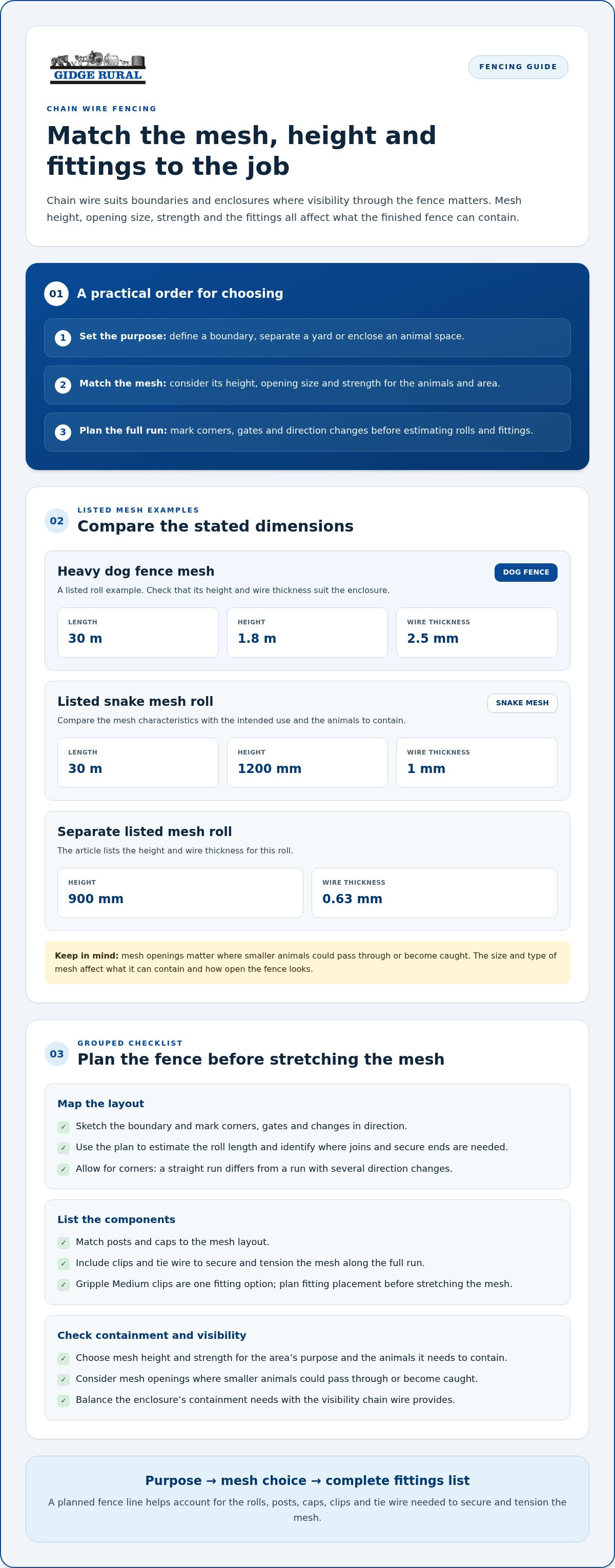
Chain wire suits boundaries and enclosures where visibility through the fence matters. Mesh height, opening size, posts and tensioning fittings all affect the finished fence.
Chainwire fence options
Chainwire fencing uses connected wire mesh supported by posts and tensioned along the fence line. Choose a mesh type and height for the area’s purpose, such as separating a yard or enclosing an animal space. A listed heavy dog fence mesh roll measures 30 m long, 1.8 m high and 2.5 mm thick. That example shows why mesh strength and height should match the job.
Chain mesh fittings
Chain mesh comes in rolls and sheets, and the format affects how you plan corners, joins and gates. Match posts and caps to the mesh layout, then choose fittings to secure and tension the wire. Gripple Medium clips are one fitting option. Plan their placement along the fence line instead of leaving joins and end points until after stretching the mesh.
Mesh openings matter where smaller animals could pass through or become caught. For example, a listed snake mesh roll is 30 m long, 1200 mm high and made with 1 mm wire. A separate listed roll is 900 mm high with 0.63 mm wire. Compare the intended use and mesh characteristics before choosing. The size and type of mesh determine how open the fence looks and what it can contain.
Before choosing chain mesh supplies, sketch the boundary and mark corners, gates and changes in direction. Use the plan to estimate the roll length and identify the required posts, caps, clips and tie wire. A straight run differs from one with several corners, as each change in direction needs a secure end or join. Include every fitting in the materials list so the mesh can be fixed and tensioned along the full run.
Prices add another point of comparison.
Fencing materials by animal or use
Start by identifying the fence’s purpose: containing animals, defining a boundary, providing privacy or screening noise. Then match the mesh, panel gaps, height and visibility to that use. A pet fence has different requirements from a boundary between paddocks.
Coastal properties need materials suited to salt exposure. Aluminium and appropriately protected metal may suit these locations, while untreated steel can need more attention to corrosion. Timber provides a solid, natural boundary but requires maintenance. Compare site exposure and upkeep needs before choosing.
Solid Colorbond panels block sightlines for privacy, while open chain mesh keeps views through the boundary. For pet enclosures, choose gaps and mesh suited to the animal’s size and behaviour. A solid barrier can screen direct noise better than open mesh, although the layout and nearby structures also affect the result.
There is no single useful per-metre price for fencing materials across Australia. The total depends on the material, fence length, terrain, panel or mesh dimensions, posts, rails, gates and fittings. Prepare the full parts list, then divide the materials cost by the fence length to compare options for your project.
Plan for safety and environmental considerations before installation. Check the fence line for buried services, uneven ground and access requirements. Control mesh ends and cut wire, and plan gates so people and animals can pass safely. Careful measurements and components suited to the layout can also help reduce waste, while property owners dealing with challenging terrain often rely on specialists such as R.W Fencing to ensure a secure, durable build.
- Stock boundaries: Match the barrier and gate layout to the animals and access required.
- Pets: Consider mesh openings, fence height and escape points around gates.
- Privacy: Choose solid panels where blocking views matters more than visibility through the fence.
Once you’ve mapped the use and boundary, browse fencing supplies to plan the components for your project.
Treat that listing as a product-specific reference, not a general cost for mesh fencing. Check that the roll dimensions suit your enclosure plan, and include posts, gates and fittings when comparing the complete materials requirement. Make sure the mesh suits the intended animal and layout before choosing.
Gidge Rural: Premium Stockfeed
Gidge Rural supplies materials for rural property projects alongside everyday farm essentials. Its Fencing Supplies can help you source materials for boundaries, yards and animal enclosures. Premium Stockfeed, Animal Health & Medical Supplies, and Reticulation & Plumbing Equipment support other property needs.
Before choosing fencing supplies, note the fence line, intended use, animal type and components required. This provides a clear starting point for comparing options for your property. Gidge Rural also offers Premium Stockfeed for feeding requirements.
Contact Gidge Rural to discuss your rural supply needs.
Plan your next fencing step
A fence works best when its design fits the property’s daily routine, not just its boundary. Before buying fencing materials, mark gates, access routes and animal areas on a simple site plan. This turns your preferred material into a practical list of posts, panels, mesh and fittings, and can reveal where the layout needs adjusting.
Gidge Rural supplies fencing materials for property projects, alongside Premium Stockfeed and Reticulation & Plumbing Equipment for other rural needs. Start with your site plan and intended use to identify the supplies suited to the job.
For a practical next step, get in touch with Gidge Rural about your fencing project. A clear plan helps you move from comparing options to preparing the right materials for your property. Your next fence can start with a well-organised list.
Frequently Asked Questions
What fencing materials are commonly used in Australia?
Common fencing materials include timber, aluminium, Colorbond steel, chain wire mesh and PVC. Timber suits a traditional rural boundary, while solid steel panels provide screening. Aluminium works for defined boundaries and gates, and chain mesh keeps sightlines open. For example, a property could use solid panels near an outdoor living area and mesh around a separate animal enclosure, matching each fence to its purpose.
What materials and tools are needed to build a fence in Australia?
A fence commonly needs posts, rails or support wires, panels or mesh, compatible fasteners and gate hardware if access is required. Tools depend on the design, but a tape measure, stringline, level, post-hole digger and driver can help with setting out and assembly. Mark the fence line and gate openings first, then calculate components based on the chosen system and ground conditions.


