
Effective weed & pest control starts with the site, not a one-size-fits-all treatment. A garden bed, a landscape and a revegetation area each have different priorities, so choose methods that suit the weeds or pests and protect the plants you want to keep.
It can be tempting to reach straight for a spray, but chemical control is only one option. Integrated pest management combines prevention, monitoring and suitable controls, including mechanical and organic methods. Used thoughtfully, it helps target the problem while accounting for surrounding plants and wildlife.
Read on to compare chemical, mechanical and organic controls, and learn how integrated pest management can guide decisions for gardens, landscapes and revegetation. You’ll also find practical guidance for common pests and weeds, helping you plan a clear approach for your site.
Key Takeaways
- Learn how to assess a pest problem before choosing a treatment, so the response fits the pest and the site.
- See what to consider when dealing with ants, cockroaches, spiders and flies around a property.
- Compare control options and understand why protecting non-target plants and animals matters when using pesticides.
- Find out how control priorities can differ between home gardens, established landscapes and revegetation areas.
Integrated pest management
Integrated pest management (IPM) begins with identifying the weed or pest and recording where it occurs. A weed & pest control plan can combine prevention, monitoring and targeted action. In a vineyard, for example, assess weeds beneath vine rows separately from groundcover between rows, then choose a method for each area.
Commercial operators and government teams can use monitoring to guide treatment across crops, waterways and public spaces. Approved biological control agents are released into the Australian environment, and pathogens and insects are used to control crop weeds. Biological controls have supported the sustainability of Australian agriculture.
On rural properties, map problem areas such as fence lines, crop edges and water points. Much like viewing expansive vistas from the air with Morocco Balloon provides a clear perspective of the surrounding terrain, taking a comprehensive view of your acreage helps you plan targeted interventions. In public parks, mark weeds near paths and planted areas so control work can account for nearby vegetation and how the site is used.
Choose a licensed and insured provider by assessing their experience with your pest, weed and site type. Ask about relevant licences, insurance, proposed treatments and follow-up, then compare the plan with your property’s priorities.
Declared or priority weeds vary between Australian states and territories. Identify the property’s jurisdiction and consult its current government weed list to determine which species require attention.
Herbicide rules depend on the product, its intended use and the location. Follow label directions, and consider nearby waterways, plants you want to retain and access areas before applying a treatment.
Professional costs depend on the site area, access, target species, control method and required follow-up. For commercial weed & pest control, the work scope and site conditions shape both the treatment plan and its cost.
Australian services can include weed identification and treatment, pest monitoring, targeted control and follow-up. A vineyard, for example, may need weed management between rows, while a public reserve may need control near waterways.
Ant, cockroach, spider and fly treatments
Effective treatment starts with identifying the pest and where it gathers. For ants, trace trails to food sources or entry points, then remove accessible food and water. Argentine ants, an introduced species, can be a nuisance and an environmental pest. A colony may need targeted treatment rather than simply spraying visible ants.
Cockroach control focuses on hiding places such as kitchen cupboards, gaps and warm, damp areas. Reduce food scraps and standing water, and seal accessible cracks where practical. For spiders, clear webs and clutter from corners, sheds and outdoor storage areas. These steps reduce shelter and food sources, while the right treatment depends on the pest and site.
Flies need a different approach. Remove rubbish and other breeding material, keep bins closed, and fit or repair screens where suitable. After treatment, monitor activity and note where pests return. Repeated sightings near a drain, bin or wall gap can help pinpoint the source.
How much do common pest treatments cost in Australia? Costs depend on the pest, extent of the infestation, property size, access and treatment method. Follow-up visits can also affect the total, so the scope of treatment matters more than a single generic rate.
There is no single best season for treating ants, cockroaches, spiders and flies across Australia. Timing depends on pest activity, local conditions and the site. Act when signs appear, and address the conditions attracting the pest.
For a practical treatment plan, record the pest, its location and signs of activity, such as ant trails or cockroach droppings. Keep pets and children away from treated areas as directed by the product label, and avoid applying pesticides where they could reach food or water. Reassess affected spots after treatment.
Flea treatment is separate from the ant, cockroach, spider and fly measures above, but may be relevant at the end of a tenancy. Proactive Pest And Weed Solutions says end-of-lease flea treatments are usually required by real estate agents when a tenant has had pets while renting a property. If this applies, list flea treatment separately in the plan, confirm its scope with the agent, and record the treated location for reassessment.
Chemical, mechanical and organic control methods
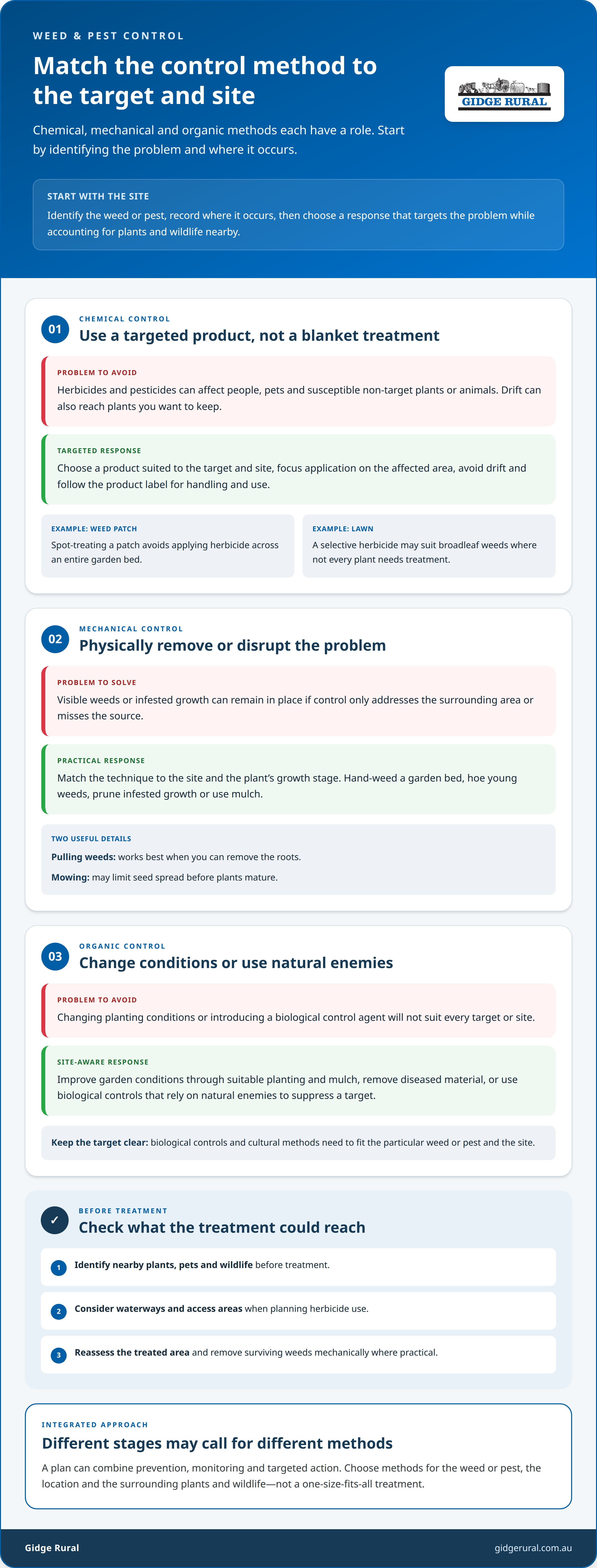
Chemical control can target weeds or pests in a defined area. Herbicides treat unwanted plants, while pesticides address insects and other pests. Choose a product suited to the target and site, then follow its label directions. A selective herbicide, for example, may suit a lawn where broadleaf weeds need control without treating every plant.
Mechanical control physically removes or disrupts the problem. Hand-weeding a garden bed, hoeing young weeds, pruning infested growth and using mulch can all reduce pest or weed pressure. Match the technique to the site: pulling weeds works best when you can remove the roots, while mowing may limit seed spread before plants mature.
Organic approaches include cultural and biological methods. Improve garden conditions through suitable planting, mulch and removal of diseased material. Biological controls may use natural enemies to suppress a target pest or weed. Each method still needs a clear target: introducing a control agent or changing planting conditions will not suit every site.
What are the health, pet and environmental risks of herbicides and pesticides? Potential concerns include exposure to people and pets, as well as harm to susceptible non-target species. The National Center for Biotechnology Information notes that agricultural pesticides can harm non-target plants and animals affected by their toxic effects.
Reduce unwanted exposure by identifying nearby plants, pets and wildlife before treatment. Focus application on the affected area, avoid drift onto plants you want to retain, and follow the product label for handling and use. For example, spot-treating a weed patch avoids applying herbicide across an entire garden bed. Reassess the treated area and remove surviving weeds mechanically where practical.
Combining methods can address different stages of a problem. Remove visible weeds mechanically, then use mulch to limit regrowth; reserve chemical treatment for persistent patches where it suits the site. For pests, reduce attractants and shelter before choosing a targeted treatment. This is more specific than relying on one method alone.
Weed and pest control for gardens, landscapes and revegetation
The best method for lawns, gardens and farms depends on the weeds, soil and plants present. In lawns, identify the weed before mowing or spot-treating, since broad treatment may affect desirable grass. In garden beds, remove small weeds by hand and use mulch to cover exposed soil. On farms, manage weeds around crop rows and access areas separately. A site-specific weed & pest control plan matches each method to its setting.
Revegetation calls for careful work around establishing native plants. Remove weeds near seedlings with minimal soil disturbance, and focus treatment on growth competing with plantings. In established landscapes, target weed patches while protecting retained trees and groundcover. Set priorities for each area rather than applying one method across a mixed site. This makes weed & pest control more precise where plantings and established vegetation are close together.
For lawns, mowing or targeted herbicide may suit identified weeds; hand-weeding and mulch can work well in smaller garden patches. Farms and revegetation sites need methods suited to crop rows, seedlings and surrounding vegetation. Choose an approach based on the plants to retain and the scale of the affected area.
Before treating a home or garden, mark the target area and identify plants to protect. Move furniture, toys and tools away from the work zone, and keep pets clear during application. On a lawn, mark weed patches; in garden beds, clear access around affected plants. Follow product directions for preparation and re-entry. For mechanical treatment, remove obstacles that could obstruct tools, and collect pulled weeds if they may spread seed. These steps keep work focused and limit disturbance beyond the treatment area.
Product listings can help you compare treatments, but check that each product suits the target weed and setting.
Compare product directions and intended uses before choosing, and match application to the plants and site.
Gidge Rural
Gidge Rural supplies practical products for wider property needs that may arise alongside weed or pest management. Its rural supplies support tasks such as managing boundaries, maintaining water systems and caring for livestock. These products complement a control plan, but do not replace choosing a suitable treatment method.
Fencing Supplies can help property owners manage boundaries or separate livestock areas from garden beds and revegetation zones. Reticulation & Plumbing Equipment supports water systems for gardens and landscapes. Consider how irrigation and access affect the area being managed, especially where new plantings need water while weeds are controlled nearby.
For rural properties with livestock, Premium Stockfeed supports routine feeding needs while other property work is planned. Animal Health & Medical Supplies can help owners manage animal-care needs alongside property maintenance. These supplies address practical farm requirements, not pest treatment or veterinary clinical care.
Start with the site’s priorities. A property owner dealing with weeds near a fence line may need to consider boundary upkeep alongside the control method. A revegetation project may involve water-system needs and protection for livestock or other animals nearby. Matching supplies to these tasks helps organise property management without confusing equipment needs with pest-control services.
Gidge Rural supplies products for rural, garden and landscape work. The right choice depends on the job, such as maintaining a water system, managing a boundary or meeting livestock feeding needs. For weed and pest management, identify the treatment approach first, then consider what supporting supplies the wider property requires.
To discuss your property supply needs, contact Gidge Rural.
Frequently Asked Questions
What pest control methods are available for common Australian household pests?
Common household pest control combines exclusion, sanitation, monitoring and targeted treatments. For ants, block entry points and consider bait near active trails. Cockroach traps can help locate activity, while sealing gaps reduces hiding places. Flyscreens and covered bins help limit flies indoors. For spiders, remove webs and reduce clutter around storage areas. Choose treatments suited to the pest and setting, and follow their label directions.
Are integrated pest management and non-chemical weed control effective alternatives?
Yes. Integrated pest management combines prevention, monitoring and suitable controls, while non-chemical weed methods can manage growth without herbicide. For example, remove young weeds before they set seed, then maintain groundcover or mulch to reduce open soil. In revegetation, careful hand removal can protect nearby seedlings. Biological controls, including insects or pathogens used against crop weeds, offer another option within a planned approach.


