
More hoof products don’t automatically mean better hoof care. You can combine horse hoof care supplies when each has a clear purpose, but layering treatments without considering the hoof’s condition can make your routine harder to manage. In wet, muddy conditions, regular cleaning and a practical approach matter.
Mud and moisture can make it tempting to reach for several products at once. A steady routine starts with picking out packed dirt, stones and debris, then choosing care suited to the hoof’s needs. If you’re unsure which routine is right for your horse, speak with a farrier or horse vet.
This guide explains how to combine products sensibly, adapt care for wet or muddy conditions, and choose useful kits and accessories. It also covers what to consider when hoof damage or sensitivity calls for more than routine care.
Key Takeaways
- Match each hoof product to a clear need, and use the hoof’s condition to guide your routine.
- In muddy weather, make regular hoof picking and debris removal part of your care routine.
- Choose a kit or accessory based on the tasks you need to manage, rather than simply adding more products.
- Build a basic care setup around regular checks, trimming, nutrition and suitable support for your horse.
Can I use more than one hoof care product in the same routine?
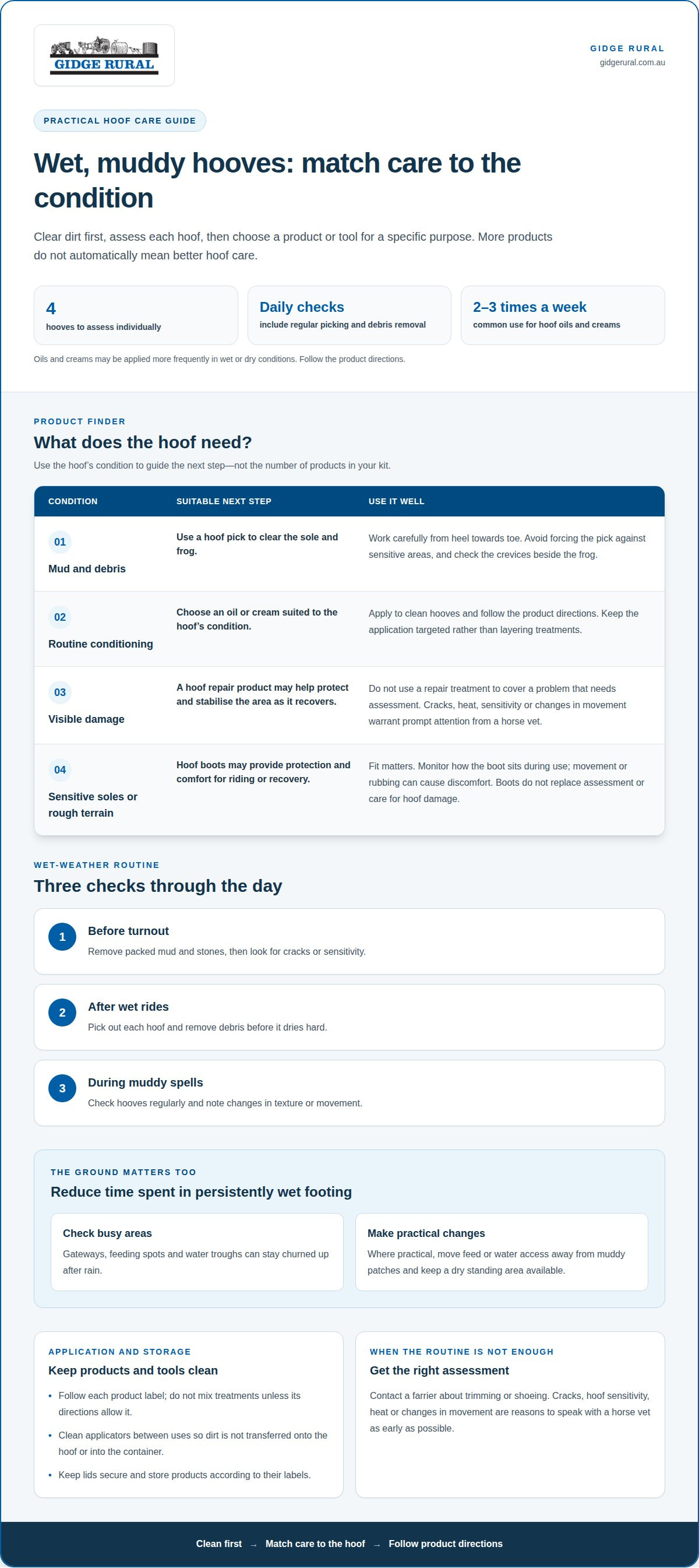
Yes, you can combine products when each has a clear role. Start by assessing all four hooves: look for cracks, sensitivity, heat, packed mud and changes in movement. Pick out debris, then decide whether the need is routine conditioning or care for a specific damaged area. Avoid layering products simply because a hoof looks wet or muddy.
For Australian travel, take a practical biosecurity approach: clean farrier equipment before moving between properties, and follow relevant state or territory directions. Transport requirements can depend on location and circumstances, so don’t assume one rule applies everywhere.
Use this product finder to match the next step to the hoof:
- Mud and debris: use a hoof pick to clear the sole and frog before applying anything.
- Routine care: choose an oil or cream suited to the hoof’s condition, and apply it to clean hooves.
- Visible damage: consider a hoof repair product to help protect and stabilise the area as it recovers.
A kit or bundle can keep several care items together. Check that its contents fit your routine, such as a hoof pick, applicator and products suited to your horse’s current needs. A larger kit isn’t automatically more useful if it includes treatments you won’t use.
Pick out hooves regularly, ideally as part of daily checks. Trimming and shoeing intervals depend on hoof growth, workload and your horse’s needs, so set the schedule with a farrier. Hoof oils and creams are commonly used two to three times a week, with more frequent application in wet or dry conditions. Supplements aren’t essential for every horse, but may help weaker hooves or slower growth; follow product directions.
Contact a farrier about trimming or shoeing. Cracks, hoof sensitivity, heat or changes in movement are reasons to speak with a horse vet as early as possible.
Hoof care in wet and muddy conditions
Wet paddocks can leave mud packed around the sole, frog and hoof wall. Clear it before applying a product, so dirt isn’t trapped beneath a coating. Use a hoof pick carefully, working from heel towards toe and avoiding force against sensitive areas. Check each hoof separately, including the crevices beside the frog.
Include the ground around gateways, feeding spots and water troughs in your routine. These busy areas can remain churned up after rain. Where practical, move feed or water access away from persistently muddy patches and keep a dry standing area available. This reduces the time your horse spends standing in wet footing.
After cleaning, assess the hoof rather than applying every product in the tack box. Use oil or cream according to its directions, keeping the application targeted. Barrier wax may suit crevices or exposed areas, while a repair product is intended to protect and stabilise hoof damage as it recovers. Don’t use a repair treatment to cover a problem that needs assessment.
- Before turnout: remove packed mud and stones, then look for cracks or sensitivity.
- After wet rides: pick out each hoof and remove debris before it dries hard.
- During muddy spells: check the hooves regularly and note changes in texture or movement.
Follow the product label and avoid mixing treatments unless their directions allow it. Hoof care products can support a routine, but they don’t replace trimming or assessment when a hoof changes. Cracks, heat, sensitivity or altered movement warrant prompt attention from a horse vet.
For tools that support day-to-day cleaning and care, explore hoof and farrier supplies and choose items that suit your routine.
Hoof care kits and accessories
A hoof care kit keeps routine items together for grooming, travel or post-ride checks. Choose one based on the tasks you perform, not the number of products inside. A basic setup may include a hoof pick, an applicator brush and products suited to your horse’s needs. Make sure each item has a clear purpose before adding it to your kit.
Accessories can make targeted application easier. A brush helps spread oil or cream across the hoof wall, while a curved-tip syringe can direct paste to a specific area. Keep applicators clean between uses and follow each product’s directions. This helps prevent dirt from transferring onto the hoof or into the container.
Hoof boots are a different kind of accessory. They can provide protection and comfort on rough terrain or during recovery. For a horse with sensitive soles, boots may offer protection while riding; they can also assist with rehabilitation after hoof injury. Fit matters: a boot that moves or rubs can cause discomfort, so monitor how it sits during use.
- For everyday care: organise a pick, a brush and the products used in your routine.
- For targeted treatment: choose an applicator suited to the product’s texture and application area.
- For riding or recovery: consider whether hoof boots suit the horse’s needs and activity.
Before choosing a bundle, compare its contents with your existing kit. A package may group several care items, but its usefulness depends on whether those items suit your horse’s hoof condition and your regular tasks. This section focuses on choosing equipment, not comparing prices. Keep lids secure, store products according to their labels, and separate clean applicators from muddy tools after use.
For equine care, a useful kit supports consistent checks without encouraging unnecessary treatments. Hoof boots are not a substitute for addressing damage, and accessories cannot replace farrier work. Choose tools for the job, then keep them clean, accessible and ready for the next check.
What basic horse hoof care supplies do Australian horse owners need?
A practical setup supports daily checks, regular trimming, suitable hoof protection and proper nutrition. Start with a hoof pick to remove stones, packed dirt and debris. Add a brush or applicator if you use hoof oil or cream. Choose products according to the hoof’s condition rather than treating every horse with the same combination.
Trimming and shoeing needs vary with hoof growth, workload and the horse’s support requirements. A farrier can advise on a suitable schedule and whether shoes are appropriate. Horseshoes can protect hooves and help maintain balance. Quality horseshoe nails help keep a shoe secure while supporting a solid, balanced fit.
Hoof boots offer another option, particularly when a horse needs temporary protection. They provide flexibility for short-term use, while shoes offer consistent, longer-term support. Boots can protect sensitive soles during riding and assist with rehabilitation after hoof injury. Match the choice to the horse’s activity and hoof needs.
- For routine checks: keep a hoof pick handy and examine each hoof daily.
- For farrier care: arrange regular trimming, with shoeing or booting suited to the horse.
- For nutrition: provide a suitable diet, and consider hoof supplements only where they meet a need.
Hoof supplements aren’t essential for every horse. They may help horses with weaker hooves or slower hoof growth. Over time, supplements can support hoof structure, consistent growth and reduced brittleness or splitting. They complement nutrition and routine care rather than replacing them.
Keep the kit simple: a hoof pick, suitable care products and the protection your horse needs. Add specialist tools only when they serve a clear purpose. For practical tools and care options, browse hoof and farrier supplies to build a setup around your horse’s routine.
Gidge Rural
Gidge Rural supports horse owners with practical supplies for animal care and property management. Turn to Gidge Rural when you’re organising broader property needs alongside a consistent hoof-care routine. Its range includes Premium Stockfeed and Animal Health & Medical Supplies, as well as Fencing Supplies and Reticulation & Plumbing Equipment for property upkeep.
These supplies support day-to-day horse and property management, while hoof assessment, trimming and treatment decisions remain part of your horse’s care routine. Match products to the job at hand, whether you’re planning feed needs or maintaining paddock infrastructure.
For practical rural supplies, shop Gidge Rural online.
Keep your hoof-care routine practical
Make your next step a routine you can maintain as paddock conditions change. Before the next wet spell, choose a place for your care kit and keep it clean and easy to reach. Store regular-care products separately from items reserved for specific hoof concerns, so each has a clear purpose. Keep a brief record of what you use and any changes you notice. That can help you describe your routine clearly if you later seek professional advice.
The right horse hoof care supplies are the ones that fit your horse’s needs and the care you’re equipped to provide. Review your setup when your horse’s workload or paddock footing changes, rather than adding products by default. Small, deliberate adjustments can keep the routine manageable as conditions shift.
When you’re ready to plan the next step, contact Gidge Rural for hoof care supplies. A practical routine starts with choices you can sustain.
Frequently Asked Questions
Should I choose hoof boots or shoes?
Choose hoof boots for flexible, short-term protection, and consider shoes for consistent, longer-term support. Boots can suit a horse needing protection on rough terrain, while riding with sensitive soles, or during recovery. Shoes can protect hooves and help maintain balance. The choice depends on your horse’s workload, hoof condition and support needs. A farrier can assess the fit and suitability of either option.
What is the difference between hoof spray, hoof powder, hoof clay and hoof wax?
The main difference is the product’s form and how you apply it. Spray is liquid, powder is dry, clay has a thicker consistency, and wax is designed to form a coating. These formats don’t make the products interchangeable. Read the specific label and choose according to the hoof concern and application area. Avoid combining them unless each product’s directions allow it.
What products can I use to keep my horse’s hooves clean?
A hoof pick is the main tool for removing stones and compacted material from the sole. For example, after a ride on a muddy track, pick out each hoof before debris dries and becomes harder to remove. A clean brush can help clear loose dirt from the hoof wall. Keep cleaning separate from treatment, and apply oils or creams only to hooves prepared as directed.
Which hoof care tools are suitable for routine cleaning and maintenance?
Start with a hoof pick for cleaning, then add an application brush if your routine includes oil or cream. A curved-tip syringe can help place paste in a specific area, while a hoof pick suits quick checks before or after riding. Keep applicators clean and store them away from muddy tools. Farrier tools such as nippers are for trimming work, not casual owner maintenance.
How to choose hoof boots, horseshoes and farrier supplies for different horses?
Start with the horse’s activity, hoof condition and need for support. A horse needing temporary protection may suit boots; one needing consistent support may be shod. Consider terrain and any sole sensitivity when choosing boots, and have a farrier assess shoeing and fit. Select supplies that match the job, such as a hoof pick for routine checks or suitable nails for a farrier’s shoeing work.
Are hoof oils, hardeners and supplements effective, and what are their risks?
Hoof oils and creams are used for routine care, while supplements may help horses with weaker hooves or slower growth by supporting hoof structure and growth over time. Use products as directed, avoid mixing treatments unless their directions allow it, and remember that products don’t replace trimming or assessment. The available information does not specify risks associated with hardeners.


