

With over 10,000 reported cases of tick paralysis in Australia annually, the "she'll be right" approach simply doesn't cut it on a rural property. When you're dealing with long grass, wildlife, and multiple animals, a standard tick and flea treatment often feels like a losing battle. It's frustrating to spend hard-earned money on monthly doses only to find a bloated tick on your dog's neck or fleas jumping in the laundry. You need a strategy that's as tough as the Australian bush.
We know that protecting your animals on a larger scale requires more than just a basic routine. This 2026 guide will help you master rural parasite control by combining high-grade medical supplies with practical property management. We'll explore the most effective treatments for high-pressure environments, tips to reduce tick loads in your paddocks, and how to spot danger signs before they become a crisis. You'll gain a clear plan to keep your animals protected and your mind at ease.
Key Takeaways
- Understand why high-load rural environments and local wildlife require a more robust strategy than standard suburban parasite control.
- Recognise the specific dangers of the Australian Paralysis Tick and how to distinguish it from common bush or dog ticks.
- Compare the durability of oral chews, spot-ons, and collars to find the most reliable tick and flea treatment for animals that spend their days outside.
- Learn how to lower parasite pressure on your property by using strategic pasture management and creating clear buffer zones around the house.
- Discover the importance of sourcing professional-grade animal health supplies from specialists who understand the unique demands of the Australian bush.
Why Rural Properties Need a Different Approach to Tick and Flea Treatment
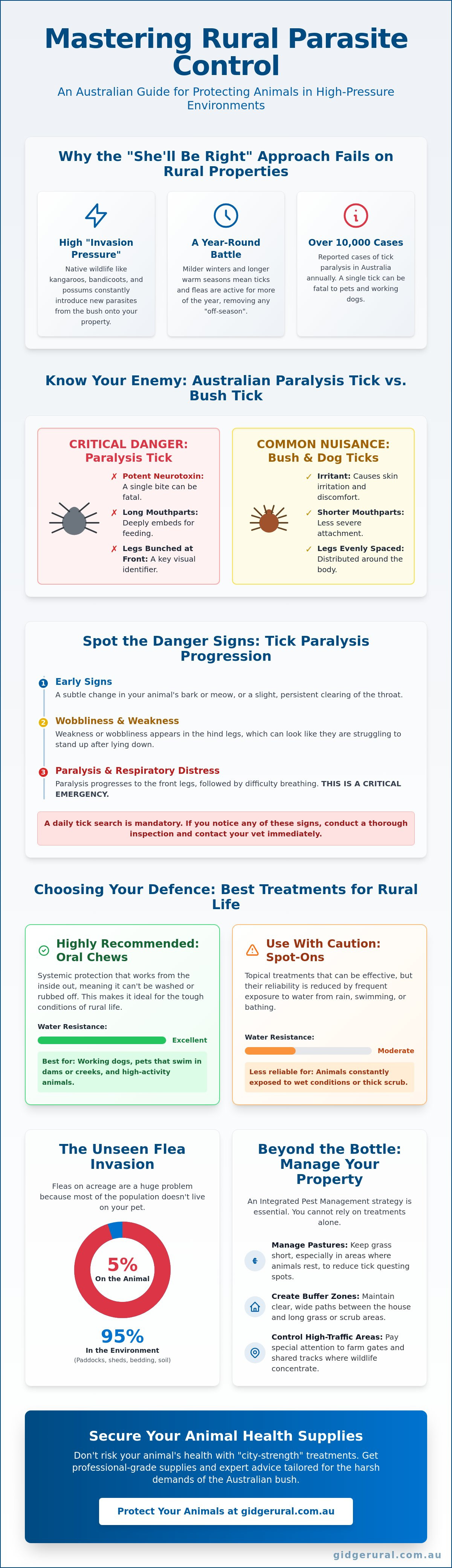
Living on a rural block is a world away from life in the suburbs. In town, a basic monthly chew might suffice because the parasite population is relatively low. On a property, your animals face constant "invasion pressure." Ticks and fleas don't just linger in the garden; they are carried across your fences every night by wildlife like kangaroos, bandicoots, and possums. This creates a high-load environment where a single missed day of tick and flea treatment can lead to disaster. Standard treatments often fail here because the sheer volume of parasites is simply too high for a "city-strength" routine.
The primary threat remains the Australian paralysis tick, a parasite that thrives in the thick scrub and long grass found on most Australian properties. Unlike a common flea infestation, a single paralysis tick can be fatal. For a primary producer, a working dog is a vital asset. Losing a trained cattle dog to tick paralysis isn't just an emotional blow; it represents a financial loss of thousands of dollars in labour and training. This is why rural owners must adopt an "Integrated Pest Management" strategy. You cannot rely on medicine alone. You must manage the animal, the garden, and the paddock as one connected system.
The "Invasion Pressure" of the Australian Bush
Proximity to native scrub increases the frequency of parasite encounters. Ticks don't jump; they "quest" by climbing to the tips of long grass and waiting for a host to brush past. Research indicates that climate change is leading to milder winters and longer warm periods. This means fleas and ticks stay active for more of the year, turning what used to be a "seasonal" worry into a year-round battle. Shared tracks and farm gates are often hotspots because wildlife use these same paths, dropping larvae and eggs exactly where your dogs walk every day.
When you explore Unpowered Campsites or visit boutique rural properties, being aware of these 'questing' zones is the first step in ensuring your pets remain protected while enjoying the landscape.
The Risk to Working Dogs and High-Activity Pets
Working dogs require a different level of protection due to their lifestyle. They are frequently exposed to water in dams or creeks and spend hours pushing through thick scrub. This high activity level means some protection methods are less effective. For example, some spot-on treatments can be less reliable if a dog is constantly swimming or getting rained on in the paddock. You need 24/7 protection that doesn't wash away or rub off. Balancing high performance in the field with total parasite safety is the key to keeping your team healthy and operational throughout the year.
Identifying the Threat: Paralysis Ticks and Bush Parasites in Australia
Not all parasites carry the same weight of danger. While a bush tick or brown dog tick might cause skin irritation or transmit blood-borne illnesses, the Australian paralysis tick is in a category of its own. This parasite produces a potent neurotoxin that can be fatal in domestic animals if not caught early. Identifying the difference is critical. Paralysis ticks have long mouthparts and legs bunched at the front of their body, whereas bush ticks are generally smaller with a more uniform leg distribution. On a rural property, you're likely to encounter all three, making a broad-spectrum tick and flea treatment essential for every animal on the block.
Fleas present a different challenge on acreage. In a rural setting, the flea life cycle isn't confined to your dog's coat or the living room rug. Eggs and larvae thrive in the dirt of outbuildings, the dry hay in stables, and even the shaded areas of the paddock where livestock congregate. Because 95% of a flea population lives in the environment rather than on the host, managing a large block requires a more aggressive approach than a suburban backyard. Consistent preventative care is the only way to break this cycle before it takes hold of your property.
Spotting the Symptoms Before They Become Critical
Tick paralysis usually follows a predictable three-stage progression. It often begins with a subtle change in your pet's bark or a slight clearing of the throat. This moves into wobbliness in the hind legs, eventually leading to full paralysis and respiratory failure. If your dog starts vomiting or seems unusually lethargic, it is time for an immediate, thorough inspection. A daily tick search is a mandatory ritual for every rural owner, as no medication can guarantee 100% protection against every single bite in a high-load area.
Flea Infestations on Large Blocks
Managing fleas on acreage is a massive task. These pests are frequently linked to tapeworm infections in rural dogs and cats, adding another layer of health risk. You can't just treat the house; you must consider where your animals spend their time, including stables and sheds. Keeping these areas clean and using high-quality animal health and medical supplies will help keep the population under control. Focus on high-traffic zones where wildlife might rest, as these are the primary sources of new infestations on your land.
Comparing Treatment Options: What Works Best for Rural Life?
Choosing a tick and flea treatment for a rural property is about more than just picking a brand off the shelf. You have to match the medication to the animal's daily routine and the specific environmental pressures of your block. A dog that spends its morning mustering in the rain or cooling off in a dam has very different needs than a pet that stays mostly on the veranda. On a large property, durability is the most important factor. If a treatment washes off or loses its punch before the next dose, your animal is vulnerable to the high parasite loads found in the Australian bush.
Many rural owners now opt for "combo" treatments. These products are designed to handle fleas, ticks, and worms simultaneously. Because rural dogs and cats are more likely to encounter wildlife carcasses or contaminated soil, they face a higher risk of heartworm and intestinal parasites. Using an all-in-one solution ensures there are no gaps in their protection. However, safety is still a priority. Breeds like Border Collies and Australian Shepherds can sometimes carry the MDR1 gene mutation, making them sensitive to certain chemicals. Always check the label or consult a professional to ensure the product is safe for your specific breed.
Oral Chews: The New Gold Standard for Rural Protection
Oral treatments, specifically the Isoxazoline class of medications, have become the preferred choice for working dogs. Because the active ingredient is absorbed into the bloodstream, it cannot be washed off by rain, dam water, or frequent baths. Speed of kill is the critical advantage here. In a high-risk paralysis tick area, you need a product that begins killing ticks within hours of attachment. This rapid action significantly reduces the window for the tick to inject its deadly neurotoxin. You can choose between monthly doses or long-acting three-monthly options depending on what fits your management schedule best.
Spot-Ons and Collars: When Are They the Right Choice?
Spot-on treatments and long-acting collars still have a vital role, especially as repellents. While oral chews kill ticks after they bite, some collars are designed to repel parasites before they even attach. This is a great secondary line of defence for dogs that spend all day in thick scrub. If you use spot-ons, application technique is everything. You must part the hair and apply the liquid directly to the skin on the back of the neck to ensure it is absorbed properly. In multi-pet households, be cautious with cats. Some dog-specific spot-ons contain permethrin, which is highly toxic to cats if they groom their canine housemates.
Beyond the Bottle: Managing Your Property to Minimise Parasite Load
Applying a tick and flea treatment is only half the battle on a rural block. To truly protect your animals, you need to lower the "parasite pressure" in the environment. If your house yard is a haven for ticks, even the best medication is working overtime. By managing your land, you create a defensive shield that stops pests before they ever reach your pets. This integrated approach is the most reliable way to ensure 24/7 safety in high-load areas.
Whether you are managing a rural block or a residential home, keeping your property in top condition is essential for safety and value. For expert assistance with residential sales and management in Western Australia, Regal Gateway Property offers the professional insight needed to maintain a high-quality living environment.
Pasture management is your first line of defence. Ticks are sensitive to dehydration and rely on the high humidity found in long grass and leaf litter. Keeping the grass short in high-traffic areas, such as around the house, kennels, and clotheslines, exposes ticks to the sun and dries them out. Aim to create a "buffer zone" of at least three metres between the bush and your lawn. This gap makes it much harder for parasites to migrate into the areas where your dogs spend most of their time. Using professional fencing supplies to secure this perimeter also helps keep out the wildlife that carry these pests onto your property.
Landscaping for Tick Prevention
The "Mow and Clear" strategy is simple but effective. Regularly remove piles of timber, leaf litter, and garden waste, as these provide the perfect damp environment for ticks to hide. If you have outbuildings or stables, consider using safe environmental sprays to treat the cracks and crevices where flea larvae thrive. Physical barriers are also vital. Fencing off the house yard from native scrub prevents kangaroos and bandicoots from dropping "tick bombs" right where your pets sleep. It's about making your immediate environment as inhospitable to parasites as possible.
The Daily Tick Search: A Rural Necessity
No treatment is a total substitute for a physical check. For long-haired dogs, use your fingers to feel deep into the coat, starting at the nose and moving back to the tail. Pay close attention to the head, neck, and ears, as research shows over 70% of paralysis ticks are found in these areas. If you find a tick, use a dedicated tick twister rather than standard tweezers to ensure the mouthparts are removed cleanly. Once removed, drop the tick into a jar of methylated spirits or a sealable bag. Don't just throw it on the ground; these hardy parasites can survive and find a new host quickly.
Securing Your Animal Health Supplies with Gidge Rural
Managing a property is a full-time commitment. You don't have time to second-guess whether your tick and flea treatment will stand up to a heavy season. At Gidge Rural, we stock professional-grade animal health and medical supplies because we live and work in the same conditions you do. We understand that a product which works in a city backyard might not cut it when your dog is pushing through scrub all day. Sourcing your supplies from a specialist ensures that every dose provides the high-level protection required for rural life.
The complexity of rural parasite control means you need more than just a box of tablets. You need a partner who understands the nuances of land management and animal husbandry. Whether you are protecting a team of working dogs or a few backyard pets, the right advice makes all the difference. Our team is always ready to help you choose the best options for your specific property needs, ensuring you get the results you expect without the guesswork.
The Gidge Rural Difference: Expertise Over Algorithms
Algorithms often suggest products based on price or popularity, but they don't understand the Australian bush. Our no-nonsense approach ensures you only get the products that actually work in high-load environments. We provide the convenience of a one-stop-shop for your rural needs. You can easily combine your parasite protection with orders for premium stockfeed, fencing supplies, or reticulation equipment. Supporting a business that understands the Australian rural lifestyle means you get practical solutions that respect your time and your budget.
Next Steps: Organise Your Seasonal Protection
Consistency is your best weapon against ticks and fleas. We recommend creating a treatment calendar to ensure no animal misses a dose, especially as seasons shift and parasite activity peaks. Having your supplies on hand before the weather warms up prevents gaps in protection. You can conveniently order your animal health supplies online for national delivery to your door. Take the lead on your property's biosecurity today. Browse our range of professional animal health supplies at Gidge Rural to find the right protection for your team.
Take Control of Your Property's Parasite Protection
Mastering the complexities of rural life means moving beyond basic preventative care. Protecting your animals on acreage requires a two-front strategy: choosing a robust tick and flea treatment that won't wash away and managing your land to lower the invasion pressure from native wildlife. By creating clear buffer zones around the house yard and sticking to a strict daily search ritual, you significantly reduce the risk of paralysis and heavy infestations. These practical steps, combined with the right medical supplies, provide the peace of mind you need when living in the bush.
Gidge Rural has been a trusted rural specialist since 2026, providing the veterinary-grade parasite protection you need for high-pressure environments. We offer national delivery on all animal health supplies, ensuring you have access to professional-grade solutions no matter how remote your block is. Don't wait for the first signs of symptoms to take action. Shop the full range of professional tick and flea treatments at Gidge Rural and give your working dogs and pets the 24/7 protection they deserve. You've now got the strategy and the tools to keep your team safe and thriving in the Australian landscape.
Frequently Asked Questions
How often should I perform a tick search on my dog if they are on treatment?
Perform a thorough tick search every single day. Even the most effective tick and flea treatment can occasionally be overwhelmed by the high "invasion pressure" found in rural scrub and long grass. A daily check is a mandatory ritual that ensures you catch any parasites before they have the chance to inject dangerous levels of neurotoxin into your pet's system.
Can I use the same tick and flea treatment for both my dogs and my cats?
No, you must never use dog-specific products on your cats. Many treatments designed for dogs contain chemicals like permethrin, which are highly toxic to felines and can be fatal. Always purchase species-specific animal health supplies to ensure the safety of every pet on your property. Check the packaging carefully to ensure the product is registered for the specific animal you are treating.
What should I do immediately if I find a paralysis tick on my pet?
Remove the tick immediately using a dedicated tick twister or fine-nosed tweezers. Grasp the tick as close to the skin as possible and pull upwards with steady pressure, being careful not to squeeze the body. Squeezing can force more toxin into your pet. Keep your animal calm and cool while monitoring for symptoms like wobbly legs or a change in bark, and contact a vet if you notice any distress.
Does rain or swimming in dams reduce the effectiveness of flea and tick treatments?
Oral chews are completely unaffected by water because the active ingredients work from within the bloodstream. However, the efficacy of spot-on treatments and some collars can be significantly reduced by frequent swimming or heavy rain. If your working dogs are constantly in the water or pushing through wet grass, an oral tick and flea treatment is generally the most reliable choice for 24/7 protection.
Are natural or herbal tick repellents effective for rural Australian properties?
Natural or herbal repellents are rarely strong enough to handle the high parasite loads found on Australian rural properties. While these products might offer some minor repellent qualities in low-risk suburban areas, they cannot compete with veterinary-grade science when facing the deadly Australian paralysis tick. Relying on unproven methods in the bush puts your animals at a high and unnecessary risk.
Why am I still seeing fleas on my dog after applying a treatment?
You are likely seeing new fleas jumping onto your pet from a heavily infested environment. Remember that 95% of a flea population lives in bedding, stables, and dirt rather than on the host. Most modern treatments kill fleas after they bite, so you will see them on the coat briefly before they die. To stop seeing them entirely, you must treat the environment to break the life cycle.
Is it safe to combine a tick collar with an oral flea tablet?
Combining a repellent collar with an oral tablet is often a safe way to provide a "double-layered" defence in high-risk areas. This strategy uses the collar to repel parasites while the tablet kills any hardy individuals that manage to attach. Always check the specific product labels or consult with a specialist to ensure the active ingredients are compatible and safe for your specific breed.
How can I tell the difference between a bush tick and a paralysis tick?
Look closely at the leg colour and position to tell them apart. Paralysis ticks have long mouthparts and their first and last pairs of legs are typically darker than the middle pairs. Bush ticks are generally more uniform in colour with shorter mouthparts. Because identification can be difficult, it's best to treat every tick found on a rural property as a potential paralysis threat and remove it immediately.


