
Did you know that a well-designed irrigation setup can slash your outdoor water usage by up to 60%? With water rates across Australia climbing, including a 6.7% increase for Sydney households starting July 2026, every litre matters. It's frustrating to watch your money disappear into the soil while plants struggle with uneven watering from inefficient sprinklers. Finding the right drip irrigation supplies shouldn't be a confusing puzzle of plastic fittings and mismatched pipe sizes.
You deserve a thriving, drought-resistant garden that doesn't require constant oversight or result in a massive quarterly bill. We understand the need for a reliable, automated system that stands up to the harsh Australian sun. This guide will help you select the exact components needed to build a professional-grade setup that keeps your property healthy. We will walk through the essential gear, from pressure regulators and filters to UV-stabilised tubing, so you can get your reticulation sorted with confidence and ease.
Key Takeaways
- Reduce evaporation by up to 60% and significantly minimise weed growth by delivering water directly to the plant's root zone.
- Identify the essential drip irrigation supplies required for a robust setup, including the choice between pre-installed drip lines and individual emitters.
- Learn how to design a high-efficiency system through hydro-zoning and precise flow rate calculations for your pump or tank.
- Protect your property from the harsh Australian sun by selecting UV-stabilised fittings and heavy-duty poly pipe that won't crack or kink.
Understanding the Benefits of Drip Irrigation for Australian Properties
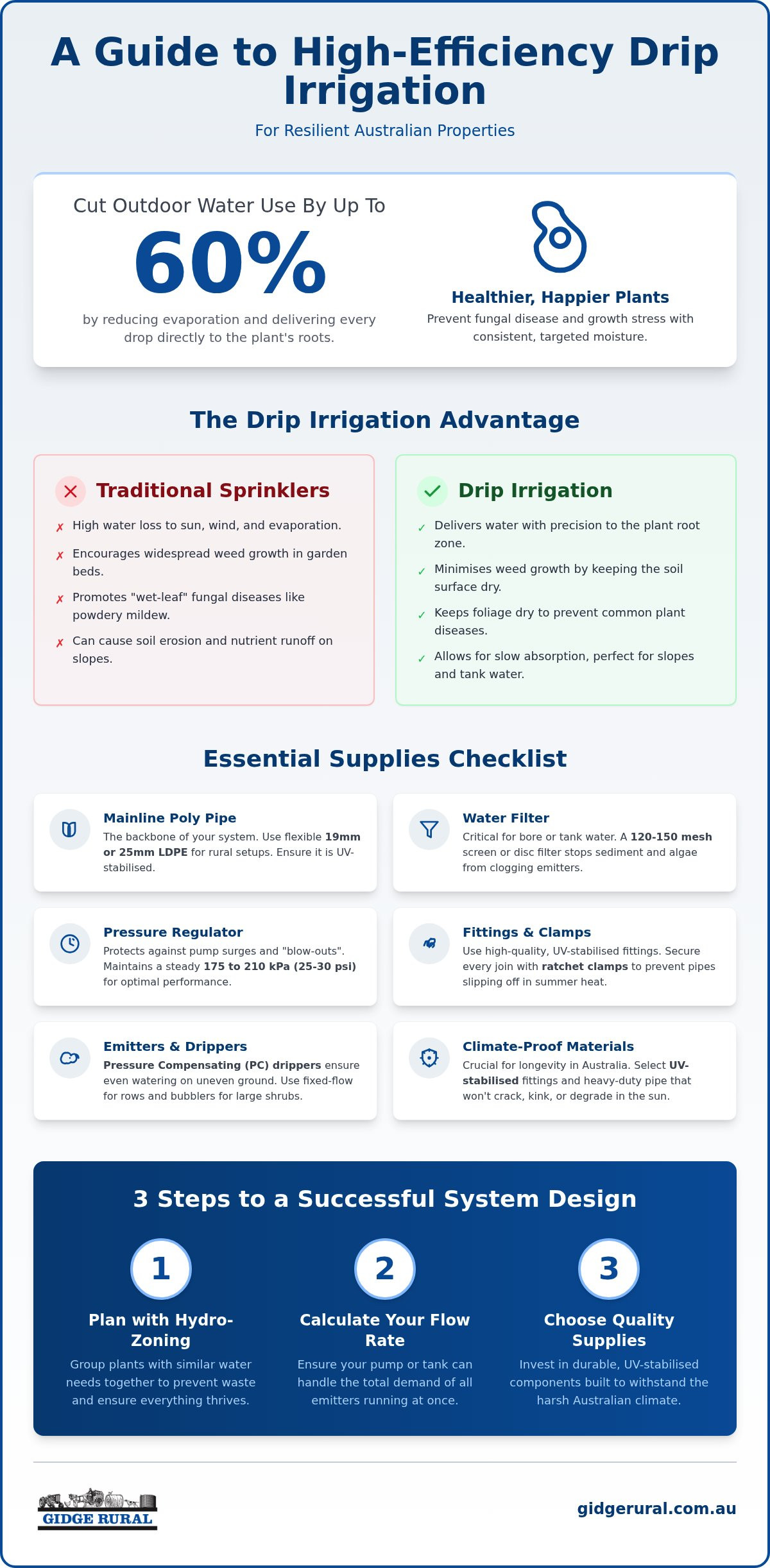
Australia's climate is notoriously unforgiving. Standard overhead sprinklers often lose half their water to the wind and sun before it even hits the dirt. Choosing high-quality drip irrigation supplies changes the game; it delivers moisture exactly where it's needed at the root zone. This precise method can reduce evaporation by up to 60% compared to traditional sprays. It also helps manage weed growth. Since you aren't soaking the entire garden bed, dormant weed seeds in the dry patches don't get the chance to sprout.
On sloped rural properties, this slow delivery is even more critical. It prevents the soil erosion and nutrient leaching common with heavy, fast-watering methods. Investing in robust drip irrigation supplies ensures your system handles the pressure required for these specific layouts. During strict water restrictions, a well-planned system is often the only permissible way to keep a garden alive.
Water Efficiency in the Australian Climate
Surface evaporation is the biggest enemy of any rural garden. In many parts of Australia, the heat is intense enough to dry out topsoil in hours. Drip systems bypass this by keeping the water close to the ground, often under a layer of mulch. This is particularly effective for sandy soils that drain quickly. This efficiency is vital for properties relying on limited tank water. It ensures every drop from your storage is used to sustain growth rather than vanishing into the atmosphere.
Healthier Plants Through Consistent Moisture
Keeping foliage dry is a simple way to prevent "wet-leaf" diseases and common fungal issues like powdery mildew. Since drip irrigation targets the soil, your plants stay healthier for longer. It also maintains a stable moisture profile. Instead of the "feast or famine" cycle of heavy weekly soaking, your plants receive small, regular amounts of water. This prevents the stress that leads to stunted growth or dropped fruit.
The Essential Drip Irrigation Supplies Checklist
Building a reliable system starts with a solid list of parts. You don't want to be halfway through an install and realise you've missed a vital fitting. Getting the right drip irrigation supplies from the start is the difference between a system that lasts for years and one that fails during the first heatwave.
Most rural setups use 19mm or 25mm poly pipe as the mainline. This serves as the backbone of your reticulation, carrying the volume needed for larger properties. If you're drawing from a bore or a tank, a filter is non-negotiable. Fine sediment or algae will clog tiny dripper holes instantly. A 120 to 150 mesh screen or disc filter keeps the water clean and your emitters flowing freely.
High-pressure surges from pumps or mains water can cause "blow-outs" where fittings literally pop off the pipe. A pressure regulator is a small but vital component. It keeps the system at a steady 175 to 210 kPa (25 to 30 psi), protecting your components from damage. Investing in water-efficient garden equipment like this is a smart move for any sustainable Australian home.
Pipes and Fittings
Low-Density Polyethylene (LDPE) is the standard choice for rural garden lines. It's flexible and easy to layout around trees and garden beds. For extra security, always use ratchet clamps on every join. These stop pipes from slipping off when the summer sun heats the plastic and makes it soft. For a deeper look at the pumps and tanks that feed these lines, check out our guide to reticulation equipment. You can view our range of irrigation gear to find the right fit for your property.
Emitters and Drippers
Pressure Compensating (PC) drippers are a must for uneven ground. They ensure every plant gets the same amount of water, whether it's at the top or bottom of a slope. Fixed-flow emitters work well for uniform rows, while adjustable bubblers are better for large shrubs that need a higher volume. Choosing the right drip irrigation supplies for your specific plant types prevents over-watering and waste, a principle also applied by hydroponic specialists like Discount Hydro for indoor growing setups.
How to Design and Install Your Drip System
A successful reticulation project begins with a clear plan. Mapping your zones, a process known as hydro-zoning, ensures you group plants with similar water needs together. This prevents the common mistake of over-watering hardy natives while your fruit trees struggle. You must also calculate your total flow rate to ensure your pump or tank can handle the demand. For a deep dive into spacing and technical layout, this Do-It-Yourself Guide to Backyard Drip Irrigation provides excellent research-based design principles.
Working with drip irrigation supplies is much easier when the weather plays along. Lay your poly pipe out in the sun for an hour before installation. The heat makes the plastic pliable, so it won't coil back on you while you're trying to pin it down. Once the pipe is flexible, you can easily snake it around garden beds and secure it with turf pegs every few metres. You can order all the poly pipe and fittings you need to get started on your property today.
Step-by-Step Installation Guide
- Step 1: Connect your backflow preventer and pressure regulator to the water source. In Queensland and NSW, mains water connections require a licenced plumber and specific backflow devices to meet local regulations.
- Step 2: Lay out the mainline and sub-mainline pipes. Use 19mm or 25mm poly for the main runs to maintain pressure across the entire property.
- Step 3: Install your emitters or drip lines. Before you put the end caps on, run the water to flush out any dirt or plastic shavings that entered the system during the build.
Testing and Troubleshooting
Once the system is live, check for "dry spots" where an emitter might be blocked by sediment. This is common if you're using bore water without a high-quality filter. Automation is the final piece of the puzzle. Integrating a tap timer or a smart controller allows for "set and forget" operation. Remember to adjust your run times as the seasons shift. A system set for a scorching January day will waste significant water during the cooler months of May and June.
Choosing Quality Supplies for the Harsh Australian Climate
The Australian sun is the ultimate test for any outdoor equipment. Cheap plastic fittings often crumble after just one season because they lack proper UV-stabilisation. Investing in professional-grade drip irrigation supplies means choosing components designed for high-heat environments. These parts contain specific inhibitors that prevent the plastic from becoming brittle and snapping under the intense summer glare.
Heavy-duty poly pipe is another essential. It's built to resist kinking and cracking, even when laid over rough rural terrain. Sourcing your gear from a specialised rural supplier ensures you get equipment rated for the pressures and temperatures common on Australian properties. General hardware warehouses often stock lighter-duty versions that simply don't last in a paddock or large garden. Maintenance also plays a key role. Use flushing valves at the end of your lines to clear out fine silt. In frost-prone regions, winterisation is critical. Emptying your lines before the first freeze prevents ice from expanding and splitting your pipes.
Material Standards and Durability
Always look for Australian Standard markings on your pipes and fittings. This gives you peace of mind that the gear meets local requirements for pressure and longevity. Commercial-grade drippers are a smarter investment than budget packs. They provide a more consistent flow and are far less likely to fail or clog. While the initial cost is higher, you'll save money in the long run by avoiding constant replacements and repairs.
Just as industrial sectors rely on the precision engineering of OG VALVES LTD. for high-pressure fluid control, selecting commercial-grade irrigation components ensures your property's water system remains robust against the elements.
The Role of Filtration in Rural Systems
Sediment is a system-killer for any reticulation setup. If you're pumping from a dam or bore, your filter is the first line of defence against failure. Sand, algae, and grit can block an entire zone of emitters in minutes. Clean your filter discs or screens regularly to maintain consistent pressure across your property. A clogged filter forces your pump to work harder, which can lead to expensive motor damage. Ready to upgrade your system? Explore our range of drip irrigation supplies to find robust gear that stands up to the elements.
Build a More Resilient Property Today
Efficient watering is no longer just a luxury for Australian properties; it's a necessity for long-term sustainability. By moving away from wasteful overhead sprays and towards targeted delivery, you can protect your landscape while keeping costs down. The key to a system that won't crumble after a single summer is choosing drip irrigation supplies specifically designed for our harsh environment.
Focusing on UV-stabilised components and robust filtration ensures your reticulation remains reliable year after year. We've spent decades providing the specialist rural knowledge and high-quality gear that property owners trust to get the job done right. Browse our range of professional drip irrigation supplies and take the first step towards a drought-resistant garden. With the right setup in place, you can spend less time worrying about your water bill and more time enjoying a healthy, thriving property.
Frequently Asked Questions
What is the best pipe size for a drip irrigation system?
The most common pipe size for a rural or residential mainline is 19mm or 25mm poly pipe. These larger sizes are essential for maintaining steady pressure and volume over longer distances. For the smaller lateral lines that branch off into your garden beds, 13mm tubing is the industry standard. Selecting the right drip irrigation supplies for your layout prevents pressure drops that leave plants at the end of the line dry.
Do I need a pump for my drip irrigation system if I use a water tank?
You will almost certainly need a pump to provide the 175 to 210 kPa (25 to 30 psi) required for a standard drip system. While gravity feed from a high tank can work for tiny herb gardens, it rarely provides enough "push" for a full property layout. A dedicated irrigation pump ensures that pressure-compensating emitters open correctly and deliver a uniform flow to every plant regardless of the tank's water level.
How often should I run my drip irrigation in the Australian summer?
During a typical summer, it's best to run your system two to three times per week for longer durations. This encourages deep root growth, which helps your plants survive those scorching 40 degree days. Short, daily bursts only wet the surface and lead to shallow, weak roots. Always check your local council's water restrictions and adjust your run times if you notice the soil drying out too quickly between cycles.
Can I use drip irrigation for my vegetable garden and orchard at the same time?
You can water both from the same mainline, but it's best to set them up as separate zones. Vegetables usually require frequent, shallow watering, whereas fruit trees thrive on deep, infrequent soaking. Using different drip irrigation supplies, such as adjustable bubblers for your orchard and inline drip tube for your veggies, allows you to manage these different needs. This prevents you from over-watering the lettuce while the citrus trees go thirsty.
Why are my drip emitters getting blocked and how do I fix them?
Blockages are usually caused by fine sediment, algae, or mineral build-up, which is common when using bore or dam water. You can often clear them by soaking the emitters in a mild acidic solution or simply replacing the individual units if they're too far gone. To prevent future issues, install a high-quality 120 to 150 mesh filter and make it a habit to flush your mainlines every few months to clear out debris.


