
A reliable electric fence needs more than wire: the energiser, conductors, posts and insulators must suit the fence line and its purpose. Choosing the right electric fencing supplies helps you build a system to contain animals or secure property, with solar power as an option where the site suits it.
It’s easy to focus on the energiser, but every part of the system matters. The right setup depends on what you need to contain or protect, the property layout and the available power source.
This guide explains energisers, solar options, accessories and charging kits, and the factors that affect kit prices. Use it to compare components and work out what your rural property needs.
Key Takeaways
- Match the energiser and power option to the fence layout and its purpose, including whether a solar setup suits the site.
- Compare accessories and charging kits by what they include and the fencing they’re designed to cover.
- Assess kit prices against the posts, conductor type and quantities included, rather than comparing headline costs alone.
- Choose a setup around whether you’re containing animals or securing property, then explore Gidge Rural’s fencing supplies for practical project needs.
Electric fence energisers, including solar models
An electric fence works as a circuit: the energiser sends pulses through live conductors, and the earth return completes the circuit. Australian safety and legal requirements depend on the fence’s location and use. Follow the manufacturer’s wiring instructions, isolate the power and connect live and earth terminals as directed.
Energiser power options
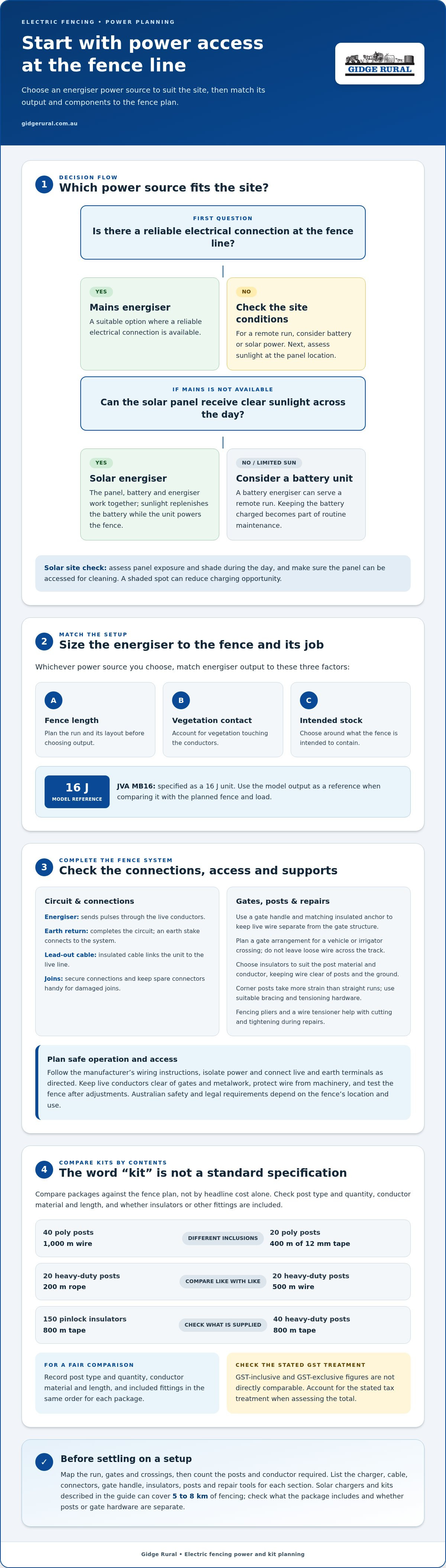
Choose mains, battery or solar power based on access to electricity at the fence line and how consistently the system can be powered. A mains energiser suits a location with a reliable electrical connection. A battery unit can serve a remote run, but keeping it charged becomes part of routine maintenance. Match the output to the fence length, vegetation contact and intended stock.
Solar energiser models
Solar models combine a panel, battery and energiser, with sunlight replenishing the battery while the unit powers the fence. Assess panel exposure, shade across the day and access for cleaning; a shaded spot can reduce charging opportunity. The JVA MB16 is specified as a 16 J unit, giving a model reference when comparing output with the planned fence and load.
Energiser hardware
Hardware connects the energiser to the fence and earth system. Use insulated lead-out cable, compatible insulators to keep live wire clear of posts, and a cut-out switch to isolate sections for fault-finding. Secure all joins and keep live conductors from touching gates or other metalwork, which can drain power from the fence.
Plan tensioning and crossings before setting posts. Keep conductors taut enough to maintain a clear line without pulling posts out of alignment. Use a gate or insulated crossing where an irrigator track interrupts the run. Protect wire from machinery and avoid placing live conductors where equipment or stock could snag them. Test the fence after making adjustments.
Energiser accessories and solar charging kits
Accessories keep the energiser connected and make routine fence checks easier. For an Australia grazing property, match each part to the fence layout: lead-out cable links the unit to the live line, while an earth stake completes the circuit. A solar charging kit can suit a remote section without convenient mains access. The described chargers and solar kits can cover 5 to 8 km of fencing.
Plan the charging components first. Position the solar panel in clear sunlight and keep it free from dust and vegetation. Place the battery and energiser where you can inspect connections without disturbing stock. Use insulated cable for connections, and keep spare connectors handy to replace damaged joins. This makes routine checks easier to manage.
Gate hardware must preserve access while maintaining the fence line. A gate handle lets you open and close a powered section; an insulated handle and matching anchor keep the live wire separate from the gate structure. Fit the handle where it can be reached safely from the approach side. For a vehicle or irrigator crossing, plan a gate arrangement rather than leaving loose wire across the track.
Posts and accessories support the conductors and keep them clear of the ground. Choose insulators that suit both the post material and conductor, then check that they hold the wire clear. Corner posts take more strain than straight runs, so use suitable bracing and tensioning hardware at changes of direction. Fencing pliers and a wire tensioner help with cutting and tightening during repairs.
Before buying, list the parts for each section: charger, cable, connectors, gate handle, insulators, posts and repair tools. This prevents a solar kit from being treated as a complete fence when the gate hardware or posts are separate needs. For practical project supplies, explore Gidge Rural’s fencing supplies.
Product prices
Electric fence kit costs depend on what the pack contains, not just its label. Compare post type and quantity, conductor length and material, and whether insulators are included. For example, a kit with 40 poly posts and 1000m of wire has different inclusions from one with 20 poly posts and 400m of 12mm tape. Those details explain what each package is built to cover.
Conductor choice also shapes the comparison. Wire, tape and rope are distinct options, so compare like with like before judging a powered fence kit. A package with 20 heavy-duty posts and 200m of rope differs from one with 20 heavy-duty posts and 500m of wire. Check the listed quantities and materials against the fence plan, rather than treating the word “kit” as a standard specification.
Post numbers and fittings matter too. One listed configuration pairs 150 pinlock insulators with 800m of tape, while another includes 40 heavy-duty posts and 800m of tape. These bundles provide different components for assembling a fence. Note whether the package includes the posts, insulators and conductor you need, or whether those items sit outside the listed kit.
For a fair price comparison, record each package’s contents in the same order: post type and quantity, conductor material and length, and included fittings. Then check whether each displayed price includes GST. GST-inclusive and GST-exclusive figures are not directly comparable, so account for the stated tax treatment when assessing the total.
Match the package to the job. A short grazing division may need different quantities from a long boundary or temporary paddock line. Map the run, mark gates and crossings, then count the posts and conductor required. This check shows whether a kit suits the planned fence, rather than leaving you with components that don’t fit the layout.
Electric fencing solutions for animal containment and property security
Start with the job: a boundary fence, grazing division or protected access point each needs a different layout. Plan the line around animal movement, gates and regular vehicle access.
Animal containment
For sheep or cattle, map the paddock boundary and note where animals gather, cross or push against existing fences. Position conductors to guide movement without blocking water access or routine stock handling. At gates, maintain a clear opening and secure closure when animals are grazing nearby. Match the materials and energiser to the layout and animal-management task.
Risks to people, pets and livestock
Electric fencing can startle people, pets and livestock on contact. Loose conductors can also cause entanglement, and a poorly maintained line may not work as intended. Keep access points visible, secure loose wire and prevent pets or stock from becoming trapped against the fence. Explain the boundary to visitors, and keep children away from the energiser and live conductors.
Property security needs a clear boundary and controlled access, not just a powered wire. Walk the perimeter and note vehicle entrances, sheds, public-facing edges and irrigator crossings. Keep gates usable, and arrange the fence so opening one access point doesn’t leave a gap elsewhere along the boundary. Regularly check joins, posts and conductors for damage, fallen branches and vegetation touching the line. If surveying historic fence lines or outbuildings reveals early Australian coins or relics, collectors turn to Renniks for authoritative reference guides and specialised storage solutions.
For either purpose, sketch the fence before choosing materials. Mark the purpose of each run, gate positions and areas requiring access, then check that the energiser, conductors, insulators and posts suit the plan. A temporary grazing division may prioritise easy movement, while a property boundary needs controlled access and a clearly maintained perimeter.
For fence materials suited to your layout, shop fencing supplies.
Gidge Rural: Premium Stockfeed
Gidge Rural supplies fencing materials alongside everyday rural property essentials. Its Fencing Supplies support fence projects, while Reticulation & Plumbing Equipment can help with separate water-system needs. Premium Stockfeed and Animal Health & Medical Supplies are also available for broader farm requirements.
Bring your fence layout and a list of the materials you need, such as posts, conductors or gate components. This keeps your purchase focused, whether you’re repairing a section or planning a new boundary. For rural property supplies, contact Gidge Rural or visit gidgerural.com.au.
Turn your fence plan into the next step
Keep your fence plan useful as the property changes. Record the purpose of each fence run, access points and adjustments made after moving stock or equipment. This gives you a clear starting point when planning repairs or changing how a paddock is used.
Before buying electric fencing supplies, gather your proposed layout and a list of the parts you still need. A practical list keeps decisions focused on the property’s requirements, rather than adding components that don’t suit the job. It also gives you a clear basis for choosing the materials for your project.
For a next step grounded in your fencing needs, contact Gidge Rural for electric fencing advice. With a clear plan in hand, you can move forward with confidence and choose supplies that fit the work ahead.
Frequently Asked Questions
What insulators, posts, strainers and connectors are required for electric fencing?
Choose fittings that match the conductor and post materials in your fence design. Insulators keep live wire or tape separate from posts; strainers tighten long runs and end assemblies; connectors join compatible conductors without loose twists. For example, a tape fence needs fittings designed to hold tape securely, while wire requires suitable wire connectors. Include corner and gate hardware in your materials list.
How much do electric fencing supplies cost in Australia?
There’s no single total for electric fencing supplies because kit contents and fence layouts vary. The number and type of posts, conductor material and length, and included fittings all affect the cost. Build a parts list from your fence plan, then compare kits with matching contents. For GST, use the tax treatment shown with each listed price so the comparison reflects the amount payable.
How do mains, battery and solar electric fence energisers compare?
Mains energisers suit fence locations with a reliable power connection. Battery models can power remote sections but need regular charge checks. Solar units combine a panel and battery, so sunlight exposure is a key site consideration. A shaded fence line, for example, may need a different power arrangement from an open paddock with clear sun. Choose based on power access and ongoing maintenance.
What are the Australian safety standards and legal rules for electric fences?
Requirements depend on the fence’s location and use. Follow the manufacturer’s wiring instructions, isolate power during installation, and connect the live and earth terminals as directed.
Where to buy electric fencing supplies in Australia, including online and rural stores?
Gidge Rural supplies fencing materials for rural property projects. Bring your fence layout and a list of the posts, conductors or gate components you need.
How to test, maintain and troubleshoot an electric fence?
Inspect joins, posts and conductors for damage, loose wire and vegetation contact, and keep solar panels clear of dust and vegetation. Isolate sections with a cut-out switch for fault-finding, secure connections and test the fence after adjustments.


