
Could the wrong equipment make a routine drench harder to deliver accurately and calmly? Choosing cattle drenching supplies involves more than picking an applicator. The treatment route, product directions, cattle and handling setup all affect what you need.
Start with a clear plan: identify the product’s application route, gather compatible equipment and organise cattle handling before bringing animals in. This guide explains how to match supplies to the treatment and your herd, without confusing oral drenching equipment with gear for other applications.
You’ll also find practical steps for setting up a safe workflow, checking equipment and cleaning and storing it after use. Gidge Rural sells animal health and medical supplies through its online shop and physical store, so you can browse the range while planning your setup.
Key Takeaways
- Choose cattle drenching supplies to suit the treatment method, product directions, herd size and handling setup.
- Keep the treatment product separate from the equipment used to administer it, and follow the product label.
- Plan the job in stages, from equipment preparation and cattle handling to cleaning and storage.
- Use a checklist to separate what the task requires from what depends on your property and workflow.
What cattle drenching supplies do you need for the job?
Cattle drenching supplies are the equipment used to administer a treatment and manage cattle during the task. They’re separate from the drench itself, which is the treatment product. The product label states its intended route and directions, so choose equipment to suit those instructions rather than assuming one tool works for every treatment. For background, Cattle drenching is the process of administering chemical solutions to cattle to protect them from various parasites.
Your setup depends on the treatment method, the number of animals and the handling arrangements available. A small job may need a different workflow from treating a larger mob. In either case, match the supplies to the task and the product label.
Which tasks do cattle drenching supplies support?
Equipment can support each stage, from preparation to clean-up. Map out the steps before you start so you can identify what the job requires:
- Preparation: Set out the product and equipment called for by its directions.
- Measured administration: Use suitable equipment to deliver the amount specified by the label.
- Animal handling: Plan restraint and movement to support safe, controlled administration.
- Clean-up: Clean and store equipment as directed after use.
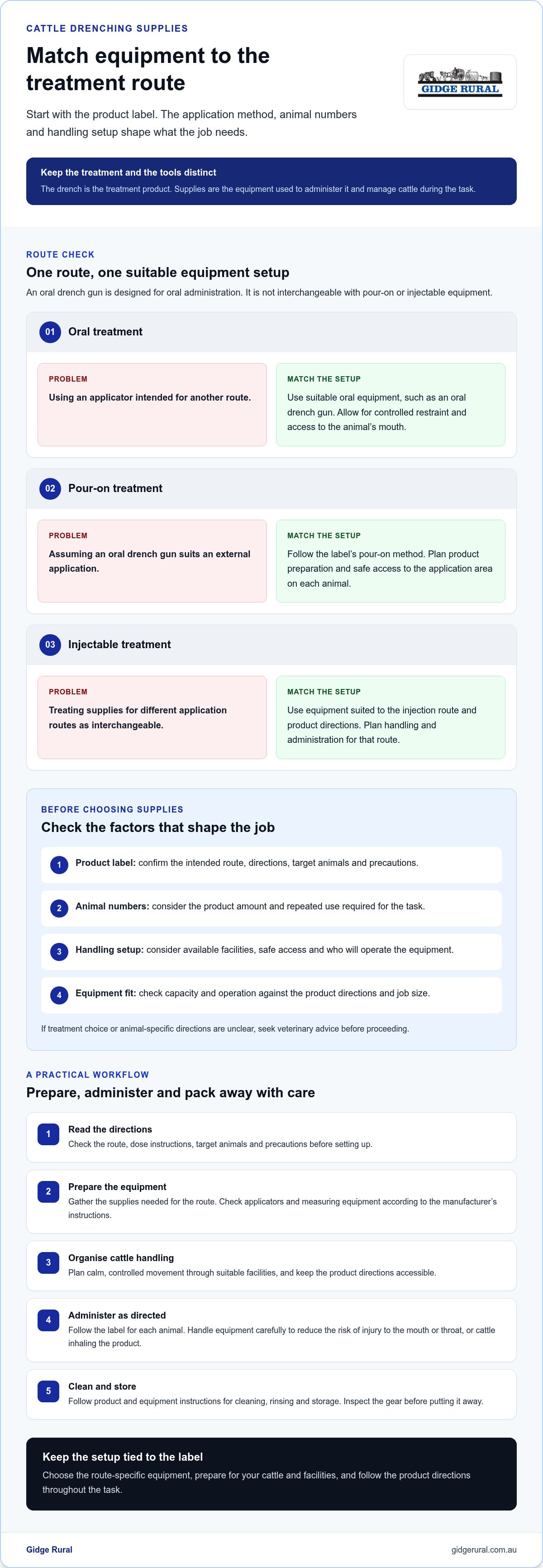
Oral drench guns are designed for oral administration. They aren’t interchangeable with equipment for pour-on or injectable treatments, which use different application routes and product directions.
What should you establish before selecting supplies?
Start by checking the product label. Confirm the intended route, directions and which animals the product is for. Then consider how many cattle you’ll handle, who’ll operate the equipment and what handling facilities are available. These details help determine what equipment and preparation the job requires. If you’re unsure about treatment choice or animal-specific directions, seek veterinary advice before proceeding. This gives you a practical basis for choosing cattle drenching supplies without confusing the treatment with the tools used to administer it.
How to match cattle drenching equipment to the treatment
The product label sets out the application route, so check whether the treatment is oral, pour-on or injectable before choosing equipment. Then match the setup to the product directions, number of cattle and handling facilities. This keeps your equipment choices tied to the task rather than simply to what’s familiar.
| Application method | Product directions | Animal numbers | Handling setup |
|---|---|---|---|
| Oral | Check the label for oral administration and its stated directions. | Consider the amount of product and repeated use required for the task. | Allow for controlled restraint and access to the animal’s mouth. |
| Pour-on | Use the application method and instructions specified on the label. | Plan how the product will be prepared and applied across the mob. | Arrange safe access to the application area on each animal. |
| Injectable | Follow the product’s specific directions for injection. | Consider how many animals are included in the treatment task. | Plan handling and administration for the stated route. |
Oral drench guns, containers and measuring equipment
An oral drench gun administers product by mouth. Containers hold or transfer product as needed, while measuring equipment helps prepare the amount directed by the label. Each item has a different role. Check that the equipment’s capacity and operation suit the product directions and job size; don’t assume one setup suits every herd or task. For practical guidance on technique and calibration, Zoetis outlines best practices for cattle drenching, including correct technique and equipment calibration.
How are oral, pour-on and injectable treatments different?
Oral treatments are administered by mouth, pour-on products are applied externally as directed, and injectable treatments follow an injection route. Each requires equipment suited to its method. An oral drench gun isn’t a pour-on applicator or injection equipment, and supplies for one route shouldn’t be assumed suitable for another. Check the label before setting up. To browse animal health products, visit Gidge Rural’s animal health range.
How to prepare for cattle drenching and use supplies responsibly
Use the product directions as the starting point for equipment setup and administration. They explain the application route and instructions for that treatment. Treatment choice and directions for individual animals can vary, so read the label and seek veterinary advice if you’re unsure. Don’t guess a dose or transfer directions from another product.
- Read the directions. Check the intended route, dose instructions, target animals and any precautions before setting up.
- Prepare the equipment. Gather the required supplies and check applicators and measuring equipment according to the manufacturer’s instructions.
- Organise handling. Plan calm, controlled movement through suitable cattle-handling facilities. Keep the product directions accessible during the task.
- Administer as directed. Follow the label for each animal. Handle equipment carefully to reduce the risk of injury to the mouth or throat, or cattle inhaling the product.
- Clean up. Follow product and equipment instructions for cleaning, rinsing and storage. Inspect the gear before putting it away.
Prepare equipment and cattle before treatment
Set out only the equipment needed for the planned application route. Check that measuring equipment and the applicator operate as the manufacturer directs, and keep the label close at hand. Plan how cattle will move through the facilities and how the operator will work safely. If an animal’s treatment or directions aren’t clear, pause and seek veterinary advice rather than improvising.
Clean and store drenching equipment after use
Cleaning instructions can depend on both the equipment and the product. Follow the relevant directions for rinsing and storage instead of using a one-size-fits-all method. Check for wear or damage before storing supplies. If equipment appears faulty, don’t rely on it for accurate administration. Resolve the issue before the next treatment.
A consistent routine helps keep cattle drenching supplies organised between jobs. Browse Gidge Rural’s animal health supplies as you prepare your equipment checklist.
Build a cattle drenching supplies checklist that fits your setup
A useful checklist reflects both the treatment and how cattle are handled on your property. Separate what the planned task requires from equipment that may help with your facilities or workflow. This keeps the list practical and reduces the chance of choosing supplies that don’t suit the product directions.
What belongs on a practical supply checklist?
Start with the label, then group the checklist by task. Mark each item as essential for this treatment or dependent on your setup.
- Treatment directions: Product label and any animal-specific instructions.
- Administration equipment: Applicator or other equipment suited to the product’s route.
- Measuring needs: Measuring equipment if the directions call for it.
- Handling setup: Access to the facilities and restraint needed to manage cattle calmly.
- After-use plan: Cleaning instructions, a suitable storage place and time to inspect equipment before its next use.
Keep optional items separate. Your handling arrangements may affect what extra equipment is useful, but they don’t change the product directions. Before the next job, check stored equipment for wear or damage and confirm it’s ready for its intended task.
Where do cattle drenching supplies fit in animal health planning?
Drenching equipment is one part of animal health planning. Keep the product, application method and intended animals clearly matched, and seek veterinary advice about treatment choices or animal-specific needs. Species matters too: don’t assume cattle products and equipment are suitable for horses. Use a broader animal health guide alongside this task checklist when planning your supplies.
Once you’ve identified what the job calls for, browse Gidge Rural’s animal health supplies for your property’s animal health needs.
Make your next treatment plan easier to manage
Keep your checklist as part of your property’s animal health planning. Review it before each treatment task and update it if the product, cattle being treated or handling arrangements change. Choosing cattle drenching supplies with those needs in mind helps you prepare before cattle are brought in and reduces last-minute uncertainty.
Before each job, check that equipment is in good condition and stored according to its instructions. If you have questions about treatment choices or animal-specific directions, seek veterinary advice before proceeding. A clear plan makes it easier to organise the task and supplies.
Gidge Rural sells animal health and medical supplies through its online shop and physical store. Browse the animal health range to find supplies for your property, and plan your next job with the product directions in hand.
Frequently Asked Questions
What equipment do you need to drench cattle?
The equipment depends on the treatment route and its label. For an oral drench, you may need a suitable drench gun, product container and measuring equipment if the directions call for it. You’ll also need a safe way to handle cattle and a plan for cleaning gear. Check the product instructions before gathering cattle so you can prepare the right equipment in advance.
Can you use the same drench gun for different cattle treatments?
Use the same gun only if it’s suitable for both products and can be cleaned as their instructions require. Product residues or incompatible cleaning methods may affect later use. Check the gun manufacturer’s guidance and each product label before switching treatments. A drench gun is designed for oral administration, so it isn’t a substitute for equipment intended for pour-on or injectable products.
How do you check a cattle drench gun is working correctly?
Follow the manufacturer’s instructions to inspect and check the gun before use. Look for visible damage, leaks, blockages or parts that don’t move as intended. If the instructions call for calibration, follow that method and use the specified measuring approach. Don’t rely on a faulty or inconsistent applicator. Resolve the problem before treating cattle so the equipment can deliver as directed.
How often should cattle be drenched?
There isn’t one schedule that suits every herd. Treatment timing depends on factors such as parasite risk, property conditions, cattle and the chosen product. Rather than drenching automatically at fixed intervals, use veterinary advice and relevant monitoring, such as worm egg counts, to help guide decisions. If treatment is needed, follow the product label and seek advice on a plan suited to your cattle.
Are oral drench, pour-on and injectable treatments interchangeable?
No. These treatments use different application routes, and the product directions specify how it must be given. An oral product shouldn’t be applied as a pour-on or injection, and equipment for one route shouldn’t be assumed suitable for another. Check the label for the product’s intended use and directions. If the route or suitability for an animal is unclear, seek veterinary advice before treatment.


