
A bathroom brush isn’t a substitute for horse grooming supplies. Horse brushes are designed for equine coats and skin, with bristle stiffness and size suited to the job. A basic grooming set includes a hoof pick, curry comb and body brush. Daily grooming helps keep the coat clean and gives you time to notice changes.
Choosing the right tools means removing dirt and loose hair without irritating sensitive skin, while keeping your kit organised and easy to reach. This guide explains how horse brushes differ from regular brushes and what to consider when choosing tools for your horse.
You’ll also learn how coat-care products fit into a grooming routine, which storage options keep brushes and combs together, and how to match your choices to your horse’s coat and needs.
Key Takeaways
- Choose brush stiffness to suit your horse’s coat and skin sensitivity, and use softer tools on delicate areas.
- Build a grooming routine around the tools’ jobs, from loosening debris to smoothing the coat.
- Pick a storage case that keeps brushes, combs and hoof-care tools together and easy to access.
- Match coat-care products to the task, such as easing tangles in the mane and tail.
Are horse grooming brushes different from regular brushes?
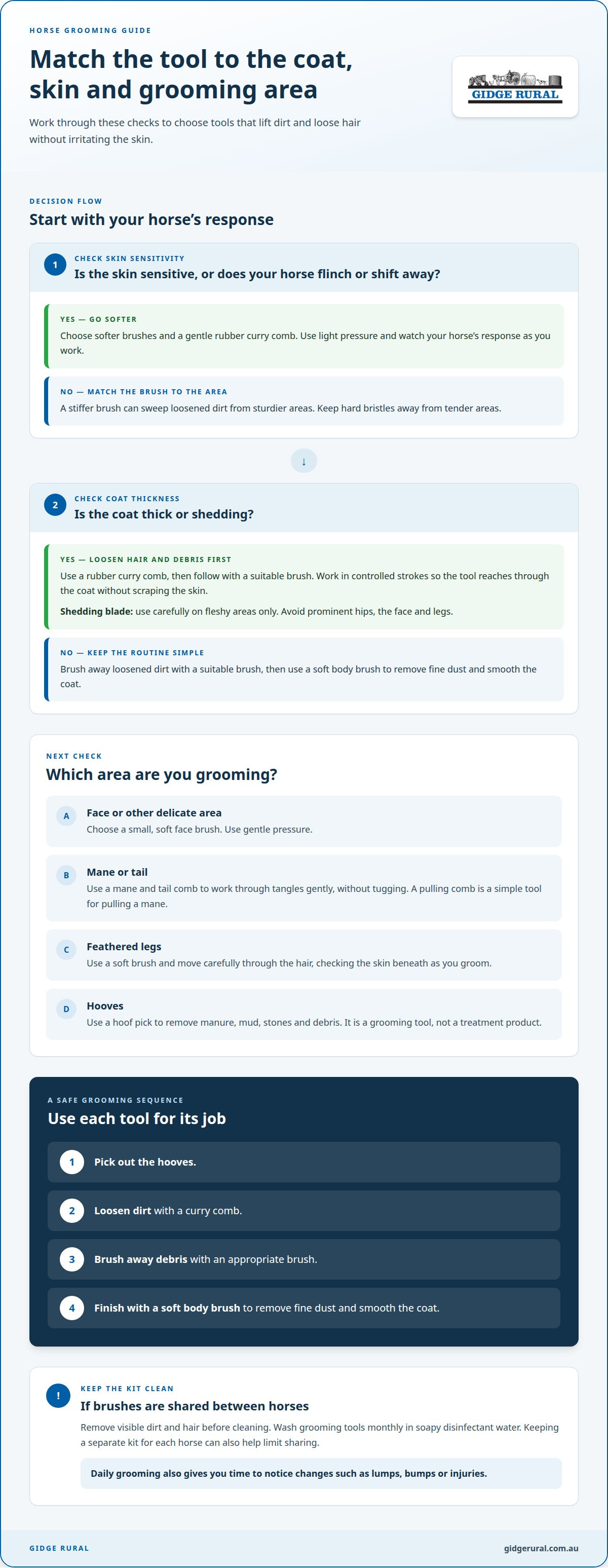
Yes. Horse brushes suit equine coats and skin, while human brushes aren’t designed for the same grooming jobs. Choose tools according to coat thickness, skin sensitivity and the area you’re grooming.
Brushes for Sensitive Horses and Thick Coats
For sensitive skin, choose softer brushes and a gentle rubber curry comb. Use light pressure and watch your horse’s response as you work. A soft body brush is suited to finishing the coat, while a stiffer brush helps sweep away loosened dirt from sturdier areas.
Thick coats can hold more dirt and shedding hair, so choose tools that reach through the coat without scraping the skin. A rubber curry comb can loosen debris and loose hair; follow it with a suitable brush. Use a shedding blade carefully on fleshy areas only, never over prominent hips, the face or legs.
Horse-Specific and Human Brushes
Horse-specific brushes have bristle stiffness and size suited to equine coats and skin. A human hairbrush is shaped for head hair, not for lifting stable dirt or grooming a horse’s larger body. A HAAS Diamond Wurzel Horse Brush is one example of a horse brush. Check a brush’s intended use and feel before choosing it.
A basic grooming kit includes a hoof pick, curry comb and body brush. For a safe sequence, pick out the hooves, use the curry comb to loosen dirt, brush away debris, then finish with a soft body brush. Daily grooming helps maintain the coat and gives you a chance to notice lumps, bumps or injuries.
When equipment is shared in Australia, cleaning and disinfecting brushes between horses is a practical biosecurity precaution. Wash grooming tools monthly in soapy disinfectant water, and remove visible dirt and hair before cleaning. Keeping a separate kit for each horse can also help limit sharing.
Choosing grooming tools for coat type and skin sensitivity
Match grooming tools to the horse’s coat and the area you’re working on. A thick or shedding coat may need a rubber curry comb to loosen hair and debris, while a soft body brush helps smooth the coat. For sensitive skin, use softer brushes and gentle pressure rather than a stiff brush on tender areas.
Check the bristles before each session. Choose a brush that lifts dirt without scraping the skin, and adjust your pressure if the horse flinches or shifts away. A dandy brush has hard bristles for sweeping away loosened dirt, so use it on suitable areas rather than delicate skin. A small, soft face brush is designed for sensitive areas around the face.
A shedding blade can help remove loose hair, but use it carefully on fleshy parts only. Avoid prominent hips, the face and legs, where the blade can be too harsh. On a thick coat, work in controlled strokes and finish with a softer brush to remove fine dust and smooth the hair.
For the mane and tail, use a mane and tail comb to work through tangles gently. A pulling comb is a simple tool for pulling a mane. For feathered legs, choose a soft brush and move carefully through the hair, checking the skin beneath as you groom.
Use this practical sequence to match each tool to its job:
- Loosen debris and shedding hair with a rubber curry comb.
- Sweep loosened dirt away with an appropriate stiff brush.
- Comb the mane and tail gently, working through tangles without tugging.
- Finish with a soft body brush to remove fine dust and polish the coat.
Choose tools that suit your horse’s coat today, then adjust as the coat changes. For grooming items suited to show preparation, explore grooming and show-prep supplies.
Grooming kit storage cases
A plastic grooming box, tote, fabric grooming tote or bucket can keep brushes and other kit items together. Choose a format to suit where you groom: a box works well in a fixed spot in the tack room, while a tote is easier to carry between storage and the horse. A bucket keeps tools accessible during a grooming session.
Start by listing what needs a place. A hoof pick, curry comb, body brush, mane and tail comb, and shedding blade all need space suited to their shapes. Check that the case can hold your current kit without forcing tools together. Leave room for additions, such as a face brush or coat-care products, if you use them.
Pockets help separate smaller items from larger brushes. The Deluxe Horse Riding Grooming Tote Bag has five external pockets, useful for sorting smaller tools from the main compartment. Keep frequently used items in accessible pockets and place larger brushes inside. This layout can make it easier to find a hoof pick without tipping out the rest of the kit.
Use a simple packing routine to keep the case organised:
- Place long-handled or larger brushes in the main compartment.
- Keep small tools, such as a hoof pick, in a separate pocket or section.
- Store coat-care products upright and apart from brushes.
- Return each item to its place after grooming.
Comfort matters when carrying a loaded tote. Consider the distance between your storage area and grooming spot, and how much equipment you usually take. A compact kit for routine grooming needs less space than one that includes tools for the mane, tail and coat. Choose a case you can carry steadily without overfilling it.
Before packing brushes away, remove visible dirt and loose hair. Keep damp tools separate until they’re dry, and avoid sealing wet items inside a case. A tidy kit helps you spot a missing tool before the next session and keeps the grooming area ready to use.
Horse coat-care products
Choose horse grooming supplies according to the task. A mane and tail detangler or conditioner helps manage tangles, while brushes remove dirt and loose hair. Match the product to the job rather than expecting one formula to suit every coat concern. A detangler, for example, is for mane and tail care, not hoof cleaning.
For hoof care, use a hoof pick to remove manure, mud, stones and debris from the hoof. It’s a grooming tool, not a treatment product. If you’re concerned about a hoof problem, grooming products alone aren’t a substitute for animal health advice.
Choose products labelled for horses, read the directions and ingredient list, and follow the stated use. Don’t assume a product intended for people or another animal is suitable for a horse—just as Royal Oodle designs grooming products tailored specifically to curly-coated dogs, equine formulas must be matched strictly to horse care. There’s no single ingredient blacklist for every product and use; follow the label and don’t apply a product outside its directions.
Use this simple selection process:
- Identify the task, such as loosening mane tangles or grooming the tail.
- Select a product labelled for that purpose and for horse use.
- Read the directions before applying it, and follow the stated amount and method.
- Keep the product separate from hoof tools and return it to storage after grooming.
NRG No-Nots Mane & Tail Detangler & Conditioner and Dr Show Mane & Tail Detangler are examples of named mane-and-tail products. Choose horse grooming supplies according to the task and directions, not a promised result. A tidy kit can hold a detangler alongside a mane and tail comb, keeping each item ready for its own job.
For a bath, a shedding blade can help remove sweat and water instead of a sweat scraper. Use it carefully on fleshy areas only, and avoid prominent hips, the face and legs. A tool suited to bathing isn’t automatically right for every part of the horse.
Ready to choose horse grooming supplies for your routine? Explore grooming and show-prep products and match your selection to the task at hand.
Gidge Rural
Gidge Rural supplies practical products for the wider needs of rural properties and animal care. Alongside planning a grooming routine, you may also need Premium Stockfeed, Fencing Supplies, Reticulation & Plumbing Equipment or Animal Health & Medical Supplies. These products support everyday property and animal-care needs beyond brushes, storage cases and coat products.
Turn to Gidge Rural when you’re organising supplies for your horse and property together. Keeping those broader needs in view can help you plan what belongs in your grooming kit and what supports the rest of your setup.
Contact Gidge Rural to discuss your rural supply needs.
Shape a grooming routine around your horse
Let your horse’s coat and response guide your next adjustment. If a brush leaves dust behind, change the order or choose a tool better suited to that area. If grooming causes your horse to move away or tense up, pause and reassess the pressure and brush softness before continuing.
A useful routine should also fit the work you do around the stable. Keep the tools you reach for together, and set aside products for specific jobs. As your horse’s coat changes, review whether your horse grooming supplies still suit its needs. Small changes to your kit can make each session more organised and purposeful.
Ready to take the next step? Explore grooming and show-prep supplies and choose items for your routine. You can also contact Gidge Rural about grooming supplies and related needs for your property. Start with the task you want to make easier, then build a practical setup around it. With a considered routine and the right tools at hand, you can make grooming a steady part of caring for your horse.
Frequently Asked Questions
What grooming supplies does a horse need for basic daily care?
For basic daily care, keep a hoof pick, curry comb and body brush ready. Add a mane and tail comb if you need to manage tangles. For example, after turnout, remove packed dirt from the hooves, then groom the coat according to its condition. A small face brush can help with delicate areas, while a suitable container keeps daily tools together.
What grooming kits for horses are available in Australia and what do they include?
Australian grooming kits range from basic tool groupings to sets with extra brushes and coat tools. A larger kit may contain a rubber curry comb, stiff brush, soft body brush, hoof pick, mane and tail comb, and shedding blade. Check the contents against your routine: a horse needing mane care may benefit from a comb, while a shedding tool suits particular coat-care tasks.
Which horse grooming brushes and tools are best for different coat types and seasons?
The best choice depends on coat density, skin sensitivity and the horse’s current coat. During a shedding period, a shedding blade may help on fleshy areas, but keep it away from the face, legs and prominent hips. For sensitive skin, favour softer brushes and gentle pressure. A thicker coat may need a curry comb to loosen hair before brushing; adjust your kit as the coat changes.
What grooming products are safe for horses and which ingredients should be avoided?
Choose products labelled for horses and the intended task, read the directions and ingredient list, and follow the stated use. There’s no general ingredient blacklist; don’t apply products outside their directions.
How much do horse grooming supplies cost in Australia?
Where to buy horse grooming supplies in Australia, including online and local tack shops?
Gidge Rural is identified as a supplier of practical horse and rural-property supplies; contact them to discuss your needs. The material does not identify online stores or local tack shops.


