
Hay, chaff, pellets and feed mixes are among the stockfeed types available for delivery in Australia. Stockfeed delivery can suit regular supply needs or planned top-ups, with timing shaped by the feed required, order size and delivery route. Knowing what you need and when supplies may run low makes planning easier.
Getting feed to a property can save a trip, but the practical details matter: which feed suits your animals, how far ahead to order and how deliveries fit your routine. This guide explains how to choose feed types, understand lead times and plan delivery schedules.
You’ll also find out how a rural supply store can help you source stockfeed alongside other property essentials. Use the guidance to prepare your next order and keep feed supplies on track.
Key Takeaways
- Compare hay, chaff, pellets and feed mixes to narrow down the stockfeed that suits your animals and routine.
- Plan orders around your feed needs and delivery arrangements so you can avoid running short.
- Consider how regular deliveries could help you maintain supplies and manage storage space.
- Gidge Rural provides dependable nationwide coverage, making it easier to source reliable stockfeed and other rural supplies wherever you operate.
What types of stock feed can be delivered?
Available feed depends on the supplier’s range, delivery route and order. Common categories include hay, chaff, pellets, grain-based mixes and bedding. Options may suit horses, cattle, sheep, poultry and birds. Orders could include lucerne hay, oaten chaff, layer pellets or wild bird mix. Match the feed type to the animals and their existing ration, rather than relying on a product name alone.
Delivery coverage depends on the supplier’s routes and your property address. Compare the available feed range, delivery arrangements and total cost. Check ingredient lists and product descriptions when comparing similar feeds: products that look alike may have different ingredients or intended uses. Labels can help you select feed suited to a particular animal and routine.
Keep product labels and order details together so you can check what arrives. Confirm the feed name, listed ingredients, batch or lot details where provided, and feeding directions. Compare the delivery with your order, especially when changing from hay to pellets or a mixed ration. Store feed in a dry, secure place, away from chemicals and animal treatments, to reduce the risk of moisture or contamination.
Delivery fees can depend on distance, weight, load size and handling. A small bag order and a hay load have different transport needs. Property access matters too: share details about narrow driveways, low branches, soft ground, turning space and the unloading point. This helps plan for the load and vehicle needed to reach the property.
Transport and biosecurity requirements can vary by goods, route, state and territory, so don’t assume one rule applies across Australia. Compare delivery coverage with your address and feed needs. Before ordering, confirm the product, quantity, address and storage plan. If feed arrives late, damaged or incorrect, note the issue and contact the supplier with your order details.
Order cut-off and lead time
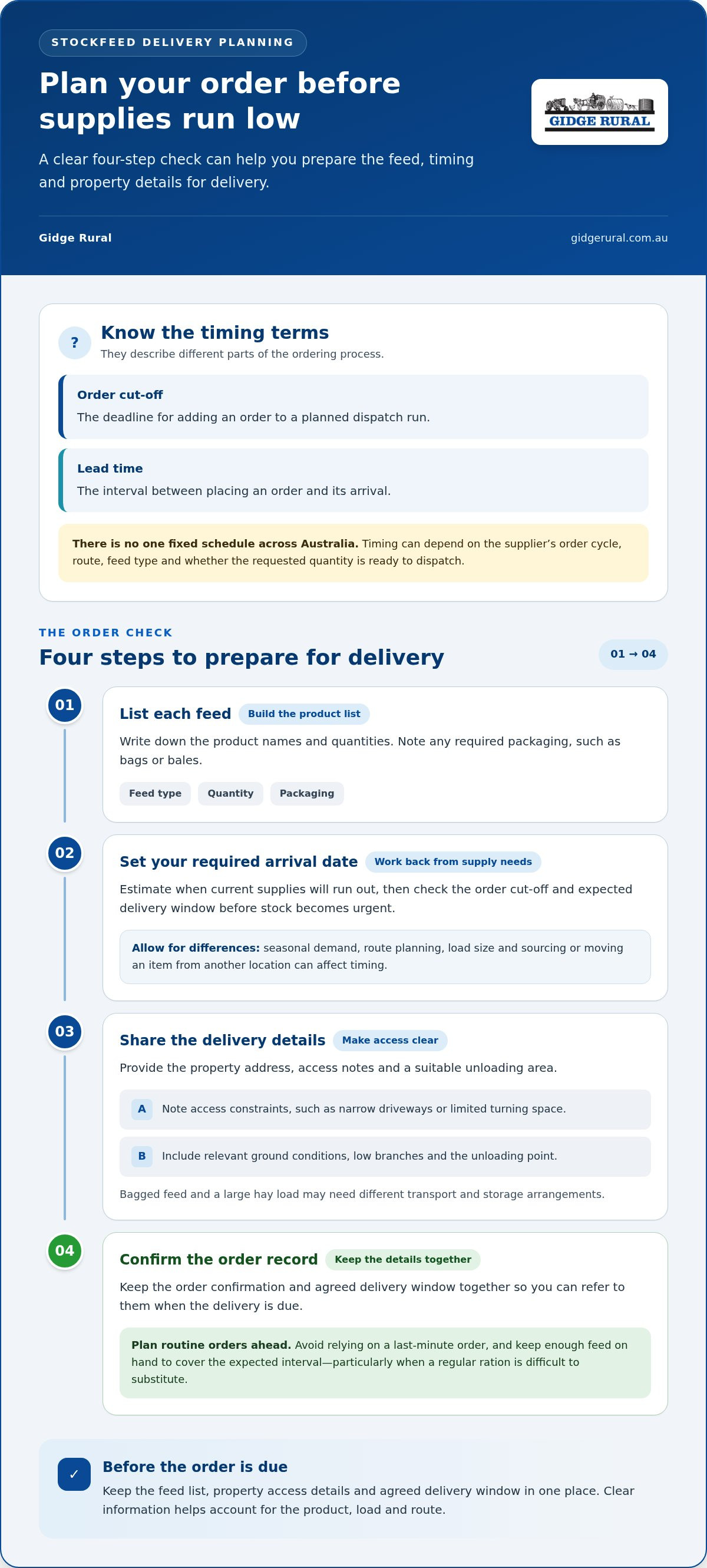
A delivery cut-off is the deadline for adding an order to a planned dispatch run. Lead time is the interval between placing an order and its arrival. Neither follows one fixed schedule across Australia. Timing depends on the supplier’s order cycle, route, feed type and whether the requested quantity is ready to dispatch.
Separate routine orders from urgent top-ups. Bagged feed may be handled differently from a large hay load because the products need different transport and storage arrangements. Sourcing or moving an item from another location can also affect timing. Find out the order cut-off and expected delivery window before supplies run low, especially if an animal relies on a specific ration.
Use this four-step order check to reduce avoidable delays:
- List each feed. Write down product names, quantities and any required packaging, such as bags or bales.
- Set your required arrival date. Work back from the point when current supplies will run out.
- Share the delivery details. Provide the property address, access notes and a suitable unloading area.
- Confirm the order record. Keep the order confirmation and agreed delivery window together.
Seasonal demand, route planning and load size can affect how orders are grouped. A mixed order of bagged feed and hay, for example, may need different handling from an order of one product. Give clear instructions when ordering and keep enough feed on hand to cover the expected interval. A buffer is useful when an animal’s regular feed is difficult to substitute without changing its routine.
For stockfeed delivery, place repeat orders before supplies become urgent, rather than relying on a last-minute run. If you’re planning an order, view feed ordering options and prepare the product list and property access details.
Delivery scheduling frequency
Some stockfeed customers choose weekly or fortnightly deliveries to maintain supplies and manage storage. Weekly drops may suit regular feed use or limited storage space; fortnightly orders can work when there’s room to store feed safely. Choose an interval based on consumption, storage capacity and the delivery arrangements available.
Estimate how quickly each feed runs out before choosing a delivery cycle. Consider which animals eat it, how much they use and whether several stock groups share the same feed. A property feeding cattle and poultry, for example, may need separate quantities and storage plans. Track actual use between orders and adjust the timing to match demand.
Use these steps to set a workable schedule:
- Separate feed types. Record how quickly hay, chaff or bagged feed is used.
- Check storage space. Make sure the planned quantity fits without blocking access to existing supplies.
- Choose a repeat interval. Compare weekly and fortnightly orders against usage and storage needs.
- Review after each delivery. Note what remains before the next order is due.
Regular scheduling can simplify feed planning, but a fixed interval needs room for change. A growing herd, a new animal or a change in feeding arrangements can affect how quickly supplies run down. Keep a simple record of order dates, feed types and remaining quantities to see when the schedule no longer fits.
Match each order to the delivery route and your storage capacity, rather than ordering by habit. A larger load can mean fewer deliveries, but it also needs more storage space. Smaller, more frequent orders can make storage easier, while requiring closer attention to order timing. Review the schedule when feed use or available storage changes.
Local delivery service
Stockfeed delivery across Australia can involve bagged feed, hay and repeat drops on planned routes. The available arrangements depend on the supplier, feed format, destination and load.
Available Delivery Services
Delivery may cover individual bags, bales or combined orders of different feeds. Repeat drops along planned routes can help properties manage regular demand. Compare what each arrangement includes: transport to the property, delivery and unloading. A hay load and several bags of pellets need different vehicle space and handling.
Local Service Coverage
Local coverage means the supplier’s delivery routes include the property’s town or district. A nearby supplier may know local roads and property access, but the delivery address still determines whether a route suits the order. Give the suburb or locality, property entrance and preferred unloading point when arranging delivery. These details help establish the practical route and drop-off plan.
For a rural address, describe the driveway surface, turning space, gates and any low branches. Explain whether the delivery point is near a feed shed or another accessible storage area. For example, a narrow entrance may affect where a vehicle can unload. Clear access details help prevent confusion on delivery day and make the order easier to handle.
Choose a delivery format that suits how you store and use feed. Bagged supplies may be easier to place in a shed, while hay bales need suitable storage space. Ask how mixed products are grouped and where the load will be left. Keep the order list and delivery address consistent, particularly at properties with multiple entrances.
Local service is most useful when the route, load and drop-off point fit the property. For feed suited to your requirements, arrange a local stockfeed order with clear delivery details.
Gidge Rural: Premium Stockfeed
Gidge Rural offers Premium Stockfeed for property owners and farmers planning feed supplies for their animals. It’s a rural supply store serving customers across Australia, with feed needs alongside practical property requirements.
Gidge Rural also stocks Fencing Supplies, Reticulation & Plumbing Equipment, and Animal Health & Medical Supplies. These categories can help you organise related rural purchases with your feed. List the feed types and quantities you need, then add any fencing, water equipment or animal health supplies to your shopping plan.
Choose Gidge Rural for premium stockfeed and related rural supplies. Visit the Gidge Rural website to view the range and plan your order.
Plan your next order with confidence
Turn your feed needs into a simple order plan: note what your animals use, what remains in storage and when you expect to need more. This gives you a practical basis for arranging the next order around your property’s routine.
Before placing an order, gather the details the supplier needs: feed type, quantity, delivery address and access information. Keeping them together makes it easier to plan the order and drop-off.
When you’re ready to discuss delivery, contact Gidge Rural about delivery. A clear order plan is a practical way to keep your supplies organised.
Frequently Asked Questions
Is there a minimum order for feed delivery?
Minimum order requirements vary by supplier and delivery arrangement. A minimum may depend on product type, load size or whether an order joins a scheduled route. For a small order, compare the product quantity with any freight charge. For a larger load, consider whether you have enough storage and suitable unloading access.
What types of stockfeed can be delivered, including bulk and bagged feed?
Stockfeed deliveries can include baled hay, bagged chaff, pellets and formulated mixes. Bulk feed may also be available when the supplier and delivery vehicle can handle loose loads. The format affects storage and unloading: bags can be stacked in a suitable shed, while bales and bulk loads need clear placement space. Check the label for ingredients and intended animals.
What are typical stockfeed delivery prices and minimum order quantities?
There is no single national delivery price or minimum quantity. Product type, order weight, distance and load size affect the total, and suppliers set their own minimum order conditions. Compare feed costs and freight separately. At Gidge Rural, displayed product prices include tax, and shipping is calculated at checkout, so the final amount depends on your selected order and delivery details.
How long does stockfeed delivery take, and can I book a delivery time?
Gidge Rural product pages state, “Usually ready in 2-3 days,” and display “Expected delivery date: 24 Oct.” Readiness time and an arrival appointment are different details; the listed timing does not provide a clock-time booking. Plan for the stated delivery date, keep the unloading area accessible, and arrange someone to receive the order if the property needs supervised drop-off.
How are stockfeed delivery fees calculated by distance, weight, or load size?
Delivery fees can depend on distance, weight, load size and handling. A small bag order and a hay load have different transport needs.


