

TL;DR: Select farm fencing posts based on terrain: use steel for rocky or marshy ground to prevent rot and breakage, and timber for sandy flats.
- Timber strainers often fail within 5 years in wet clay or granite paddocks due to rot.
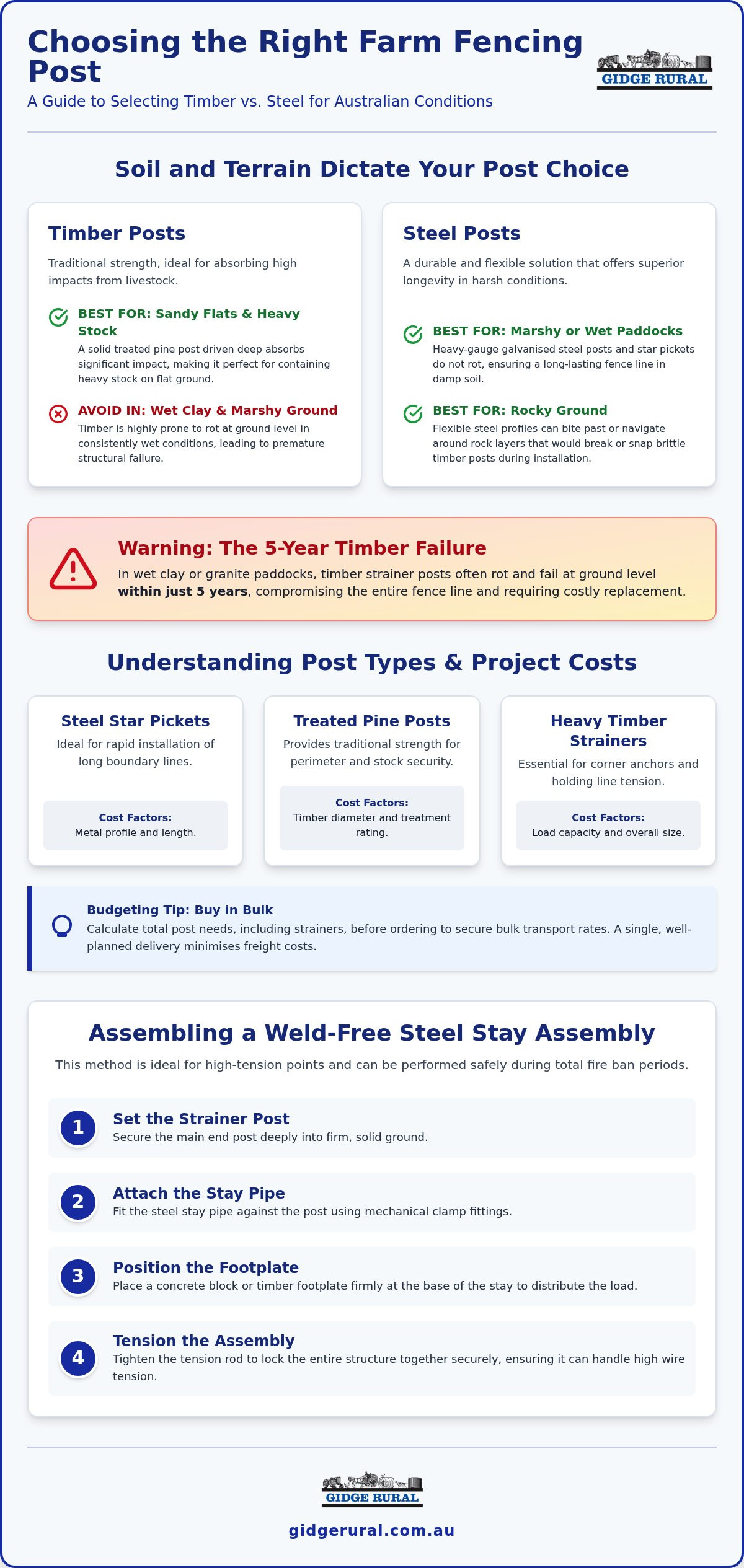
- Use timber posts for sandy flats or heavy stock areas, but avoid them in wet clay to prevent structural failure.
- Therefore, use weld-free steel stay assemblies for high-tension terminal points during total fire ban periods.
- The article demonstrates that steel profiles bite past rock layers more effectively than timber during installation. Current market analysis shows rural fencing (farm fencing posts) and complete strainer assemblies vary across Australian suppliers based on material gauge and timber treatment. The overall investment depends heavily on selected fence post models (material specifications) and local delivery factors: which post suits your soil and stock, how volume and freight shape the bill, and when steel replaces timber before rot or rock wrecks the line. Contact regional suppliers directly to receive an accurate, personalised quote for your specific property layout.
3 Rural setups and the right post for you
Matching your specific land layout and livestock to exact material specifications (fence post models) prevents premature structure failure. Three common situations guide the first choice:
- Marshy or wet paddocks: timber rots fast at ground level, so use steel star pickets or heavy-gauge galvanised steel.
- Rocky ground: brittle posts snap on drive-in, so choose flexible steel that can work past rock.
- Flats with heavy stock: a solid treated pine post (RL5 post) driven deep absorbs impact; on slopes, add a reinforced fence end post (strainer) to hold line wire tension across uneven ground.
With clients we see that selecting timber for marshy paddocks leads to rapid timber rot at ground level. Wet soil demands steel star pickets or heavy-gauge galvanised steel instead.
Different environments demand distinct physical post characteristics. Standard agricultural fencing (Wikipedia 2026) varies across geographical regions depending on local topography and the animals contained. Rocky terrain breaks brittle posts, making flexible steel the practical choice. Flats with heavy stock need a solid treated pine post driven deep to absorb high impact. Sloped paddocks need a reinforced fence end post to hold line wire tension across uneven ground.
Heavy stock requires substantial support hardware. If you install large fencing gates (farm gate), identify the right gudgeons and strap hinges to support the weight of heavy-duty farm gates Perth Hills properties require for livestock security. Browse materials at Gidge Rural | Stockfeed, Fencing Supplies & General Hardware to match posts and hinges to your terrain.
Volume and gauge set your real post spend
Calculating rural fencing expenses requires assessing material specifications, order volume, and freight costs together. Your choice of fence post models drives the total project investment. Heavy steel star pickets suit quick installations across long boundaries. Treated pine post timber options provide traditional strength for livestock enclosures. A strong fence end post costs more initially due to timber volume and specialized structural requirements. According to the Australian Bureau of Statistics 2000 publication, agricultural land usage shapes structural infrastructure demands across properties. Selecting thicker metal wall thickness (gauge) increases initial expenditure while providing long-term durability against cattle pressure. You can read current News, tagged "Farm Fencing" to stay informed on regional supply trends.
| Post Type | Ideal Application | Cost Factors |
|---|---|---|
| Steel Star Pickets | Rapid boundary lines | Metal profile and length |
| Treated Pine Posts | Perimeter security | Timber diameter and rating |
| Heavy Timber Strainers | Corner anchors | Load capacity and size |
Ordering materials in volume significantly reduces total delivery overheads per unit. Transporting heavy timbers individually inflates freight fees rapidly; buying full pallets optimizes delivery logistics and protects your overall project budget. Whether sourcing locally or browsing online trade merchants like Romford Fencing Ltd to estimate fencing packs and timber supplies, ordering in bulk keeps project expenses manageable. Planning layout counts early avoids expensive top-up deliveries.
Tip: Calculate total post needs including strainers before ordering to secure bulk transport rates.
One user posted this feedback on the productreview.com.au discussion titled "Rural Store":
"However, shopping at the Rural Store offers a completely different experience. I've been consistently surprised by how quickly my orders arrive." (source)
Quick delivery from suppliers like Rural Store keeps fencing projects on budget by preventing costly site downtime, and fast turnaround on orders keeps bulk transport runs efficient. Ask for a landed quote that includes pallet freight so you can compare gauge options on equal terms.
Load maths and weld-free gate stays that hold
Calculating precise load capacities prevents fence end post failure and sagging gates. Gate width drastically increases rotational force, so heavier timber thickness (gauge) is needed to resist pull. Identify the right gudgeons and strap hinges to support the weight of heavy-duty fencing gates Perth Hills properties require for livestock security, and match post depth to the overall load.
Follow this step-by-step setup to assemble stays without welding:
- Set the strainer: Secure the main end post deeply into firm ground.
- Attach the stay: Fit the steel stay pipe against the post using mechanical clamp fittings.
- Position the footplate: Place a concrete block or timber footplate firmly at the stay base.
- Tension the assembly: Tighten the tension rod to lock the structure together securely.
Correct setup ensures your fence handles heavy tension, even when integrating custom Electric Fencing systems. Choose a treated pine post for high-impact end points. Proper assembly also keeps work viable on total fire ban days.
A commenter in the rotechrural.com.au thread "Customer Testimonials: Why People Love Our Products":
"Rotech Rural stay assemblies are easy to use, especially on total fire bans as there is no welding needed and we can keep operating without risk" (source)
Weld-free stay assemblies allow landowners to install strainers during fire bans without stopping work, removing ignition risk while keeping structural strength for farm posts. If your gate line is still on the drawing board, request a hardware list sized to your opening width and stock load.
When timber post strainers fail your budget
Installing wood uprights in wet clay or rocky ground often creates a money pit. In our fencing project reviews, we regularly see traditional timber rotting below the waterline within five years. Hard ground pushes moisture into natural grain fissures, forcing premature structural failure that destroys your initial installation savings.
Situation: wet clay or granite paddocks punish timber ends. Solution: switch terminal points to steel assemblies that hold alignment without ground movement. Result: you cut repeated replacement labour and keep wire tension stable for the life of the line, so high-grade steel costs less over time than rebuilding broken timber twice.
Rocky paddocks shatter timber ends during driving, while soft clay lets them shift out of plumb. Steel profiles bite past rock layers easily, creating rigid terminal points that support heavy livestock loads without bracing failure. To secure perimeter wires cleanly, pick up quality Fencing Accessories for long-term stability.
Timber suits sandy flats; steel is the stronger call on wet or rocky ground. Using a treated pine post in boggy soil wastes labour, and you end up replacing each fence end post before the main wire line even sags.
Plan wire, hinges, and panel access before the truck
Ordering mesh options, post accessories, and oversized panels requires planning your site access before transport trucks arrive. Oversized loads can struggle on tight rural driveways, so verify turn-around space for delivery drivers beforehand.
From site visits, landowners often underestimate how much space heavy freight vehicles need. Panel delivery on regional routes often involves large flatbed trucks that require wide clearance. Choosing pre-assembled panels speeds up setup time, yet site access still decides whether those freight trucks can unload safely.
You also need matching hardware to build secure borders. Standard rural fencing requires the right wire mesh and tensioners. Heavy fencing gates demand correct gudgeons and strap hinges; these hinges support heavy weight on Perth Hills properties for livestock security.
Similarly, ensuring the functional safety of residential entryways is a key part of property upkeep; for professional service in Melbourne, We Do Garage Doors specialises in garage door repairs and maintenance.
Small accessories matter as much as main posts. Proper clips and tie wire keep stability under pressure. Wire mesh thickness (gauge) influences both final strength and overall weight. Matching your post material specifications to wire tension prevents sagging later.
Bulk orders cut regional freight rates per item significantly. Planning delivery routes early avoids unexpected transport delays and costly offloading issues when access is tight.
Writing on productreview.com.au inside the "Rural Store" thread, a customer noted:
"I have relied on ruralstore for a long time. Good range and if a product is not in stock they arrange for a next best option or a full refund." (source)
Reliable supplier logistics make a clear difference when coordinating heavy fence posts and panel deliveries across regional routes. Flexible inventory management helps keep farm projects on schedule even during stock shortages. Confirm driveway clearance and hinge specs with your supplier before the delivery date is locked.
Frequently asked questions
What are the price ranges for each product?
Overall costs depend on total length, post type, and shipping distances. Ask for a personalized quote to get exact costs for your boundary line.
What is the price of a treated pine post RL5?
Rates for a rural fencing treated pine post vary by order volume and length. Request a custom quote to plan your exact budget.
What sizes and gauges are available for strainers?
Sizes for each fence end post depend on your soil type and tension needs. You can choose different dimensions and wall thickness (gauge) options based on available material specifications.
What fence post brands are available?
We supply durable fence post models built to handle tough outdoor conditions. Ask our team for current inventory details.
What rural fencing products are offered?
We stock rural fencing items including strong posts, wires, and heavy-duty fencing gates. Heavy gates require specific gudgeons and strap hinges to support livestock security loads.
Soil, stock, and load decide your post mix
Choosing the correct rural fencing still comes down to the same questions opened at the start: soil type, structural load, and whether timber or steel will hold tension without early failure.
In day-to-day agricultural work, property owners often overlook how ground moisture affects long-term stability. Selecting suitable timber or steel components prevents structural leaning over time. For heavy-duty farm gates Perth Hills installations require, identify the right gudgeons and strap hinges to support the total weight and maintain livestock security. Correct material specifications prevent premature sagging, and strainer (fence end post) selection dictates overall tension.
The technical team at Gidge Rural provides custom load calculations and bulk material quotes for your property in 2026. Contact the advisers to walk through your layout, gauge choices, and delivery plan.


