

The feed with the lowest price or the broadest label isn’t automatically the right choice. Working out how to choose the right livestock feed can feel like guesswork when animals, production goals and available feed sources all differ.
A suitable option depends on the livestock class and condition, the purpose of feeding and what else is in the ration. Even animals of the same species may have different needs at different life stages or under different conditions.
This guide explains what to assess before you buy, from feed type and product information to existing forage, storage and budget. You’ll learn how to compare options against your stock’s needs and when to seek tailored advice before changing a ration. Gidge Rural sells premium stockfeed through its online shop and physical store. Check current product information and feeding directions before deciding which option to buy.
Key Takeaways
- To understand how to choose the right livestock feed, start with your animals’ species, life stage, condition and management goals.
- Compare pasture, hay, grains and supplementary or complete feeds by their intended role, not by broad claims.
- Check each product’s intended animals, purpose, ingredients, analysis and feeding directions, where stated.
- Before changing a ration, review what your stock already receive and confirm any unclear product details or questions about suitability.
How to choose the right livestock feed for your animals and goals
Suitable livestock feed matches the animals’ needs, the reason for feeding and the conditions on hand. To work out how to choose the right livestock feed, start with your stock and their current situation, not a product claim. Species, age, life stage, body condition and management goals all affect what to consider. The animal feed overview introduces terms such as forage and compound feed. For a broader look at stockfeed, refer to a premium stockfeed guide.
Start with the livestock, not the product label
First, identify the animals that will receive the feed and their life stage. Young animals, breeding animals and stock at maintenance can have different feeding considerations. The same applies to animals kept for growth or work. Note their body condition and any recent changes in management. These details give you a clear basis for comparing products without assuming one feed suits every animal or attempting to prescribe a ration.
Check the wider feeding situation
Feed is only one part of the picture. Before comparing supplementary options, record what the animals already eat and what’s currently available:
- Pasture condition and access
- Forage or hay currently fed
- Water access
- Other feeds and established feeding practices
Availability can change with conditions, so a feed that suited the situation earlier may need to be reassessed. Note what has changed and what you’re trying to address. This gives you a practical basis for comparing products and checking their directions, rather than adding feed without considering the existing diet.
Keep these notes handy when browsing stockfeed categories. Gidge Rural sells premium stockfeed online and through its physical store. Check current product availability and directions before deciding whether an option fits your animals and feeding purpose.
Compare livestock feed types by purpose, not by broad claims
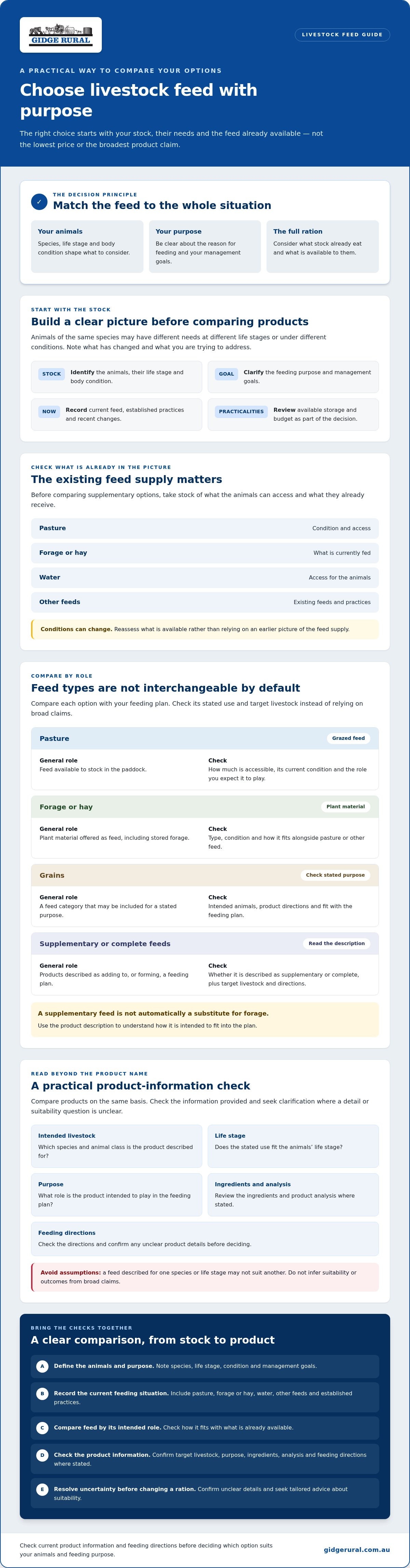
Feed categories serve different roles, so compare each option with your feeding plan rather than assuming one can replace another. Pasture, hay, grain and formulated feeds can differ in purpose and directions. Use the product’s stated use and target livestock to guide your checks. Understanding Livestock Feed Types also explains why form and product details matter when comparing options.
| Feed type | General role | What to check |
|---|---|---|
| Pasture | Grazed feed available to stock in the paddock. | How much is accessible, its current condition and whether it meets the role you expect it to play. |
| Forage or hay | Plant material offered as feed, including stored forage. | What type it is, its condition and how it fits alongside pasture or other feed. |
| Grains | A feed category that may be included for a stated purpose. | Which animals it’s intended for, its directions and how it fits the rest of the feeding plan. |
| Supplementary or complete feeds | Products described as adding to, or forming, a feeding plan. | Whether the label describes it as supplementary or complete, plus its target livestock and directions. |
Understand forage and supplementary feed
Think of pasture and forage as the existing feed supply, then assess whether an additional product has a clear role. Pasture quality and availability vary with conditions, so check what your animals can access now rather than relying on a general assumption. A supplementary feed isn’t automatically a substitute for forage. Check the product description to understand how the feed is intended to fit into the plan.
Compare options against their intended use
For each product, compare the stated purpose, target livestock and feeding directions. A feed suitable for one species or life stage may not suit another. Don’t infer suitability or outcomes from broad claims. Check the product information and ask for clarification if anything is unclear. To explore available options, browse Gidge Rural’s premium stockfeed and confirm current product details before choosing.
Use labels and feeding directions to assess livestock feed
Product labels and descriptions help you check whether a feed matches the animals and purpose you’ve identified. Read the full information, not just the product name or a broad quality claim. The guide to understanding livestock feed types also explains why details such as feed form and protein content can matter when comparing options.
What to check on a feed label or product description
Use this checklist to compare products on the same basis:
- Intended species and animal class: Check which livestock the product is described for and whether it suits the animals’ life stage.
- Feeding purpose: Look for the stated role, such as supplementary or complete feed, where specified.
- Ingredients and analysis: Review the listed ingredients and any nutritional analysis provided. Compare like with like rather than treating different categories as equivalent.
- Directions: Read the feeding instructions and any species-specific guidance. Don’t assume directions for one product apply to another.
A higher price or a broad claim such as “premium” doesn’t, by itself, show that a feed suits your stock. Check the details against your intended use. If information is missing or unclear, ask the retailer or manufacturer for clarification before buying.
When to pause before changing feed
If an animal has a health concern or its feeding needs are complex, seek advice from a veterinarian or suitably qualified animal nutrition professional before making a change. Avoid abrupt ration changes, and follow the product’s directions alongside appropriate professional guidance. Animal health products aren’t a substitute for advice about feed suitability.
Once you’ve identified the details to check, browse Gidge Rural’s stockfeed options. Review the current product information and directions before deciding whether a feed fits your animals and feeding plan.
Choose a livestock feed and plan your next step
You’ve compared feed types and checked product information. Now turn those notes into a clear buying decision. Knowing how to choose the right livestock feed means checking that the option fits your animals, its intended purpose and your current feeding plan, rather than relying on a broad claim alone.
A simple final check before buying
Work through these points before committing to a change:
- Identify the stock: Confirm the intended livestock and relevant life stage match the product information.
- Define the purpose: Be clear about the role you expect the feed to play.
- Review current feed: Consider what animals already receive, including pasture or forage.
- Check directions: Read the product’s feeding instructions and confirm anything that’s unclear.
Then consider practicalities. Check that you have suitable storage and think about how much feed your plan requires. Ask the supplier about current product information and availability, and write down any unanswered questions. If suitability depends on a health concern or complex feeding needs, pause and seek appropriate professional advice before changing the ration.
Find stockfeed options through Gidge Rural
Gidge Rural sells premium stockfeed through its online shop and physical store. Browse the available options, then check the specific product details and directions before deciding. Product range and availability can change, so confirm current information rather than assuming an item is available or suitable for a particular animal.
Ready to compare options? Browse Gidge Rural stockfeed and use your notes to guide the next step.
Make your next feed choice with confidence
A sound feed choice starts with your livestock, their needs and the purpose of feeding. Knowing how to choose the right livestock feed means considering what stock already receive, then comparing product information and directions against your situation. Feed type and broad quality claims alone aren’t enough to confirm suitability.
Before you buy, check that the product’s intended animals and feeding purpose align with your plan. Review the full directions, consider practical needs such as storage and note any questions that need an answer. If health concerns or complex feeding needs are involved, seek appropriate professional advice before changing a ration.
Gidge Rural sells premium stockfeed through its online shop and physical store. Take your notes with you as you compare options, and confirm current product information before deciding. Browse Gidge Rural stockfeed to explore available options and take your next step.
Frequently Asked Questions
How do I choose the right feed for my livestock?
Start by identifying your animals, their life stage and the purpose of feeding. Then assess the pasture or forage available and what the stock currently receive. Compare products intended for that situation, paying attention to ingredients, analysis and feeding directions where provided. If your animals have health concerns or their needs are difficult to assess, seek suitable professional advice rather than relying on a general guide.
Can one type of livestock feed suit all animals?
No, don’t assume one feed suits every animal. Species, age, life stage, body condition, management goals and the rest of the diet all affect suitability. Check the product’s intended use and directions against your stock’s circumstances. For example, a product described for one species or life stage may not be appropriate for another. If the information doesn’t clearly fit, ask the supplier or a qualified adviser before feeding it.
What should I look for on a livestock feed label?
Check the stated purpose, intended livestock, ingredients, nutritional analysis and feeding directions, where these details are provided. Compare products on the same basis rather than relying on broad claims or product names alone. Read the full description and note any information that’s missing or unclear. Ask the supplier or manufacturer for clarification before buying or changing what you feed if you can’t confirm the product suits your animals.
Should I change livestock feed gradually?
Don’t make a sudden or substantial feed change based only on general guidance. Follow the product directions and seek advice suited to your animals and circumstances, particularly if health concerns or complex feeding needs are involved. The appropriate way to change a feeding plan can depend on the livestock and the feeds concerned. If you’re unsure, check with a veterinarian or suitably qualified animal nutrition professional before making a change.
Is pasture enough for livestock, or do they need supplementary feed?
It depends on the animals, their needs, pasture availability and the wider feeding plan. A general article can’t confirm whether pasture alone is suitable for a particular group. Assess the stock and the feed they can access, then seek qualified advice if you’re uncertain. Choose supplementary feed for a clear purpose, check that it’s intended for your livestock and follow its directions rather than assuming every supplement is suitable.


