
A familiar treat or a nibble from the garden can carry risks an alpaca owner may not expect. Knowing what not to feed alpacas isn’t always simple: food that’s harmless to people may upset an alpaca, and some garden or pasture plants are toxic.
It’s understandable to feel unsure about scraps, treats and feed labels. Mould, contamination and sudden diet changes can also add to the risk. This guide explains which foods, plants and feed conditions to avoid, and how to limit access to hazards around paddocks and yards.
You’ll also learn how to check feed before offering it, introduce planned changes gradually and respond if an alpaca eats something concerning. Knowing what the item was and when it was eaten can help you give a veterinarian useful information.
Key Takeaways
- Learn what not to feed alpacas, from unverified human foods to spoiled or unsuitable feed.
- Check garden and pasture plants, and don’t assume feeding advice for other livestock applies to alpacas.
- Use a simple feed-checking routine and get expert advice before making diet changes.
- If an alpaca eats something concerning, remove access to it and contact a veterinarian with details about the item and when it was eaten.
What not to feed alpacas: start with the main risk categories
Start by avoiding unverified human foods, toxic plants, and spoiled or unsuitable feed. The answer to what not to feed alpacas depends on the item and the animal. Don’t assume that every food is either safe or poisonous without checking.
Alpacas are camelids, and their digestive system differs from those of horses, cattle and sheep. Feeding advice for those species may not transfer directly. For background, read about the Alpaca digestive system. Check the feed label for its intended species and ingredients. If suitability for alpacas is unclear, ask an alpaca-experienced veterinarian or nutrition adviser before offering it.
For a general look at common ownership mistakes, watch this video:
Why familiar treats are not automatically suitable
Fruit, vegetables, bread and kitchen scraps aren’t automatically suitable treats. Whether an item is appropriate can depend on the food, how it’s prepared, the portion offered and the alpaca’s health. Check with an alpaca-experienced veterinarian or nutrition adviser before offering unfamiliar foods. This is different from avoiding a known hazard: if an item’s safety is uncertain, get advice rather than guessing.
Feed condition matters as much as feed type
Withhold feed that is mouldy, damp or contaminated, or has unknown ingredients, until you can get advice. Don’t rely on appearance alone if you suspect contamination. Spoiled feed is a separate concern from a fresh batch or a planned change in feed type. Check the label and condition of each batch, and seek guidance before changing the diet.
Feed labels and species suitability matter because ingredients and intended use help you judge whether a feed is appropriate for an alpaca.
Potentially toxic plants and risky foods: what alpaca owners should check
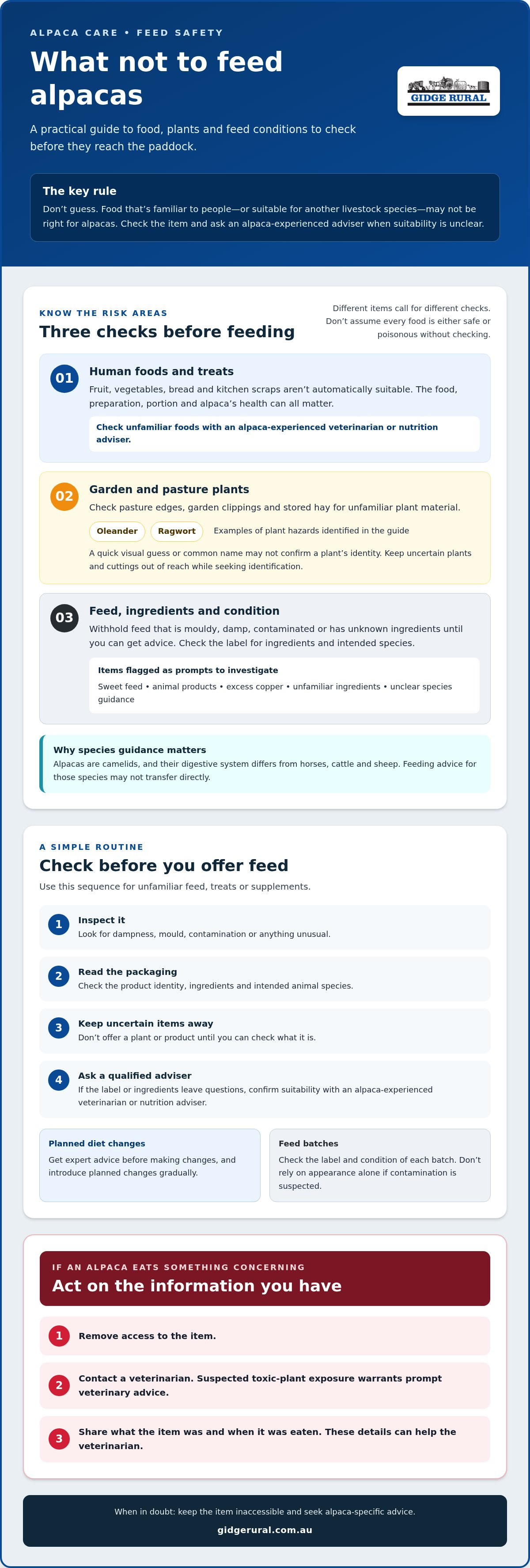
Check three areas: human foods and treats, garden or pasture plants, and feed with unknown or unsuitable ingredients. The Open Sanctuary Project lists items such as sweet feed, animal products and excess copper among things that can be toxic to alpacas. Use these as prompts to check ingredients and seek alpaca-specific advice, not as a substitute for veterinary guidance.
How to check plants in paddocks and feed areas
Inspect pasture edges, garden clippings and stored hay for unfamiliar plant material. Oleander and ragwort are examples of plants identified as hazards, but a common name or quick visual guess isn’t enough to confirm a plant’s identity. Keep uncertain plants and cuttings out of reach while you seek identification from a suitable expert. Suspected toxic-plant exposure warrants prompt veterinary advice.
Treats and supplements need a suitability check
Don’t assume fruit, vegetables, scraps or supplements are suitable just because another livestock species eats them. Read the label, check the ingredients and confirm the product is appropriate for alpacas with an alpaca-experienced veterinarian or nutrition adviser. For general feed-selection context, see this premium stockfeed guide. It isn’t approval for use with alpacas. You can also check product labels in Gidge Rural’s stockfeed range, alongside expert advice.
When deciding what not to feed alpacas, the ingredient list matters as much as the product name. Check for unfamiliar ingredients, unsuitable mineral levels or unclear species guidance before offering a feed or supplement. If you can’t confirm what a plant or product is, keep it inaccessible until it has been checked.
How to reduce feeding risks without making sudden diet changes
A consistent check before feeding can catch problems early. Confirm what the feed is, which species it’s intended for and whether it’s clean and in good condition. If the label is unclear or doesn’t confirm suitability for alpacas, pause and ask an alpaca-experienced veterinarian or nutrition adviser rather than guessing.
A simple check before offering feed
Use this sequence when checking an unfamiliar feed:
- Inspect it: Look for dampness, mould, contamination or anything unusual.
- Read the packaging: Check the product identity, ingredients and intended animal species.
- Remove uncertainty: Keep unknown items away from alpacas while you check what they are.
- Ask for advice: Confirm suitability with a qualified adviser if the label or ingredients leave questions.
Inspect the feed, check its label, remove unknown items and seek expert advice before offering anything uncertain.
Don’t confuse a planned diet change with spoiled or suspect feed. For a planned change, ask an alpaca-experienced adviser how to make the transition. The supplied guidance recommends changing gradually over 10 to 14 days to give the digestive system time to adapt. If feed appears spoiled or contaminated, withhold it instead of mixing it into the usual ration.
Keep access to hazards under control
Store feed cleanly and protect it from dampness and contamination. Remove spilled or spoiled feed promptly. Secure rubbish, garden clippings, unfamiliar plants and stored feeds so alpacas can’t reach them. For general property preparedness, consider animal health supplies for property owners. This is not treatment advice.
Reviewing Gidge Rural’s stockfeed range can help you check product information against the label and expert advice. Don’t assume a feed is suitable for alpacas unless its intended use is clear and an appropriate adviser confirms it.
What to do if an alpaca eats something it shouldn't
If you suspect an alpaca has eaten a risky food, plant or feed, act promptly. Move the animal away from the item and prevent others from reaching it. If it’s safe, keep a sample or the packaging, or take a clear photograph of the plant or product. Contact a local clinic or an established regional team such as West Gippsland Vet Care for advice. Don’t wait for signs to appear if you’re concerned about what was eaten.
Information to have ready when you call
Tell the veterinarian which alpaca may have eaten the item, what it was, roughly how much may be missing and when it happened. Describe any changes you’ve noticed. Have the feed label or plant photographs ready if available, but don’t delay contacting the veterinarian to collect details.
Don’t try home remedies, induce vomiting or give treatment unless a veterinarian specifically directs you to. This guide can’t diagnose poisoning or replace an individual veterinary assessment. If the alpaca seems unwell, tell the veterinarian what you’ve observed and follow their instructions.
When general advice is not enough
Advice about what not to feed alpacas can help reduce risk, but suspected ingestion needs case-specific veterinary guidance. A veterinarian can assess the animal, the substance and the likely exposure. Gidge Rural isn’t a veterinary clinic, and its online shop is for product enquiries, not clinical advice.
For feed-related product questions, visit Gidge Rural’s online shop and check the stockfeed label. Confirm that any feed is suitable for alpacas with an experienced adviser before purchase. If an alpaca may have eaten something concerning, contact a veterinarian first.
Make safer feeding choices with confidence
Alpaca feeding safety starts with careful checks. Don’t assume familiar human foods, pasture plants or feed intended for other livestock are suitable. Check labels and feed condition, keep uncertain items out of reach, and ask an alpaca-experienced adviser before changing the diet. If an alpaca may have eaten something harmful, contact a veterinarian promptly rather than trying a home remedy.
Knowing what not to feed alpacas helps you make considered choices, but each feed still needs to suit the animal and its circumstances. Gidge Rural lists stockfeed and animal health supplies, with online shopping available. Its range can be a useful starting point for checking product information, not a substitute for expert advice on alpaca suitability.
Check Gidge Rural’s stockfeed range and confirm product suitability before purchase. With thoughtful checks and prompt veterinary advice when needed, you can help keep feeding routines safer for your alpacas.
Frequently Asked Questions
Can alpacas eat bread, fruit or vegetable scraps?
Don’t assume bread, fruit or vegetable scraps are suitable for alpacas. The type of food, how it’s prepared, the portion and the animal’s health can all affect whether it’s appropriate. Before offering a human food, check with an alpaca-experienced veterinarian or nutrition adviser. Knowing what not to feed alpacas means checking each item, rather than treating a whole food category as safe.
What plants are poisonous to alpacas?
Oleander and ragwort are examples of plants identified as potential hazards, but confirm the exact species rather than relying on a common name. Plant appearance can be misleading, particularly when material is dried or mixed through hay. Keep unfamiliar plants and cuttings away from alpacas while you seek identification from a suitable expert or an Australian government plant reference. If ingestion is suspected, contact a veterinarian promptly.
Can alpacas eat mouldy hay or feed?
No. Withhold hay or feed that appears mouldy, damp or contaminated, and don’t mix it into the normal ration. Keep alpacas away from the suspect material and ask an alpaca-experienced veterinarian or nutrition adviser what replacement feed is suitable. If an alpaca may already have eaten it, contact a veterinarian and explain what the feed looked like and when exposure may have occurred.
What should I do if my alpaca eats a toxic plant?
Move the alpaca away from the plant, prevent access by other animals and contact a veterinarian promptly. If safe, take a clear photograph or keep a sample for identification. Note which alpaca was exposed, what it may have eaten, the estimated amount and when it happened. Don’t wait for symptoms or try a home remedy before seeking veterinary advice.
Can alpacas eat the same feed as sheep or horses?
Not automatically. Feed made for sheep or horses may have ingredients or nutrient levels that aren’t suitable for alpacas. Check the packaging for its intended species, but don’t treat that label alone as confirmation. Ask an alpaca-experienced veterinarian or nutrition adviser to confirm suitability for your animals, particularly before using a feed or supplement as a regular part of their diet.


