
Even a dry feed store can lose stock quality if heat, pests or poor stock rotation go unchecked. Knowing how to store bulk stockfeed correctly means managing the conditions around it, not just keeping rain off. Warm, damp or poorly ventilated storage can affect feed and make spoilage harder to spot.
Keeping bulk feed dry is essential, but moisture is only one part of good storage. Temperature, ventilation, pests and stacking all matter. A few practical checks can help protect feed quality and reduce avoidable waste.
This guide covers managing storage temperature, checking for pests and spoilage, and keeping bagged stockfeed raised on pallets. You’ll also learn how to protect bulk supplies from moisture, use older feed first and prevent contamination. These habits make storage easier to manage in changing Australian conditions.
Key Takeaways
- Store feed in a shaded, well-ventilated place to limit heat build-up and help maintain quality.
- Inspect stored stock regularly for signs of pests, moisture or spoilage, and use older feed first.
- Keep bagged feed raised on pallets so it’s less exposed to damp floors and pests.
- Protect bulk feed from moisture, and consider Gidge Rural’s Premium Stockfeed when you need to replenish supplies.
1. Controlling storage temperature
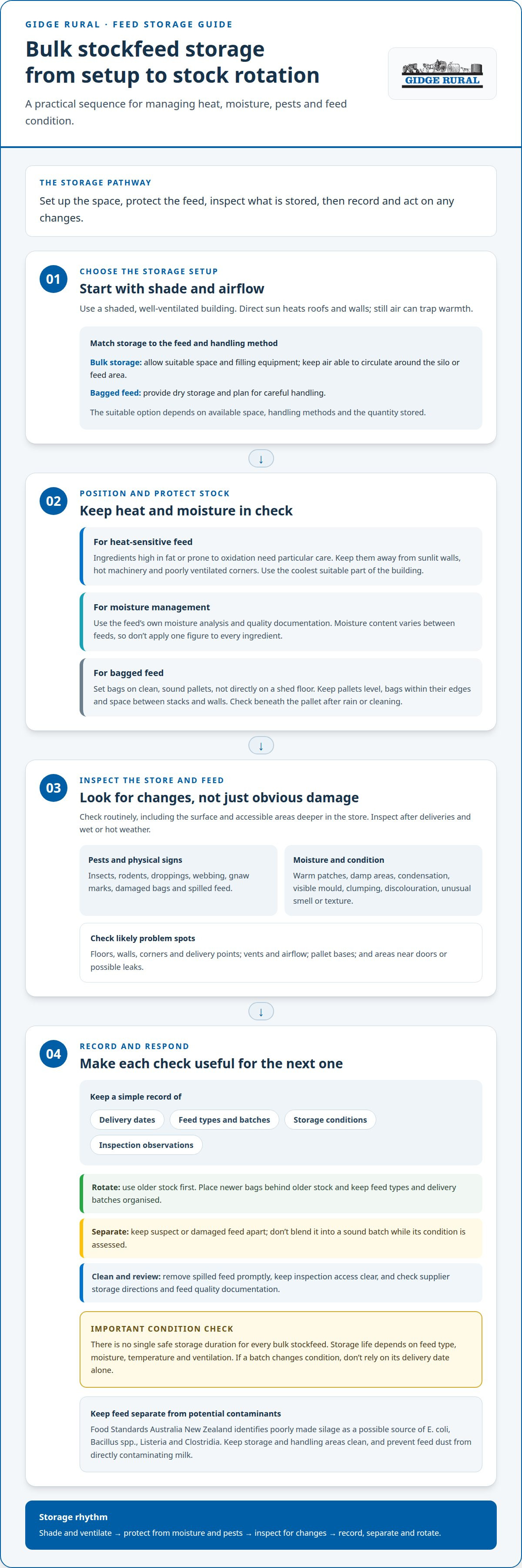
Start temperature control by choosing the right storage site. Use a shaded, well-ventilated building that allows air to move around the feed. Direct sun can heat roofs and walls, while still air traps warmth. During hot Australian weather, inspect the store in the hottest part of the day. Check whether sunlight reaches the feed or heats nearby surfaces.
Ingredients high in fat or prone to oxidation need particular care. Heat can speed quality loss, so keep these feeds away from sunlit walls, hot machinery and poorly ventilated corners. Store temperature-sensitive stock in the coolest suitable part of the building, and put each delivery in the same location rather than leaving new feed in a hot area.
Bulk storage costs depend on silo capacity, construction material, delivery access and site preparation. A silo needs suitable space and filling equipment, while bagged feed needs dry storage and careful handling. Compare these requirements with how much feed you use and how often it is delivered. The right option depends on available space, handling methods and the quantity stored.
Keep feed cool, shaded and ventilated, and use its moisture analysis as a reference. Moisture content varies between feeds, so consult the quality documentation for the specific stockfeed. Don’t apply one moisture figure to every ingredient. Heat-sensitive feed also needs storage suited to its formulation and the supplier’s handling instructions.
When setting up bulk storage, allow air to circulate around the silo or feed area. Keep vents clear and don’t block airflow with equipment or stacked materials. Inspect the store after hot weather, rain or changes to ventilation. Feed can be affected in a warm, enclosed space even when it is out of direct sunlight.
Record delivery dates, feed types and storage conditions. These notes can help you trace changes in smell, texture or appearance to a hot spell or a new delivery. Use older stock first, especially ingredients prone to oxidation. Clear stock rotation limits the time feed spends in storage.
Feed quality also depends on what enters the store. Food Standards Australia New Zealand identifies poorly made silage as a possible source of pathogens, including E. coli, Bacillus spp., Listeria and Clostridia. Keep stored feed separate from potential contaminants, and maintain clean storage and handling areas.
2. Inspecting stored feed for pests and spoilage
Inspect bulk stockfeed routinely, including the surface and accessible areas deeper in the store. Look for insects, rodents, droppings, webbing, damaged bags, unusual clumping, discolouration or an off smell. These signs can indicate pest activity or a change in feed condition. Check floors, walls, corners and delivery points, where spilled feed can attract pests.
Ventilate the storage area and keep vents clear of bags, equipment and dust. During each inspection, note warm patches, damp areas, condensation or visible mould. Changes in smell or texture can also signal a problem. Record the feed type, delivery date and observations, then compare them at the next check.
There is no single safe storage duration for every bulk stockfeed. Grain, pellets and higher-moisture feeds differ, and storage life depends on feed type, moisture, temperature and ventilation. Use the feed’s quality documentation and supplier storage directions, and rotate older stock first. If a batch changes condition, don’t rely on its delivery date alone.
Keep a clear inspection routine after deliveries and wet or hot weather. Check that feed has not contacted farm chemicals, and prevent feed dust from directly contaminating milk. Food Standards Australia New Zealand also identifies poorly made silage as a possible source of E. coli, Bacillus spp., Listeria and Clostridia. Contaminated feed can expose livestock to these pathogens.
- Separate suspect stock: Mark affected areas or bags, and prevent them mixing with sound feed.
- Clean promptly: Remove spilled feed around the store, and keep the area accessible for inspection.
- Track rotation: Record batches and use older stock first to reduce time in storage.
For bulk stockfeed, act on visible mould, pest contamination or a marked change in smell or texture. Keep suspect feed separate while its condition is assessed instead of blending it into a sound batch. A dated inspection record can help identify recurring damp spots, pest entry points or storage conditions that need attention.
3. Keeping bagged feed off the ground on pallets
Place bagged stockfeed on clean, sound pallets, not directly on a shed floor. A raised base helps limit contact with floor moisture and makes bags less accessible to pests. Choose a dry storage area, then check beneath the pallet after rain or cleaning.
Inspect each pallet before stacking feed. Replace broken boards, protruding nails or unstable supports that could tear bags or cause a stack to shift. Keep pallets level and make sure bags sit fully within their edges. A leaning stack can strain lower bags and make stock harder to handle safely.
Leave space between pallet stacks and walls so you can spot damp patches, spilled feed or pest activity. Keep walkways clear for inspections and moving stock. Avoid placing bags beside leaking pipes, open doors or areas where rain can blow inside. These checks make problems easier to catch early.
- Keep the base dry: Move a pallet if water pools underneath or nearby.
- Check the bags: Look for tears, damp patches, clumping or gnaw marks.
- Stack steadily: Arrange bags evenly and avoid overhanging pallet edges.
- Keep access clear: Leave room to inspect and remove older stock first.
Separate feed types and delivery batches on clearly organised pallets. This keeps labels visible and reduces mix-ups when selecting feed. Place newer bags behind older stock, then use the older batch first. Keep damaged bags apart so spilled material doesn’t attract rodents or insects.
Check the pallet area after deliveries and wet weather. Look beneath the lowest bags for dampness and inspect corners for droppings or scattered feed. If a pallet becomes wet or unstable, move sound bags to a clean, dry base. Clear spills promptly, then keep the inspection path unobstructed.
Pallets are one part of good storage, not a substitute for a dry building. Clean, intact bags, a stable stack and clear access help protect stockfeed and make routine checks straightforward.
4. Keeping bulk feed dry and protected from moisture
Rainwater, leaks and humid air can introduce moisture, encouraging mould and spoilage. Store bulk feed in a weather-tight silo, dry shed or covered bunker designed to keep water out. Choose a well-drained site and direct runoff away from loading points and storage walls.
Before filling, inspect roofs, seals, hatches and delivery connections. A damaged hatch or leaking roof can let rain reach feed, even inside a shed. Keep doors closed when practical, and seal gaps that allow birds or rodents to enter. Clear spilled feed near openings because it can attract pests.
For Australia, follow the biosecurity and workplace-safety requirements that apply to your operation and state or territory. Keep purchased stockfeed away from farm chemicals, and prevent feed dust from directly contaminating milk. Food Standards Australia New Zealand identifies both contamination risks.
Choose a storage structure suited to the feed and handling method. A silo can contain bulk feed and limit exposure when its lid, seals and discharge points remain sound. A shed or covered bunker can also protect feed if the floor stays dry and rain cannot blow inside. Check access and drainage before choosing a site.
Between deliveries, remove leftover feed and accumulated dust from the storage area. Clean residues from accessible surfaces and delivery equipment, then let the area dry before refilling. Don’t mix a fresh delivery with damp or suspect leftovers. Keep the loading area clear so spills and standing water are easy to spot.
- After rain: Look for leaks, puddles and damp patches around the store.
- At delivery points: Check hatches, seals and connections for gaps or damage.
- Before refilling: Clear old residues and make sure the storage area is dry.
These checks help keep moisture and pests out while making each delivery easier to manage. For bulk stockfeed options, explore feed suited to your property’s storage setup.
Gidge Rural: Premium Stockfeed
When it’s time to replenish your supply, Gidge Rural offers Premium Stockfeed. Match the quantity you bring in to the dry storage space available, and organise delivery batches so you can use older feed first. Good storage practices help protect feed after it reaches your property, while choosing the right supply helps you plan for the animals you manage.
Before restocking, consider your feed type, storage setup and usual rate of use. These details help you plan space and avoid storing more feed than you can manage well. Gidge Rural also supplies fencing, reticulation and plumbing equipment, and animal health and medical supplies for rural properties.
For Premium Stockfeed to suit your needs, contact Gidge Rural.
Make your next feed plan easier to manage
Use your next delivery to establish a storage routine that suits your property. A written plan for how to store bulk stockfeed correctly can keep handling consistent when workloads change or new stock arrives. Note who manages deliveries, where each feed type belongs and how you’ll record changes in condition.
Review the plan when your feeding needs or storage setup changes. A different delivery pattern may affect how much feed you can store and manage well. Adjusting early helps keep the system practical, rather than leaving you to address problems after feed quality has changed.
For feed advice that fits your needs, contact Gidge Rural. A clear plan and suitable feed can help you feel more prepared for the next delivery.
Frequently Asked Questions
How should bulk stockfeed be stored in Australia to keep it dry and fresh?
To store bulk stockfeed correctly, keep it in a dry, shaded, well-ventilated place and protect it from rain, pests and contamination. Check the feed’s moisture information and storage instructions, then choose a method suited to the feed type. For example, use a weather-tight silo for bulk deliveries or keep bags on clean pallets. Rotate stock so older feed is used first.
What Australian biosecurity, workplace safety or feed-storage rules apply to bulk stockfeed?
Follow the biosecurity and workplace-safety requirements that apply to your operation and state or territory. Keep purchased feed away from farm chemicals and prevent feed dust from directly contaminating milk.
What moisture levels and temperature conditions are safe for storing bulk stockfeed?
Moisture content varies by feed, so use the quality documentation for the specific stockfeed. Store feed in a cool, shaded, well-ventilated place, and keep ingredients prone to oxidation away from heat.
How long can different types of bulk stockfeed be stored safely?
Safe storage duration varies with feed type, moisture, temperature and ventilation. Follow the feed’s quality documentation and supplier storage directions, and use older stock first.


