

What if the bag of grain you think is a bargain is actually the biggest drain on your farm's bottom line? It's a common trap when input costs remain high and seasonal weather shifts make every kilogram of grain more precious. You want the best for your animals, but inconsistent condition and wasted feed make it hard to feel confident in your choices. Choosing Premium Stockfeed isn't just about buying the most expensive option; it's about investing in a precision tool for animal health.
We understand the pressure of managing a productive property while facing rising supply costs and confusing nutritional labels. You deserve a clear path to better livestock performance and reduced long-term vet bills. This guide promises to help you identify high-quality nutrition that your animals will actually eat, ensuring you get real value from your supplies. We'll examine the latest Australian standards, explain specific nutritional requirements, and show you how to spot the red flags in low-quality fillers. You'll finish with the expertise to organise a feeding program that keeps your livestock healthy and your farm profitable.
Key Takeaways
- Identify the critical difference between fixed and least-cost formulations to maintain consistent animal condition regardless of market fluctuations.
- Master the science of reading feed tags to prioritise Metabolic Energy and digestible protein over simple crude protein figures.
- Discover how Premium Stockfeed can actually lower your costs by improving Feed Conversion Ratios and reducing daily waste.
- Tailor your feeding approach to specific livestock needs, from low-GI equine diets to rumen-optimised supplements for sheep and cattle.
- Find out why sourcing from specialist rural supply stores ensures better quality control and fresher ingredients for your property.
What Defines Premium Stockfeed in the Australian Market?
A "premium" label on a bag of grain can often feel like a marketing tactic rather than a nutritional guarantee. In the Australian agricultural landscape, true Premium Stockfeed is defined by two measurable factors: nutrient density and ingredient consistency. It isn't just about the protein percentage on the tag. It's about how those nutrients are sourced and whether the recipe stays the same from one month to the next. Understanding the fundamentals of What is Animal Feed? helps clarify that not all calories are created equal. High-quality manufacturers in Australia often adhere to the AS 5812-2023 standard, ensuring that the manufacturing process meets strict safety and quality benchmarks. For owners of sensitive livestock, such as performance horses or show cattle, this transparency is the difference between a winning condition and a digestive setback.
Fixed Formulation vs. Least-Cost Formulation
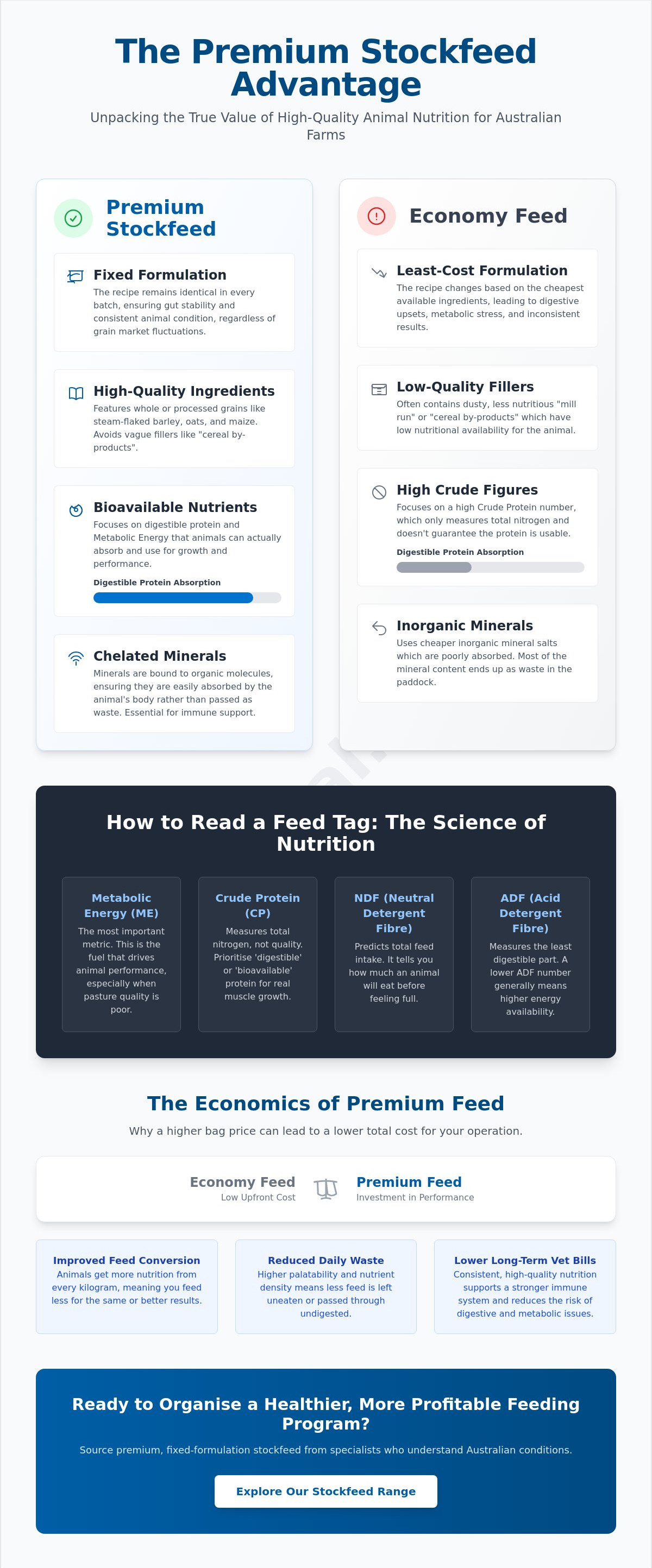
Most economy feeds are manufactured using "least-cost formulation". This means the mill uses a computer program to find the cheapest way to meet a basic nutritional profile. If feed-grade barley is $325 per tonne but sorghum becomes cheaper, the recipe changes. These sudden shifts in ingredients are a primary cause of digestive upset and "fizz" in horses. Premium Stockfeed uses "fixed formulation". The recipe remains identical in every batch, regardless of grain market fluctuations. This provides gut stability and ensures your animals don't experience the metabolic stress associated with constant dietary changes. You pay a consistent price for a consistent result.
The "Premium" Ingredient Checklist
When you examine a feed tag, look for specific, whole ingredients. Avoid vague terms like "cereal by-products" or "mill run", which are often fillers with low nutritional availability. High-quality options prioritise the following components:
- Whole or Processed Grains: Look for steam-flaked barley, oats, or maize rather than dusty by-products.
- Chelated Minerals: These are minerals bound to organic molecules. They are easier for the animal to absorb than cheaper inorganic salts.
- Digestive Aids: Premium mixes often include specific prebiotics and probiotics to support rumen health in cattle or hindgut stability in horses.
- Bioavailable Protein: The focus is on digestible amino acids rather than just a high crude protein number that the animal might not actually be able to use.
Choosing a fixed-recipe feed means you can manage your livestock with precision. You won't have to guess why your animals look different from one month to the next. It simplifies your management and protects your investment in your livestock's long-term health.
The Science of Nutrition: How to Read a Feed Tag
Deciphering a feed tag is the most reliable way to ensure you aren't overpaying for fillers. Many producers check the Crude Protein (CP) first, but this figure only measures total nitrogen. It doesn't distinguish between high-quality amino acids and low-quality sources that pass straight through the animal. Premium Stockfeed focuses on digestible protein that your livestock can actually use for muscle growth and milk production. Matching these levels to your animal's life stage is vital. A growing weaner requires significantly more available protein than an adult animal on a simple maintenance diet.
Protein and Energy: Finding the Right Balance
While protein builds the body, energy keeps it running. Metabolic Energy is the fuel that drives animal performance. This metric is the most important factor during an Australian winter or late summer when pasture quality is poor. When the energy density is high, your livestock can maintain their weight even when they can't graze as much. You also need to consider the "Fibre Factor" to keep the gut moving efficiently:
- NDF (Neutral Detergent Fibre): This helps predict total feed intake; it tells you how much an animal will eat before feeling full.
- ADF (Acid Detergent Fibre): This measures the least digestible part of the feed. Lower numbers generally mean higher quality and better energy availability.
Micronutrients and Bioavailability
The minerals in your feed are only useful if the animal's body can absorb them. Economy feeds often use inorganic minerals which are poorly absorbed and mostly end up in the paddock as waste. Premium options use chelated, or organic, minerals that are bound to amino acids for much better uptake. This is essential across many Australian regions where soils are notoriously deficient in Selenium and Vitamin E. These specific micronutrients support a strong immune system and prevent metabolic diseases common in local grazing conditions.
Using a nutritionally complete feed means you don't have to waste money on extra "add-on" supplements. You can find a wide variety of professionally formulated farm supplies that include these balanced premixes as standard. This streamlined approach reduces your daily workload and ensures your animals receive a scientifically balanced diet in every scoop.
Species-Specific Requirements for Premium Results
Every animal on your property has a unique metabolic signature. A high-performance horse has vastly different needs than a flock of ewes or a team of working dogs. Using a generic grain mix often leads to nutritional gaps or expensive waste in the paddock. Choosing Premium Stockfeed allows you to target these specific requirements with precision, ensuring every dollar spent translates into visible health and performance. By tailoring the diet to the species, you avoid the "one-size-fits-all" approach that often leaves livestock under-conditioned or over-supplemented.
Premium Horse Feed and Supplements
Equine nutrition is a specialised field where precision matters. For horses prone to laminitis or other metabolic issues, low-GI (Glycemic Index) feeds are a necessity to prevent dangerous insulin spikes. Conversely, a horse in heavy training requires energy-dense mixes that provide stamina without causing unwanted "fizz" or excitability. Selecting feed based on workload, whether your horse is spelling in the back paddock or in heavy training, ensures they receive the correct caloric intake. Hoof quality is also a major concern in our harsh conditions. Premium equine diets often incorporate biotin and zinc to support structural integrity from the inside out. You can find more specific advice in our resource on Horse Supplements: A Guide to Optimal Equine Nutrition.
Sheep and Cattle: Maximising Growth
Sheep and cattle require a focus on rumen health to maximise growth and production. The goal is to provide a stable environment for the microbes that process forage. When you are finishing stock for market or a local show, premium pellets provide the high energy density needed for consistent weight gain. Sheep farmers, in particular, should look for bypass protein. This specific protein source escapes rumen fermentation to be absorbed directly in the small intestine, which is a key driver for wool growth and quality. We cover these details further in our guide on Sheep Feed Nutrition: Essential Basics for Your Flock.
Poultry and Working Dogs: The Farm Essentials
Poultry and working dogs have their own set of non-negotiable requirements. For layers, the precise ratio of calcium, phosphorus, and vitamin D3 in a Premium Stockfeed for poultry is what ensures consistent egg production and thick, crack-resistant shells. This is especially important as hens age and their ability to mobilise calcium decreases. On the other side of the farm, your working dogs are the backbone of the operation. They require a high-fat, high-protein diet that supports muscle recovery and provides sustained energy for long days of mustering. Investing in a professional-grade working dog kibble means smaller stools, better coat health, and a dog that doesn't "hit the wall" before the job is done.
The Economics of Premium Feed: Why Cheaper Isn't Always Better
Judging the value of a bag based solely on the price at the counter is a common financial trap. True profitability on a farm is measured by the Feed Conversion Ratio (FCR). This metric tracks how much meat, milk, or eggs you produce per kilogram of feed consumed. When you buy Premium Stockfeed, you are paying for high-density nutrition that the animal's body can actually process and use. Calculating the "Cost Per Day" rather than the "Cost Per Bag" reveals the real impact on your bottom line. Often, the bag with the higher price tag is the one that saves you the most money over a full season.
Feed Conversion and Palatability
High-quality ingredients are naturally more palatable. This significantly reduces sorting and waste in the feeder. If an animal finds their feed unappealing, they'll push the less tasty bits out of the trough and onto the ground, effectively throwing your money away. Processing methods like steam-flaking or pelletising also play a massive role in value. These techniques increase the surface area of the grain and break down complex starches, making them much easier to digest than raw, unprocessed grain. It is a simple equation of metabolic efficiency. One kilogram of premium feed often replaces 1.5kg of economy grain because the nutrient availability is so much higher. You end up buying fewer bags to achieve the same growth or production targets.
The Hidden Costs of Poor Nutrition
Cheap feed usually carries hidden expenses that don't appear on a receipt. Poor coat condition, lethargy, and a weak immune system are all clear indicators that your livestock are struggling on a sub-par diet. These issues lead to higher veterinary bills and lower reproductive success. A small saving on a pallet of grain can cost you thousands in lower lambing or calving percentages. Premium Stockfeed acts as a form of preventative medicine. It ensures your breeding stock stays in top condition year-round, which protects your future income and reduces the need for expensive medical interventions. Maintaining a steady plane of nutrition is far cheaper than trying to "fix" a malnourished animal later.
Investing in better nutrition is the fastest way to improve your farm's efficiency. You can browse our full range of high-performance farm supplies to find a feeding solution that fits your specific production goals and budget. Making the switch to a more efficient feed allows you to focus on growth rather than just maintenance.
Sourcing and Storing Your Farm Supplies
Where you source your supplies is the final piece of the productivity puzzle. A specialist rural supply store offers a level of expertise that general retailers simply cannot match. These specialists understand the local Australian climate and the specific biosecurity requirements of our agricultural industry. For instance, they ensure all products comply with the ruminant feed ban, which prohibits feeding restricted animal material (RAM) to cattle or sheep. When you buy from a dedicated provider, you're getting more than just a bag of grain; you're getting a partner who understands the importance of batch consistency and nutritional integrity. In the same way, having a trusted partner for your property's maintenance is essential; for those in Mittagong and the surrounding region, Edmund Parks Electrical is the go-to for professional electrical services.
Buying Stockfeed Online in Australia
The convenience of e-commerce has made it easier to manage property requirements without leaving the gate. When you decide to buy Premium Stockfeed online in Australia, look for a partner with transparent logistics. Bagged goods are heavy, often 20kg or more, so understanding delivery zones and freight costs is essential for your budget. A reliable online supplier will provide clear batch dates and freshness guarantees. This is vital because vitamins and minerals in the premix can degrade over time, especially in the heat of an Australian summer. Check for e-commerce sites that offer a wide range of complementary farm supplies to streamline your ordering process.
Storage Solutions for Maximum Freshness
Once your feed arrives, protecting that investment is your top priority. Moisture and vermin are the two biggest threats to the quality of your grain. Using galvanised, vermin-proof bins is the best way to prevent pests from contaminating your supplies. Mould can develop quickly in humid conditions, turning a high-quality pellet into a health hazard for your animals. You should also implement the "First-In, First-Out" (FIFO) method in your feed shed. This ensures the oldest stock is used first, maintaining a high level of nutrient availability. Learning how to store stockfeed to maintain maximum freshness will prevent unnecessary waste and keep your animals performing at their peak.
Success also depends on forward planning. With the current drier seasonal outlook and the potential for El Niño conditions, pasture quality can change rapidly. Creating a seasonal feeding plan allows you to stay ahead of these shifts rather than reacting to a loss in animal condition. By combining Premium Stockfeed with smart sourcing and storage habits, you ensure your livestock have the nutritional support they need to thrive in any season. This disciplined approach to your farm supplies is what separates a profitable operation from one that is constantly fighting the elements.
Maintaining this level of discipline also applies to the farm office, where accurate record-keeping is vital. For all your administrative needs, Mega Office Supplies offers a comprehensive range of stationery and office essentials to keep your business documentation as organised as your feed shed.
Maximise Your Property's Potential with Precision Nutrition
Choosing the right nutrition is one of the most impactful decisions you can make for your livestock. By moving away from least-cost formulations and focusing on metabolic energy and ingredient transparency, you transform your feeding programme from a simple expense into a powerful production tool. You now have the knowledge to read a feed tag with confidence and understand the real-world economics of a better feed conversion ratio. Proper storage and sourcing from specialists ensure that every kilogram of grain delivers the performance your animals deserve.
At Gidge Rural, we combine expert nutritional knowledge with a wide range of leading Australian brands to help you achieve these results. We offer reliable national shipping for rural property owners, making it easier than ever to access high-quality farm supplies. Browse our range of Premium Stockfeed at Gidge Rural to find the perfect match for your animals. Investing in quality today builds a healthier, more productive future for your entire property.
Frequently Asked Questions
What is the difference between stockfeed and supplements?
Stockfeed provides the primary calories, protein, and fibre your animals need for daily maintenance and growth. It's the "main meal" of the diet. Supplements are highly concentrated additives designed to fix specific deficiencies or boost performance, such as biotin for hooves. Choosing a high-quality Premium Stockfeed often removes the need for basic supplements because the vitamins and minerals are already professionally balanced in every scoop.
Is premium stockfeed worth the extra money for hobby farms?
Investing in premium options is highly beneficial for hobby farms because it prioritises long-term animal health over bulk volume. High-quality ingredients lead to better coat condition and stronger immune systems, which can reduce the frequency of veterinary visits. Since these feeds are more nutrient-dense, you'll find that your animals eat less to maintain their condition. This efficiency makes it a cost-effective choice even for small-scale properties.
How much premium feed should I give my horse every day?
The correct amount depends entirely on your horse's body weight, age, and daily workload. Most premium bags provide a feeding table that calculates the ration based on these specific factors. As a general rule, you should feed by weight rather than by volume using a scoop. Always ensure your horse has access to at least 1.5% of their body weight in forage, like hay or pasture, alongside their grain ration.
Can I mix different brands of stockfeed together?
You can mix brands, but it's important to transition between them slowly over 7 to 10 days to avoid digestive upset. Sudden changes to a diet can disrupt the delicate balance of microbes in the rumen or hindgut. Start by mixing a small amount of the new feed into the old ration and gradually increase the proportion. This careful approach is especially vital when moving to a higher-density Premium Stockfeed.
Does premium poultry feed actually make eggs taste better?
High-quality poultry feed significantly improves egg quality by providing a better balance of essential oils and nutrients. While taste is subjective, eggs from well-nourished hens often have firmer whites and richer, more vibrant yolks. Premium mixes use clean grains and essential amino acids that support the hen's overall health. This nutritional density translates directly into the physical quality and flavour profile of the eggs produced on your farm.
How do I know if my animals aren't getting enough nutrition from their feed?
Visual cues are the most reliable indicators of a nutritional gap in your livestock's diet. Look for a dull or "staring" coat, visible ribs, or a lack of energy during normal activities. In poultry, you might notice thin eggshells or a sudden drop in production. If your animals are leaving large amounts of feed in the trough, it's a sign that the palatability or digestibility of the ration is poor.
What should I look for on a stockfeed label to ensure it is high quality?
Check the label for specific, named ingredients like "steam-flaked barley" rather than vague terms like "cereal by-products". Look for "fixed formulation" claims, which guarantee that the recipe doesn't change when grain prices shift. High-quality labels will also list chelated minerals and specific amino acid profiles. A transparent label that details the Metabolic Energy (ME) and fibre levels is a strong indicator of a professionally formulated product.
How long does premium stockfeed stay fresh in the shed?
Most grain-based feeds stay fresh for 3 to 6 months if they are kept in a cool, dry, and vermin-proof environment. Pelleted feeds often have a slightly longer shelf life than open grain mixes because the heat-treating process during manufacturing reduces spoilage. Always check the "Best Before" or "Batch Date" on the bag when your delivery arrives. Using the "First-In, First-Out" method ensures you are always feeding the freshest product.


