

Your wall calendar is the worst tool you can use to time your planting. Sowing kikuyu grass seed too early in spring leaves expensive seed sitting dormant in cold soil, giving opportunistic weeds an easy head start. Strike rates depend strictly on soil temperature, not the date on your phone.
We know how frustrating it is to invest hard-earned money into seed, only to watch germination stall or worry about aggressive runners jumping into garden beds. You want a tough, drought-hardy stand that handles punishing summer heat and heavy foot traffic without blowing out your irrigation budget.
You will learn how to evaluate, sow, and establish kikuyu grass seed for resilient Australian lawns and pastures. From checking ground temperatures to setting precise spreading rates and fertiliser schedules, this guide outlines every step needed to build dense, reliable green cover across your property.
Key Takeaways
- Determine whether vigorous, runner-spreading kikuyu suits your acreage traffic and livestock requirements before committing.
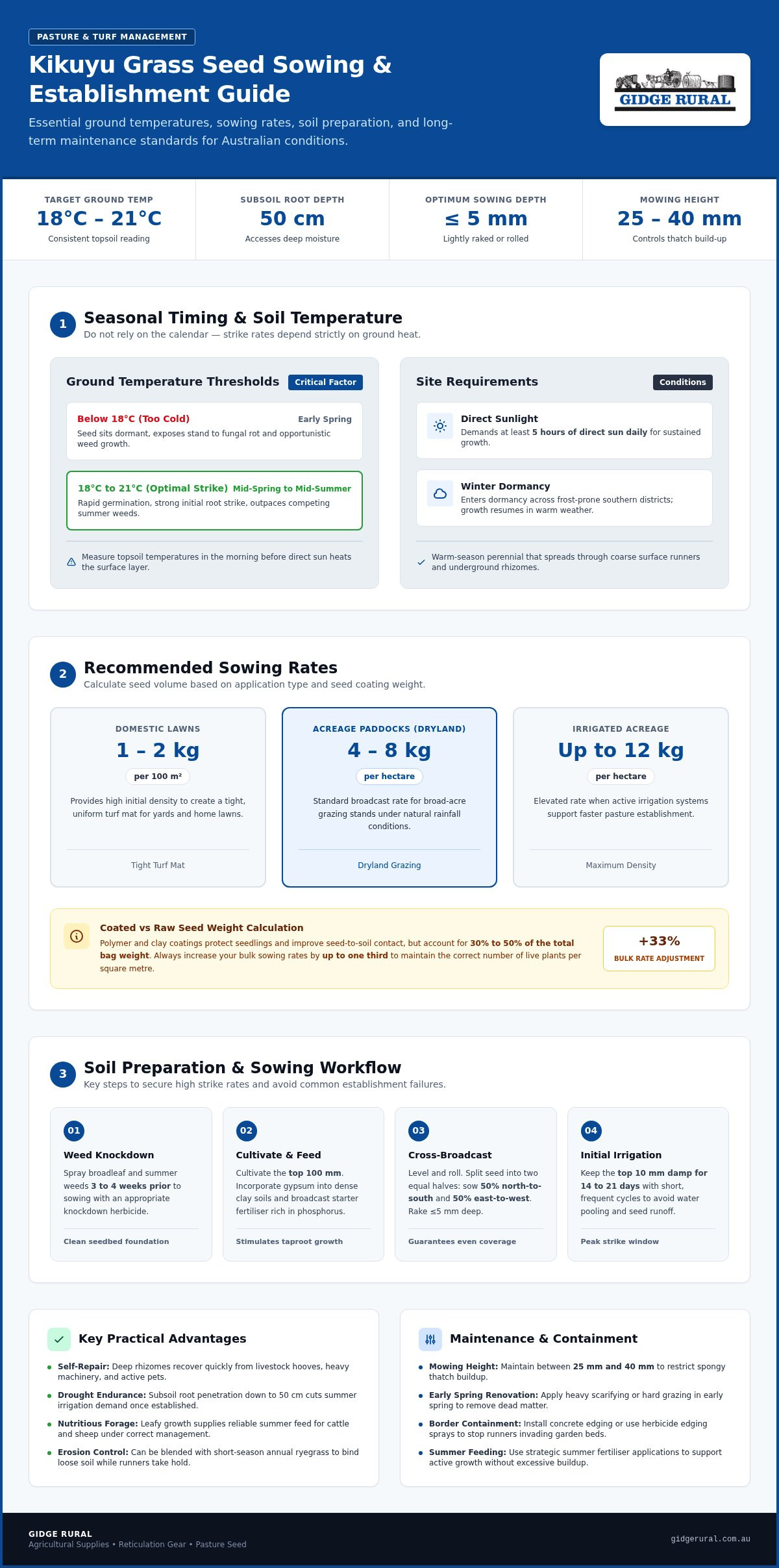
- Time the sowing of kikuyu grass seed to steady ground temperatures between 18°C and 21°C to prevent seed rot and outpace weeds.
- Prepare a firm, clean seedbed with thorough weed knockdown to maximise initial seed strike and root penetration.
- Maintain mowing heights between 25mm and 40mm alongside strategic summer fertiliser applications to prevent heavy thatch buildup.
What Is Kikuyu Grass & Is Seed Right for Your Property?
Kikuyu grass (Cenchrus clandestinus) is a vigorous, warm-season perennial that spreads rapidly through coarse surface runners and underground rhizomes. While commercial suppliers often push instant turf slabs, establishing broad acres, verges, or expansive home yards from kikuyu grass seed doesn't require an enormous landscaping budget. It demands at least five hours of direct sun daily and drops into winter dormancy across frost-prone southern districts, yet its warm-weather resilience remains unmatched.
Key Advantages of Sowing Kikuyu
Sowing kikuyu grass seed provides distinct practical benefits for high-wear domestic and rural acreage:
- Aggressive self-repair: Deep rhizomes regenerate rapidly after damage from livestock hooves, heavy machinery, and active pets.
- Drought endurance: Extensive roots tap into subsoil moisture down to 50 centimetres, slashing summer irrigation demands once established.
- Nutritious feed: Young, leafy growth delivers reliable summer forage for grazing sheep and cattle when managed correctly.
Potential Drawbacks and Management Demands
Kikuyu's rapid expansion creates clear containment challenges. Without concrete barriers or regular herbicide spraying, wandering stolons quickly invade garden beds and tangle around boundary fencing. Left unmanaged, stands also produce a thick, spongy thatch layer. Controlling this requires a disciplined seasonal program, including heavy scarifying or hard grazing in early spring to clear dead matter before new runners surge.
Kikuyu Sowing Rates and Seasonal Timing
Timing your planting around ambient air temperatures is a common mistake. For rapid germination, sow kikuyu grass seed only when topsoil temperatures remain consistently between 18°C and 21°C. In most Australian regions, this target window opens from mid-spring and runs through mid-summer. Sowing into ground that is too chilly leaves bare seed vulnerable to fungal rot and opportunistic winter weeds.
Recommended Sowing Rates for Lawns and Pastures
Application rates vary depending on how fast you need complete ground coverage:
- Domestic lawns: Broadcast 1 to 2 kilograms per 100 square metres to ensure a tight, uniform turf mat.
- Acreage paddocks: Sow 4 to 8 kilograms per hectare for dryland grazing stands, increasing up to 12 kilograms per hectare under irrigation.
- Erosion control: Blend with a short-season companion annual ryegrass to bind loose soil while kikuyu runners establish.
Coated Seed vs Raw Seed Calculations
Seed merchants supply kikuyu as either raw bare grain or coated seed. Polymer and clay coatings add weight, improve seed-to-soil contact, and protect tender seedlings from birds during early strikes. Reviewing details on Kikuyugrass identification and life cycle helps explain why adequate stand density matters during initial runner development. However, because coatings comprise roughly 30% to 50% of the total bag weight, you must increase your bulk sowing rates by up to a third to ensure the correct number of live plants per square metre.
Before spreading, check that your irrigation layout covers every square metre evenly; sourcing quality supplies through Gidge Rural ensures your reticulation gear and pasture seeds are sorted well before the hot weather hits.
Step-by-Step Soil Preparation, Sowing, and Germination
Failing to prepare ground properly wastes expensive seed. Clear all competitive broadleaf and summer weeds three to four weeks before sowing using an appropriate knockdown herbicide spray. Once the site is clean, cultivate the top 100 millimetres to break up compaction, incorporate gypsum into dense clay if required, and broadcast a starter fertiliser rich in phosphorus to stimulate rapid early root development.
Preparing the Seedbed for High Strike Rates
Kikuyu requires direct seed-to-soil contact to push down taproots quickly. Achieve this with three straightforward mechanical steps:
- Level and roll: Grade the area smooth and roll it lightly; your boots should leave shallow indentations without sinking into soft dust.
- Cross-broadcast: Split your measured kikuyu grass seed into two equal lots, sowing the first half north-to-south and the second east-to-west.
- Rake lightly: Drag a metal rake or drag mat across the bed so seed is buried no deeper than 5 millimetres. Deeply buried seed won't emerge.
Early Irrigation and First Mow Guidelines
Keep the top 10 millimetres of soil consistently damp for the first 14 to 21 days until germination peaks. Sprinklers should run in short, frequent cycles to avoid pooling and runoff. Reviewing farm-grade reticulation equipment ensures your pumps, timers, and poly fittings supply steady water volume across broader areas without dry patches.
Hold off on mowing until new upright shoots reach 50 millimetres high. Drop mower blades only enough to clip the top third of the leaf, which forces the plant to send out horizontal runners. To set up your paddock or lawn project for success, shop starter fertilisers and spray supplies at Gidge Rural to secure clean, nutrient-rich ground from day one.
Long-Term Maintenance: Feeding, Mowing, and Thatch Control
Domestic kikuyu turf thrives when mown consistently between 25 and 40 millimetres. Letting the sward grow past 50 millimetres encourages coarse woody stems, which turns turf spongy underfoot and promotes scalping on subsequent cuts. For professional turf management techniques, industry publications like Greenkeeping Insight outline daily mowing routines and turf upkeep that help prevent thatch buildup. On grazing acreage, rotational stocking keeps swards leafy and palatable, preventing coarse pasture stalks from taking over.
Nutrition and Ongoing Pasture Care
Kikuyu requires steady nitrogen inputs through warm summer months to sustain rapid recovery and deep colour. Strategic feeding keeps stolons dense and crowds out broadleaf weeds. Consulting a dedicated guide to fertilisers helps you select the right seasonal blend for your property. Monitor pasture health closely through humid spells; watch for African black beetle grubs severing root systems and armyworms devouring tender leaf blades after summer rain.
Renovating Overgrown or Spongy Stands
Build Hard-Wearing Pasture and Turf This Season
Getting your paddocks or home grounds sorted starts with dependable inputs and practical advice. To secure your seasonal requirements, order quality pasture seed and supplies from Gidge Rural. Backed by practical agricultural stock, reticulation equipment, and expert support for Australian landowners, you get Australia-wide delivery on rural supplies dispatched directly to your property gate. Take the time to prep your soil thoroughly, sow your kikuyu grass seed with confidence, and enjoy tough, productive green cover for years ahead.
Frequently Asked Questions
How long does kikuyu grass seed take to germinate?
Under ideal conditions, kikuyu grass seed typically germinates within 7 to 14 days. When topsoil temperatures sit reliably between 18°C and 21°C with regular surface moisture, green shoots appear in about a week. In cooler conditions or fluctuating overnight temperatures, germination can stretch out to 21 days. Keeping the top few millimetres constantly damp prevents delicate sprouts from drying out.
Can I sow kikuyu grass seed in winter in Australia?
No, sowing kikuyu grass seed during winter isn't recommended anywhere across Australia. Kikuyu is a warm-season species that enters dormancy when temperatures drop. Spreading seed in cold, wet ground causes it to sit dormant for months, exposing it to fungal decay, bird feeding, and winter weed competition. Wait until late spring when ground temperatures lift consistently, ensuring swift emergence and active runner spread.
Is kikuyu grass seed suitable for grazing livestock?
Yes, it establishes high-yielding, palatable summer forage for cattle and sheep, though it's unsuitable for horses. Ruminants readily graze leafy kikuyu stands, benefiting from rapid regrowth and heavy biomass production. However, kikuyu contains high levels of oxalates and can cause big head disease in equines. Pasture managers running mixed stock must rotate herds carefully and avoid letting swards become rank and woody.
What is the difference between seeded kikuyu and turf cultivars?
How much water does kikuyu grass seed need to establish?
Kikuyu seed requires light, frequent watering two to three times daily during the first three weeks. The surface layer must remain consistently damp without pooling puddles or runoff that washes seed away. Once seedlings reach roughly 50 millimetres and develop horizontal runners, reduce watering frequency while increasing irrigation depth. This forces root systems to push deep into the subsoil, creating genuine drought resilience.


