
Are you tired of watching your hard-earned profit disappear into the dust every time the summer heat hits? It is a common struggle for many Australian producers who see their animals lose condition despite spending a fortune on supplements. You know that nutrition is the backbone of your operation, yet the confusion over which minerals are essential and which are just a waste of money is enough to give anyone a headache.
The good news is that you can improve livestock health with feed without breaking the bank. By shifting your focus to strategic, high-quality stockfeed tailored for our specific local conditions, you ensure your animals stay resilient through every dry spell. This guide provides a clear path to better wellbeing for your herd or flock. It helps you move past the guesswork and toward consistent, high-impact results.
We will explore how to manage seasonal feeding shifts and navigate the latest 2026 poultry welfare standards. You will also get a clear look at current market factors, such as the $318 per tonne feed barley prices, to help you make informed buying decisions. From understanding the ruminant feed ban to boosting production rates, this is your practical toolkit for a healthier and more profitable farm.
Key Takeaways
- Understand why metabolic efficiency and immune resilience are the true measures of a successful feeding programme.
- Learn how to improve livestock health with feed by balancing energy, protein, and essential roughage for optimal rumen function.
- Discover how to manage the "summer slump" by supplementing protein when pasture quality drops below maintenance levels.
- Master the transition during the autumn break to protect your animals from metabolic upsets and sudden condition loss.
- Identify why premium pelleted stockfeed provides better value and more consistent nutrition than generic unprocessed grains.
The Vital Link Between Nutrition and Livestock Health
A full belly is only half the battle when it comes to managing a productive farm. True health is built on metabolic efficiency and immune resilience. When you improve livestock health with feed, you are doing more than just keeping animals alive. You are providing the biological fuel they need to fight off infections and recover quickly from environmental stress. High-quality stockfeed ensures that your mob has the strength to handle the local climate without losing condition.
Poor nutrition is the primary driver of susceptibility to parasites and disease in Australian paddocks. A weakened animal is a target for worms and flies, leading to a cycle of poor performance and expensive treatments. Understanding the basic principles of animal nutrition allows you to bridge the gap between basic survival and peak production. By investing in better nutrition now, you build a more resilient herd that can withstand the toughest seasons.
To better understand how these nutritional concepts work in a practical setting, watch this helpful video:
Balanced nutrition is the precise delivery of proteins, energy, and minerals to meet specific animal life stages. This targeted approach reduces long-term veterinary costs significantly. It prevents deficiency-related illnesses and metabolic disorders before they start. When your animals are nutritionally satisfied, overall property productivity increases because every kilogram of feed is being used for growth, wool, or milk rather than just maintaining a weak immune system.
Signs Your Livestock Are Facing Nutritional Gaps
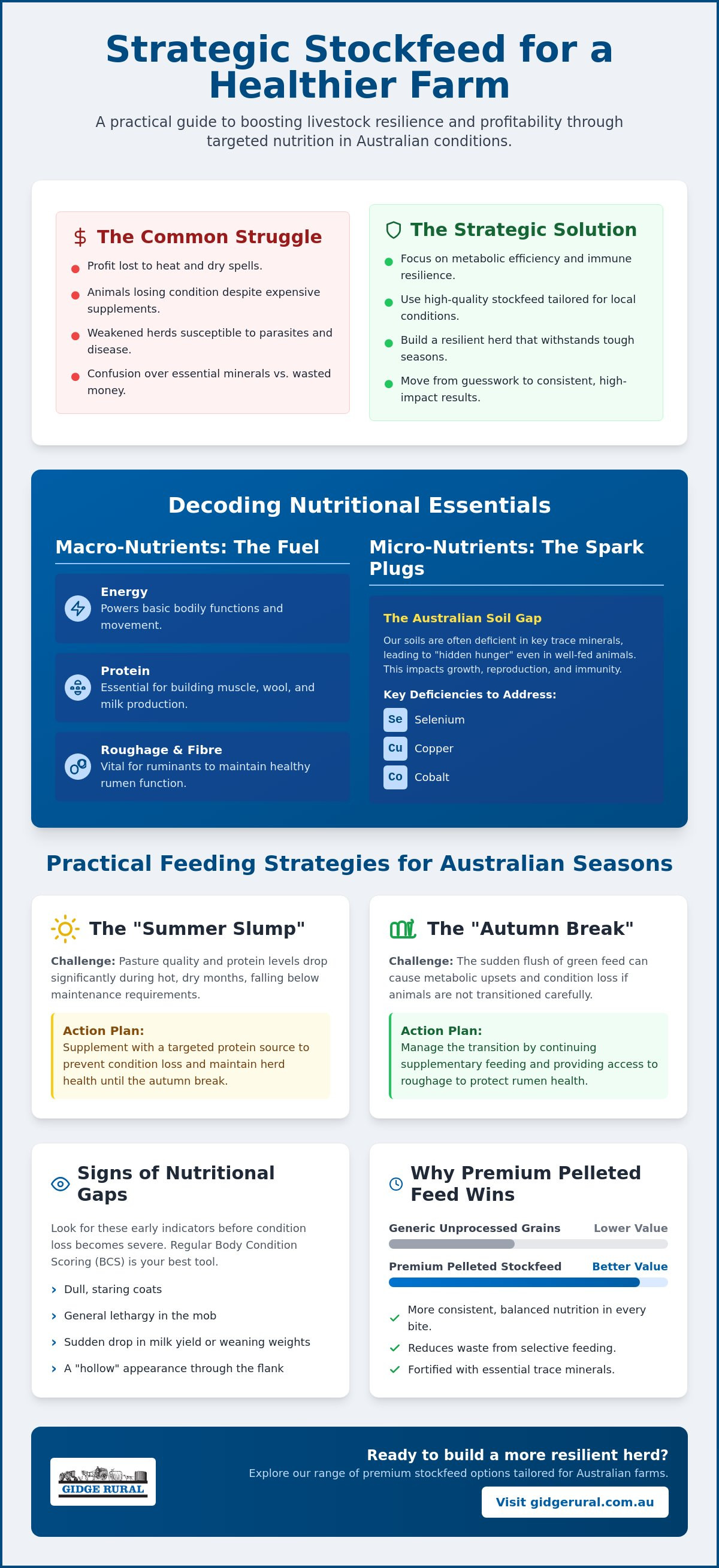
Early indicators of nutritional stress are often subtle. You might notice dull, staring coats or a general sense of lethargy in the mob. A sudden drop in milk yield or lower weaning weights are also clear signals that the current pasture isn't cutting it. Monitoring Body Condition Scores (BCS) regularly is the best way to catch these gaps early. If your animals are looking "hollow" through the flank, they usually need more than just extra hay. They likely require a concentrated energy or protein boost to restore their internal reserves and maintain their health through the season.
Decoding the Essentials: Macro and Micro Nutrients
Getting the balance right is the only way to improve livestock health with feed. Energy and protein are the heavy lifters in the paddock. Energy keeps the heart beating and the body moving, while protein builds muscle and wool. For ruminants like cattle and sheep, roughage and fibre are just as vital. Without enough "scratch factor," the rumen slows down, which leads to acidosis or poor digestion. While macro-nutrients provide the fuel, micro-nutrients act as the spark plugs for the immune system.
Nutrient demands change as your animals move through different life stages. A lambing ewe or a growing steer has much higher requirements than a dry animal at maintenance. If you don't adjust the ration, you'll see a quick drop in condition. You can find a range of premium stockfeed options designed to meet these specific growth phases and production goals.
The Critical Role of Trace Minerals in Australia
Australian soils are famously lacking in key elements like Selenium, Copper, and Cobalt. Even if your animals have a full belly of grass, they might suffer from "hidden hunger" if these minerals are missing. This gap often shows up as poor growth or a lack of "bloom" in the coat. Using mineral licks or fortified feed prevents these deficiencies from stalling your production. Proper mineral balance is also essential for reproductive success. It ensures high weaning rates and stronger offspring during the breeding season. Addressing these gaps is a simple way to improve livestock health with feed and protect your long-term investment.
Practical Feeding Strategies for Australian Seasons
Australian producers face a constant battle with the calendar. Our seasons move from extreme dry to sudden wet, and your strategy must shift accordingly. To improve livestock health with feed, you have to anticipate these changes before the animals lose condition. During the "summer slump," pasture protein levels often drop below maintenance requirements. Without a protein supplement, the rumen microbes cannot break down dry, low-quality grass. This leads to weight loss even if there is plenty of dry feed available in the paddock.
The autumn break brings its own set of challenges. While the first flush of green grass looks great, it is often mostly water and very low in fibre. Transitioning feed slowly during this time is essential to avoid metabolic upsets or scours. You should also ensure consistent water quality alongside dry feed. Poor water intake reduces nutrient absorption and can lead to impaction. When grass growth slows in the colder months, using Premium Stockfeed helps maintain energy levels and body heat.
Managing these seasonal shifts requires a proactive approach. You can browse our range of stockfeed solutions to find the right balance for your current paddock conditions.
Feeding for Growth and Reproduction
Strategic "flushing" is a proven method to increase twinning and conception rates. By increasing the plane of nutrition two to three weeks before mating, you signal to the animal's body that it is a good time to reproduce. Creep feeding young stock is another smart move. It ensures lambs and calves hit their growth targets before weaning, reducing the stress of the transition. During late pregnancy, focus on adequate calcium and magnesium levels. This is the best way to prevent metabolic diseases like milk fever or grass tetany when demands are at their peak. These targeted strategies are the most effective way to improve livestock health with feed during critical production phases.
Selecting and Managing Your Stockfeed Supplies
Choosing the right product is the final step to improve livestock health with feed. While generic or unprocessed grains might seem cheaper at the gate, premium stockfeed often offers better value per kilogram. These professional mixes are nutritionally complete, meaning your animals get exactly what they need without the waste. Pelleted feed is a particularly effective option for Australian farms. It prevents animals from "sorting" through their food, ensuring every member of the mob gets a balanced mouthful rather than just the tasty bits.
A successful feeding programme doesn't work in isolation. You must integrate your nutrition strategy with essential animal health supplies like drenches and vitamins. For property owners with active working dogs, PetREGEN provides expert guidance on mobility and recovery to ensure every animal on the farm stays in peak condition. A well-fed animal with a heavy worm burden still won't thrive. Combining high-quality nutrition with proactive medical care creates a sturdy foundation for growth. Proper storage is also vital. Keep your supplies in a dry, cool place to prevent mould and pests. Moisture can quickly lead to nutrient degradation or even toxicity, so sealed drums or silos are always the best investment.
Choosing the Right Mix for Your Specific Animals
When you evaluate feed labels, look at the crude protein and fibre percentages first. High-energy grain-based concentrates are excellent for finishing stock or supporting heavy lactation. Forage-based supplements are often better suited for maintaining rumen health when pasture is scarce. Always transition your animals onto new feed slowly over seven to ten days. A sudden shift in diet can cause acidosis or bloating, which can be fatal for ruminants. Start by mixing a small amount of the new feed with their current ration and increase the ratio gradually. This careful approach is the safest way to improve livestock health with feed while keeping your production targets on track.
Building a Resilient Future for Your Property
Managing a property in Australia means staying one step ahead of the weather. You have seen how metabolic efficiency and strategic seasonal feeding form the foundation of a productive herd. By bridging the gap between pasture quality and animal requirements, you protect your bottom line and ensure your livestock thrive even when the grass turns off. It is clear that the best way to improve livestock health with feed is through consistent, high-quality nutrition tailored to our local conditions.
Beyond nutritional management, creating a truly sustainable property often involves upgrading your energy infrastructure; you can discover G-Solar & Electrical for professional advice on solar installations that help reduce operational costs for Australian producers.
Success comes from combining the right nutrients with proactive management. We provide expertly selected stockfeed for Australian climates and a comprehensive range of animal health and medical supplies. Australian property owners trust us for reliable rural advice that gets results. Browse our range of Premium Stockfeed and keep your livestock in top condition. Your dedication to better nutrition today will pay off in healthier animals and higher production rates for seasons to come. Keep up the great work in the paddock.
Frequently Asked Questions
How can I tell if my livestock have a mineral deficiency?
You can identify a mineral deficiency by looking for physical changes like dull, brittle coats, lethargy, or a lack of appetite. Some animals might even start chewing on wood or dirt, a behaviour known as pica. These signs often point to a lack of Copper, Cobalt, or Selenium, which are common gaps in Australian soils. If your mob looks poor despite having enough grass, they are likely suffering from hidden hunger.
Is it better to feed hay or grain to improve animal condition?
The best choice depends on whether you need to add weight quickly or simply maintain rumen function. Grain provides high energy for rapid condition gain, while hay provides the essential fibre needed for a healthy digestive system. To improve livestock health with feed effectively, you should use a combination. This ensures the rumen stays active while the animal receives the calories required to build muscle and fat.
What are the most important nutrients for pregnant livestock?
Energy and protein are the most critical requirements for pregnant livestock, especially during the final trimester. This is when the foetus grows most rapidly and the mother's internal space for rumen capacity decreases. You also need to monitor calcium and magnesium levels closely. Providing these minerals through fortified stockfeed helps improve livestock health with feed during the high-stress period around lambing or calving.
How much feed should I give my animals per day during a drought?
During a drought, animals generally require about 2% of their body weight in dry matter daily just for maintenance. For a 500kg cow, this means roughly 10kg of feed per day, though this amount changes based on the energy density of the supplement. It is vital to monitor Body Condition Scores weekly. If the mob continues to lose weight, you must increase the energy concentration of the ration to keep them healthy.
Can poor quality feed actually make my livestock sick?
Yes, poor quality feed can lead to serious health issues like impaction, acidosis, or respiratory disease. If feed is mouldy or dusty, it can cause fungal abortions or permanent lung damage. Additionally, feeding high-fibre grass without enough protein prevents the rumen from breaking down the material. Ensuring you only use clean, balanced products is the best way to improve livestock health with feed and avoid preventable vet bills.


