

With the significant investment required for quality stockfeed across Australia, every kilogram of wasted grain is a direct hit to your property's bottom line. You have likely felt the frustration of opening a bag of expensive pellets only to find mould or signs of a rodent infestation. It's exhausting to decode complex nutritional labels while worrying about whether you're actually meeting your animals' needs or accidentally triggering a metabolic crisis. We understand that managing stockfeed is about more than just filling troughs; it's about protecting your investment and your animals' welfare.
This guide shows you how to take control of your feeding system to ensure your livestock thrive while your expenses drop. You'll learn how to select high-quality rations, interpret labels with confidence, and implement storage systems that keep pests out and nutrients in. We'll provide a clear, waste-free strategy designed for the unique challenges of the Australian climate, especially as seasonal pressures increase reliance on supplementary feeding. From managing nutrition to eliminating waste, you'll gain the expertise needed to run a healthy, productive property.
Key Takeaways
- Identify the specific nutritional requirements for maintenance, growth, and production to keep your livestock in peak condition throughout the year.
- Decode feed tags by focusing on Metabolisable Energy (ME) and Crude Protein metrics to ensure you are paying for actual performance rather than filler.
- Protect your premium stockfeed from moisture, heat, and vermin by using a dedicated storage system that prevents spoilage and costly waste.
- Improve metabolic health and digestion by moving away from slug feeding toward more frequent, controlled rations and providing reliable water access.
Understanding the Fundamentals of Stockfeed and Nutrition
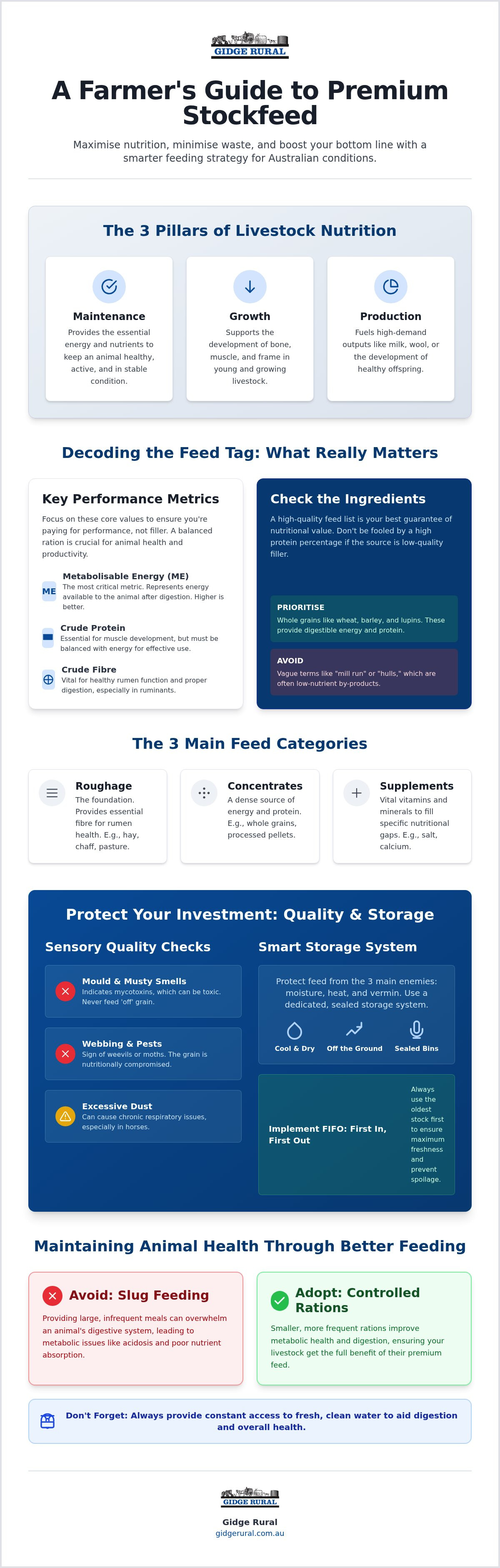
Managing a successful Australian property requires a firm grasp on Animal feed basics. Broadly defined, stockfeed includes any material used to provide essential nutrition to domestic animals. It isn't just about keeping bellies full; it's about meeting specific biological requirements. Nutrition generally supports three pillars: maintenance, growth, and production. Maintenance keeps the animal healthy, growth develops bone and muscle in young stock, and production supports wool, milk, or offspring development.
Pasture quality across the country fluctuates wildly with the seasons. When grass dries off or stops growing during a dry spell, its nutritional value plummets. This is where supplementary feeding becomes critical. Without it, livestock lose condition quickly, making them vulnerable to disease. Choosing a Premium Stockfeed ensures your animals receive a precisely balanced ration. These products are formulated to fill the specific gaps left by poor grazing, providing a reliable solution for year-round health.
The Three Main Categories of Feed
Roughage forms the foundation of most diets. Materials like hay, chaff, and standing pasture provide the essential fibre needed for healthy rumen function. While high in volume, roughage often lacks the dense energy required for high-production animals or growing lambs.
Concentrates provide a punchy hit of energy and protein. These include whole grains or processed pellets. They offer a dense nutrient profile, supporting rapid growth or high energy demands that roughage alone simply can't meet during peak production cycles.
Supplements act as the final piece of the puzzle. These vitamins and minerals fill specific nutritional holes, such as salt, magnesium, or calcium deficiencies. They are used in smaller quantities but are vital for preventing metabolic issues and ensuring your stock remains productive and resilient. For horse owners seeking specialised support, you can explore Sale of Equine Dietary Supplements and Pellets to find products tailored to their unique needs.
How to Evaluate Stockfeed Quality and Nutritional Labels
Choosing the right stockfeed requires more than a quick glance at the price tag. You must understand the feed tag to ensure your animals get the performance you're paying for. Look for Crude Fibre, which ensures proper digestion, and Fat, which provides concentrated energy. Crude Protein is the total nitrogen content in the feed. While high protein levels are often sought after, they must be balanced against energy to be truly effective for growth or production.
Metabolisable Energy (ME) is perhaps the most critical metric for efficiency. It represents the energy actually available to the animal after accounting for losses during digestion. A higher ME value means the animal needs less volume to maintain condition, reducing your overall costs and waste. Always scrutinise the ingredient list. Prioritise whole grains like wheat or barley over generic fillers like mill run or hulls. If you need assistance selecting the right balance, you can browse a range of premium stockfeed options designed for Australian conditions.
Visual and Sensory Quality Checks
Your senses are powerful tools for quality control. Mycotoxins and mould often present as a musty smell or unusual discolouration. These can be toxic; never feed "off" grain to livestock. For chaff and hay, check for excessive dust. High dust levels can cause chronic respiratory issues, especially in stabled horses or yarded cattle.
Pest contamination is another major concern. Look for "webbing" inside grain bags, which indicates the presence of flour moths or weevils. These pests consume the high-protein germ of the grain, leaving behind a nutritionally depleted shell. If you spot clumps of grain stuck together by fine threads, the batch is already compromised and will likely be rejected by picky eaters.
Organising Your Stockfeed Storage and Rationing System
Moisture and heat are the primary enemies of feed longevity. In the Australian climate, high humidity and soaring temperatures quickly degrade the nutritional value of your stockfeed. Heat causes vitamins to break down, while moisture encourages the growth of toxic mycotoxins. Beyond environmental factors, vermin-proof storage is a non-negotiable requirement. Mice and rats consume significant amounts of grain, but the real damage comes from contamination through urine and droppings, which spreads disease across your property.
Maintaining a strict "First In, First Out" (FIFO) system ensures your animals always receive fresh rations. When you invest in Premium Stockfeed, effective storage protects that investment. Proper management keeps the energy and protein levels stable from the day of purchase until the bag is empty. This discipline prevents the accidental feeding of stale or nutritionally depleted grain.
Step-by-Step Guide to Proper Storage
- Step 1: Elevate all bags off concrete floors using pallets. This simple step prevents rising damp from seeping into the bottom bags.
- Step 2: Transfer opened bags into sealed metal or heavy-duty plastic bins. This creates a physical barrier against rodents and insects.
- Step 3: Label every bin with the feed type and the date it was opened. This removes the guesswork from your FIFO rotation.
Accurate Rationing Techniques
Precision is key to eliminating waste. You must feed by weight, not by volume. A scoop of dense grain weighs significantly more than a scoop of light chaff; relying on volume leads to metabolic issues or underperformance. Use a simple set of scales to calculate rations based on the animal's current weight and activity level. If you need reliable supplies to start your system, you can buy stockfeed online for national delivery.
Maintaining Animal Health Through Proper Feeding Practices
"Slug feeding" is a common mistake on many properties. This occurs when animals receive their entire daily ration in one large sitting. It causes a rapid drop in rumen pH, leading to acidosis and metabolic stress. Small, frequent meals are a far better approach. They mimic natural grazing patterns and keep the digestive system stable. Consistent access to high-quality stockfeed in smaller portions ensures nutrients are absorbed efficiently rather than wasted. While livestock digestion is a primary focus, many property owners also look for ways to support their farm pets; for instance, Purrlys provides dental probiotics to help maintain the digestive and oral health of cats.
Clean, cool water is a vital part of your feeding system. If water troughs are fouled or the water is too hot, animals will eat less. This reduced intake directly impacts their health and productivity. Always check troughs daily to ensure they are clear of algae and debris. Without adequate hydration, even the best nutritional plan will fail to deliver results.
For more detailed advice tailored to your specific herd, see our guides on cattle feed or goat feed. Watching for signs of nutritional distress is equally important. Keep a sharp eye out for dull coats, lethargy, or a sudden change in grazing behaviour. These are early warning signs that your current regime needs adjustment before serious health issues arise.
How to Transition Between Different Feeds
Never swap one ration for another overnight. Always follow the 7-to-10 day rule. Start by mixing 25% of the new grain with 75% of the old, gradually increasing the ratio every few days. Sudden feed changes can disrupt ruminant microbes. During this transition, monitor manure consistency closely. If it becomes loose or watery, slow down the changeover. This patient approach prevents digestive upsets and keeps your animals on track for optimal growth.
Optimising Your Property's Nutritional Strategy
Effective feed management is a professional discipline that pays dividends in animal health and cost savings. By prioritising Metabolisable Energy and whole grains, you ensure every dollar spent on stockfeed translates into measurable results for your livestock. A disciplined storage system is your best defence against pests and spoilage; keeping bags elevated and sealed preserves the high-quality nutrients your animals need to thrive. Transitioning between rations slowly and feeding by weight rather than volume will further protect your stock from metabolic distress.
Gidge Rural has been trusted by local farmers for years to provide an expertly selected range for Australian conditions. We offer national delivery for rural property owners, ensuring you have access to the best supplies regardless of your location. Browse our range of Premium Stockfeed and order online today to secure high-quality nutrition for your herd. With a clear system in place, you'll enjoy healthier, more productive animals and a more efficient property.
Frequently Asked Questions
How long can I store stockfeed before it loses its nutritional value?
Most stockfeed maintains its peak nutritional value for three to six months if stored in a cool, dry environment. Beyond this period, vitamins begin to degrade and fats can become rancid, especially in high-fat pellets. Always check the manufacturer's "use-by" or "milled-on" date. If you notice a change in smell or colour, the nutritional profile is likely compromised and should not be fed to high-production animals.
Can I feed horse feed to my sheep or cattle safely?
No, you should never feed horse-specific rations to sheep or cattle without checking the label for copper levels. Sheep are highly sensitive to copper; levels that are safe for horses can be fatal to them. Additionally, some horse feeds contain medications or additives that aren't registered for use in food-producing animals. Always stick to species-specific rations to ensure the safety and health of your livestock.
How much stockfeed should I give my animals per day?
Daily rations depend entirely on the animal's weight, age, and production stage. As a general rule, supplementary feeding usually accounts for 1% to 2% of an animal's body weight when pasture is limited. You must adjust this based on whether the stock is growing, pregnant, or working. Use a set of scales to weigh every portion; relying on scoops leads to inconsistent nutrition and unnecessary waste.
What is the best way to prevent mice from getting into my stockfeed?
The most effective method is using sealed metal bins with tight-fitting lids. Mice can easily chew through plastic bags and even some heavy-duty plastic containers. Keep your storage area clean by sweeping up any spilled grain immediately, as even small amounts attract vermin. Elevating your bins off the ground also makes it harder for pests to nest nearby, protecting your feed from contamination and disease.
Is it cheaper to buy stockfeed in bulk or by the bag?
Buying in bulk often provides a lower price per tonne, but it only saves money if you have the infrastructure to store it correctly. For smaller properties, buying by the bag is frequently more cost-effective because it reduces the risk of spoilage and pest infestation. Consider your monthly usage; if you can't use a bulk delivery within three months, the potential for waste usually outweighs the initial price discount.


