

The right poultry feed isn’t simply the one your birds eat fastest. A flock may include birds of different ages and purposes, and the best choice depends on who will be eating it. Choosing poultry feed can feel confusing when complete feed sits alongside grain, scratch mixes and treats.
Start by identifying each bird’s species, age and purpose, then compare that with the feed label. A consistent routine makes it easier to spot when feed is being wasted, some birds are missing out or your flock’s needs have changed.
This guide explains how common feed types differ, how to keep extras from displacing a balanced ration, and what to review as your birds grow or the flock changes. It also covers when to seek qualified advice. Gidge Rural sells premium stockfeed through its rural supply shop and online store.
Key Takeaways
- Choose poultry feed by identifying your birds’ species, age and purpose, then check the label for suitability.
- Use complete feed as the planned daily ration; treats and scratch mixes are extras, not automatic substitutes.
- Build a practical routine around the product directions, consistent access and regular observation of your flock.
- Review the routine when bird behaviour, feed use or flock needs change, and seek qualified advice if you’re concerned.
Poultry feed basics: what your flock needs from its daily ration
Poultry feed is the planned food ration for domesticated birds such as chickens, ducks and turkeys. It is different from treats or extra foods offered now and then. The right choice depends on the bird, its age and its purpose, so don’t assume a feed intended for one species suits every bird in the flock. Just as companion bird owners might look to an exotic bird store New Jersey for diets tailored to specific avian needs, poultry keepers must ensure their feed is formulated precisely for their flock's species and life stage.
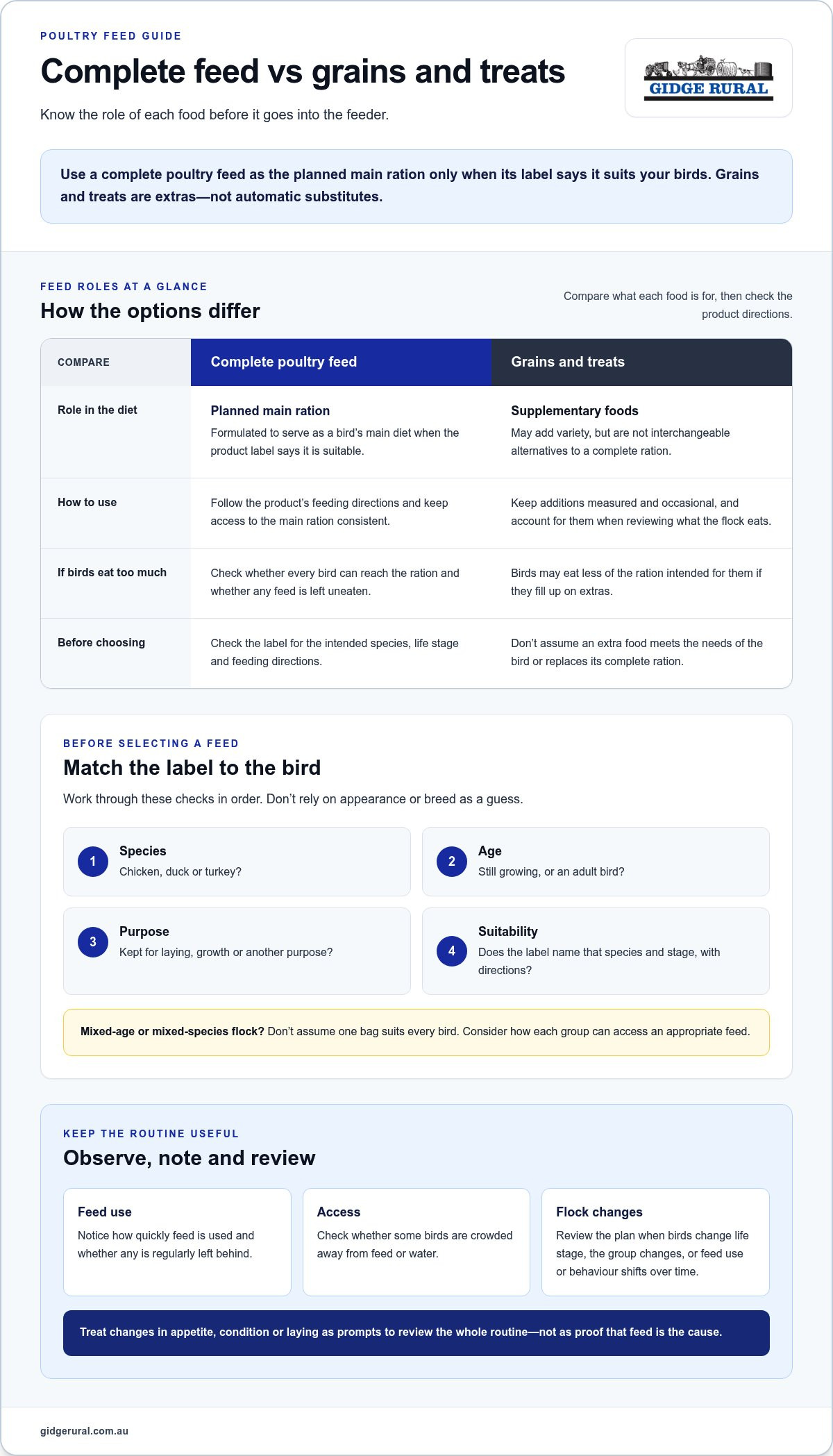
Complete poultry feed is formulated to serve as a bird’s main diet when the product label says it is suitable. Grain, kitchen scraps and scratch mixes may add variety, but they should not automatically replace a complete ration. Before feeding, check the label for the intended species, life stage and directions.
Complete feed, grains and treats: how they differ
Complete feed is designed to provide the main ration when fed as directed. Grains and treats are supplementary foods, not interchangeable alternatives. If birds eat too many extras, they may eat less of the ration intended for them. Keep additions measured and occasional, and account for them when reviewing what the flock is eating. For background on common feed types and chicken feeding, see this overview of chicken feed.
Why age and purpose affect feed choice
Growing birds and laying birds have different feeding considerations. A ration suited to a growing chicken may not be the right choice for a laying hen, and ducks or turkeys may have different requirements again. Check the label for the species and life stage it names. If your flock includes birds at different stages, don’t assume one bag suits all of them. Consider how each group will access an appropriate feed, and follow the product directions.
How to choose poultry feed for your birds’ species, age and purpose
Choose in a clear order: identify the bird, its age and what it is being kept for, then check whether the label suits that combination. Start with the bird’s life stage and the product label, not a guess based on appearance or breed. This gives you a practical way to compare options before changing a ration.
- Species: Is the bird a chicken, duck or turkey?
- Age: Is it still growing, or has it reached adulthood?
- Purpose: Is it being raised for laying, growth or another purpose?
- Suitability: Does the label name that species and stage, and provide feeding directions?
Match feed to poultry type and life stage
A growing chicken and a laying hen have different feeding considerations. A mixed-age flock may need a plan that accounts for each group rather than one ration chosen for convenience. Check which birds can access each feed, and don’t assume a chicken ration also suits ducks or turkeys. Apply the same care when comparing feeds for different breeds: use the stated species and life-stage suitability instead of relying on a broad label or a guess.
Read the feed label before changing the ration
Check the intended species and age group, feeding directions and any stated limitations. If the label does not clearly fit your flock, pause before switching and seek advice from a qualified poultry nutrition professional. Mississippi State University Extension’s guide to poultry nutrition and feeding discusses feeding across growth stages. If you’re comparing stockfeed options, Gidge Rural’s stockfeed range is available through its rural supply shop and online store.
How to set a practical poultry feeding routine
A steady routine makes it easier to notice whether your feeding plan still fits the flock. Use the product directions as your starting point, then keep access to the main ration consistent. Feed amounts aren’t one-size-fits-all: follow the label and account for factors such as bird type, age and how the flock is managed. Avoid relying on a generic serving figure from an online source.
Build the routine around the feed directions
Use the specific product label to guide the amount and frequency of feeding. Keep the main ration separate from treats and extras. If birds fill up on scratch or other additions, they may eat less of the ration intended for them. When you change feed or move birds between groups, make a simple note of what changed and what you observe. For example, record whether feed use has shifted or whether every bird can reach the feeders.
Check access as part of the routine. Notice whether some birds are routinely crowded away from the feed, whether food is left uneaten, or whether it disappears faster than expected. These observations help you identify practical issues before assuming the ration itself needs to change. Thoughtful shelter design, such as the layouts built by Southern Chicken Coops, can also assist by providing protected space where feeders can be stationed to minimise crowding.
Keep changes measured and consistent
Avoid abrupt, unexplained changes to the ration. If you switch products, follow the new product’s guidance for transitioning and note when the change happened. Where practical, keep the rest of the routine steady. Changing several things at once makes it harder to tell what may have affected feed use or flock behaviour.
For wider guidance on managing stockfeed, refer to relevant advice on storage and handling. When comparing premium stockfeed, keep your flock’s needs and the product directions at the centre of the decision. Shop premium stockfeed at Gidge Rural through the rural supply shop or online store.
Assess your poultry feed routine and respond to changes
A feeding plan should keep pace with the flock. Review it when birds move into a new life stage, the group changes, or you notice a sustained shift in feed use or behaviour. Before changing the ration, look at the whole routine. A change in appetite or laying, on its own, does not show that feed is the cause.
Signs your feeding plan may need a review
Keep brief notes on how quickly feed is used, whether any is regularly left behind, and whether all birds can reach it. Observe appetite, general condition and laying patterns over time, too. Consider other changes alongside these observations, including flock composition and access to feeders and water. Treat these as prompts to review the routine, not as a diagnosis or proof of a feed deficiency.
When to seek experienced poultry nutrition advice
Recheck the label if your flock’s age, species or purpose has changed, or if the ration no longer seems to fit. For persistent concerns, special requirements or uncertainty about the diet, seek advice from a qualified poultry nutrition professional. If birds appear unwell, consult a veterinarian rather than trying to diagnose the cause or treating a feed change as a cure.
Keep notes on feed use and flock changes handy when discussing the ration. They can help a qualified adviser understand what you’ve observed and when it began. You can also read more about poultry feed and healthy chooks in the related poultry how-to article.
Reviewing the routine doesn’t always mean changing the feed. If a different stockfeed is needed, compare its label with your flock’s needs. Gidge Rural sells premium stockfeed through its rural supply shop and online store, where you can explore stockfeed options as you refine your plan.
Make your feeding plan work for the flock ahead
A good routine isn’t fixed forever. Treat it as a working plan that you revisit as the flock changes, rather than waiting for a problem to force a decision. Brief notes on flock changes and feed use can help you spot patterns and explain your observations if you seek qualified advice. Before changing a ration, check that the product remains suitable for your birds and follow its directions.
This makes choosing poultry feed part of everyday flock care, not a one-off decision. A review doesn’t automatically mean you need a new ration. Sometimes the next step is simply confirming that the current feed still fits your birds’ life stage and purpose. If you do make an adjustment, change one thing at a time and record when, so you can make sense of what you observe.
Ready to explore stockfeed options as you plan your flock’s next step? Explore Gidge Rural’s stockfeed range online or through the rural supply shop. Compare the product information with your flock’s needs and follow the feeding directions.
Poultry Feed FAQs
Is poultry feed the same as chicken feed?
Not always. “Poultry feed” can refer to feed for several domesticated bird species, while “chicken feed” specifically refers to feed for chickens. A bag labelled for poultry isn’t automatically suitable for every bird. If you keep chickens alongside ducks or turkeys, check the packaging carefully and choose feed that states it suits the species you intend to feed.
Can chickens eat scratch grains instead of complete poultry feed?
Scratch grains shouldn’t replace a complete ration as a chicken’s main diet. For example, offering grain before the usual feed may mean birds eat less of their formulated ration. Keep scratch as an occasional extra and follow the main feed’s directions. If you’re unsure how an additional food fits your flock’s diet, seek qualified poultry nutrition advice.
How do I choose poultry feed for chicks and laying hens?
Choose a product whose label names the bird’s life stage and intended use. A chick and a laying hen aren’t at the same point in their development, so don’t assume one product suits both. In a mixed-age flock, consider how you’ll keep each group on an appropriate ration. If that’s difficult to manage, ask a qualified poultry nutrition professional for guidance.
How much poultry feed should I give my flock each day?
Use the feeding directions on the specific product rather than a universal daily amount. The right quantity can vary with the birds and how they’re kept. Check whether feed is being eaten or left behind, and look for spillage that makes consumption hard to judge. If the label doesn’t address your flock’s circumstances, seek advice before adjusting the ration.
What should I do if my chickens stop eating their feed?
First, check whether the feed looks or smells different from usual, whether it has been changed, and whether every bird can reach it. Make sure clean water is available, too. Don’t assume a sudden appetite change is a feed problem or try to diagnose it yourself. If reduced eating persists or a bird seems unwell, contact a veterinarian for advice.


