

What if the "cheap" bag of pellets you just bought is actually costing you more in lost weight gain and poor herd health? Choosing the right cattle feed often feels like a guessing game, especially when you are staring down an El Niño declaration and drying pastures. It's understandable to feel overwhelmed by technical specs like Crude Protein or Metabolisable Energy while trying to keep your input costs under control. You want a productive herd, but balancing quality with a sensible budget is a constant challenge for every Australian property owner.
This guide will show you exactly how to select a diet that maximises weight gain and fills seasonal nutritional gaps. We will simplify the science behind modern stockfeed, explain how to prevent metabolic issues, and provide a clear framework for building a more resilient, healthy herd. From understanding energy levels to managing dry season deficiencies, you'll gain the knowledge needed to streamline your feeding routines and improve your bottom line. We will move through the essentials of nutrition in a logical, practical way so you can make informed decisions for your livestock today.
Key Takeaways
- Understand why relying solely on pasture often falls short during Australian seasonal shifts and how to bridge the nutritional gap.
- Compare the pros and cons of raw grains versus processed cattle feed pellets to find the most efficient solution for your property.
- Learn to match specific nutrient levels to growth stages, from rumen development in calves to fat cover in finishers.
- Safeguard your livestock by mastering transition techniques that prevent grain poisoning and other metabolic issues.
- Recognise the essential role of clean, fresh water in aiding digestion and ensuring your herd stays healthy and productive.
Understanding the Basics of Cattle Nutrition and Feed Types
Effective cattle feed isn't just a single ingredient. It's a precise balance of roughage, energy, and protein sources designed to keep your livestock thriving. At the centre of this system is the rumen. This complex stomach acts like a fermentation vat, relying on fibre as its primary fuel source. Without enough long-stem fibre, the rumen stops working efficiently, which can lead to serious metabolic issues like acidosis. For a comprehensive Cattle feeding overview, it's clear that fibre remains the foundation of every successful diet.
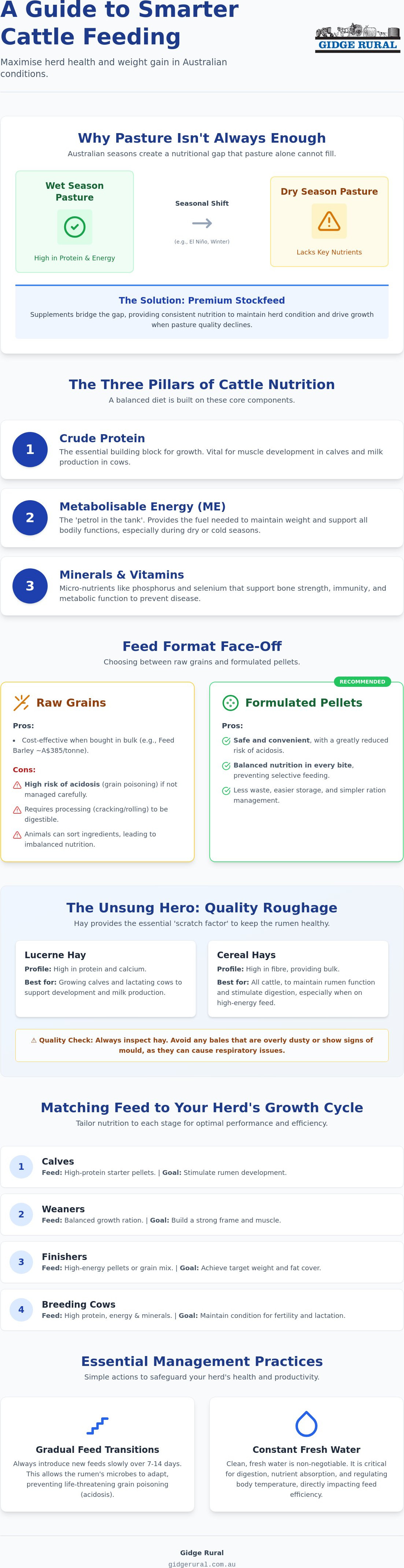
While Australian paddocks provide excellent grazing during a wet spring, pasture quality drops sharply during our harsh seasonal shifts. As grass dries out or enters a dormant phase, it loses its nutritional punch. This leaves your herd with "belly filler" that lacks the necessary protein and energy to sustain growth. This is where Premium Stockfeed becomes essential. It bridges the gap between what the land provides and what your animals actually need to maintain condition, especially with an El Niño declaration increasing the risk of below-average rainfall.
The Three Pillars: Protein, Energy, and Minerals
Crude Protein. This is the building block for growth. It's vital for muscle development in young calves and sustained milk production in breeding cows. If protein levels drop too low, growth stalls and immunity suffers.
Metabolisable Energy (ME). Think of ME as the "petrol" in the tank. It represents the energy available for the animal to use after digestion. It is the primary factor that keeps the mob maintaining weight during a cold winter or a dry summer when green feed is scarce.
Minerals and Vitamins. Don't overlook these micro-nutrients. Elements like phosphorus, magnesium, and selenium support bone strength and metabolic function. A deficiency in these areas can lead to preventable diseases that stall your herd's productivity and health.
Comparing Grains, Pellets, and Roughage: Which is Best?
Deciding on the right cattle feed format depends on your herd size and the time you can dedicate to management. Raw grains like barley or sorghum are traditional choices. They are often cost-effective when bought in bulk, with prices for feed barley recently quoted around A$385 per tonne. However, raw grains require careful handling. If you don't crack or steam-roll them, much of the nutrient value passes straight through the animal. Even worse, feeding straight grain without proper buffering increases the risk of acidosis, a painful and potentially fatal condition.
Pellets vs. Raw Grains
Formulated pellets offer a safer, more convenient alternative, especially for hobby farmers or those with smaller mobs. Every pellet contains a balanced mix of protein, energy, and minerals. This prevents "sorting," where dominant animals pick out the tasty bits and leave the essential nutrients behind. You get less waste and easier storage. To ensure you're meeting specific requirements for different growth stages, consult cattle nutrition resources provided by industry experts.
The Importance of Quality Hay
Roughage is the "scratch factor" that stimulates the rumen wall and keeps digestion flowing. Even when using high-energy pellets, your cattle should always have access to quality hay. Different hays serve different purposes:
- Lucerne: High in protein and calcium, ideal for growing calves and lactating cows.
- Cereal Hays: High in fibre, perfect for maintaining rumen health and providing bulk.
When selecting your cattle feed and roughage, check for a consistent texture. Avoid any bales or bags that are excessively dusty or show signs of mould, as these can lead to respiratory issues. If you need a reliable source for your mob, you can explore premium stockfeed options that meet these high standards.
Matching Feed to Your Herds Growth Cycle
Not every animal in your mob has the same nutritional requirements. A young calf building its frame needs a completely different ration than a dry cow simply maintaining weight. Selecting the right cattle feed depends on identifying which stage of the growth cycle your livestock are currently in. By tailoring your approach, you avoid wasting expensive supplements on animals that don't need them while ensuring your high-performers reach their potential.
Calves require high-protein starter pellets to stimulate rumen development. During the first few months, their digestive system is transitioning from milk to solid feed. Providing a 16% to 20% protein ration encourages early growth and ensures they don't receive a setback at weaning. Once they move into the grower phase, the focus shifts toward a balance of protein for frame development and energy for steady weight gain.
Feeding for Growth and Fattening
If you're preparing steers for sale, you need to target specific live-weights to hit market specifications. This often requires high-energy supplements to boost average daily gain. Finishing is the process of adding muscle and fat before market. During this stage, energy density is more critical than high protein. You're looking for that final "bloom" that attracts buyers at the saleyards or meets processor requirements.
Supporting the Breeding Herd
Managing breeding cows is a balancing act. You don't want them over-conditioned and fat, as this leads to calving difficulties. However, they need a "rising plane of nutrition" in the weeks leading up to joining to improve conception rates. Once the calf is on the ground, a cow's energy and protein demands double to support lactation. If the paddock is dry, you must supplement to prevent her from "milking off her back" and losing too much condition.
During drought or poor seasons, maintenance feeding becomes the priority. This isn't about growth; it's about survival and keeping the rumen healthy until the rain returns. To find a solution tailored to your herd's current stage, shop our range of premium stockfeed designed for Australian conditions.
Best Practices for Feeding and Management on Your Property
Successful livestock management goes beyond just buying the right cattle feed. It's about how you deliver it to the mob. The golden rule for every property owner is to introduce new supplements slowly. A sudden shift in diet can disrupt the rumen and trigger grain poisoning or acidosis. Aim for a transition period of 10 to 14 days to allow the animal's internal microbes to adjust to the new energy levels safely.
Safe Feed Introduction
Start by offering very small amounts of pellets or grain alongside unlimited access to quality roughage. Gradually increase the supplement every second day while watching the herd closely. Look for signs of lethargy, scouring, or bloating. If any animals appear "off," cut back the ration immediately and ensure they have plenty of hay. This slow approach is the most effective way to prevent metabolic crashes that stall growth or cause livestock losses.
Storage and Handling
Proper storage protects your financial investment and the health of your herd. You must keep all supplies in a cool, dry place to prevent mould growth and contamination from vermin. Rats and mice don't just eat the grain; they spoil it with droppings that can spread disease throughout your mob. You can find more details on protecting your supplies in our guide on How to Store Stockfeed.
In addition to storage, consider the layout of your property. Organise feeding areas to reduce trampling and waste. Using troughs or hay rings prevents expensive cattle feed from being trodden into the dirt. For those looking to improve their property's infrastructure, you can learn more about professional site cleanup and maintenance. Finally, ensure your cattle have constant access to clean, fresh water. Water is the most critical nutrient for digestion and metabolism. Without enough of it, your herd can't process their feed efficiently. Monitor your herd's Body Condition Score regularly to adjust these levels proactively before they lose significant weight.
Secure Your Herd's Future with Smarter Nutrition
Mastering your livestock's diet is the most direct way to ensure a productive and healthy mob. By matching specific nutrients to each growth cycle and managing feed transitions carefully, you protect your animals from metabolic setbacks while maximising weight gain. High-quality roughage and constant access to clean water remain the non-negotiables for any successful feeding program on your property. When you combine these best practices with the right cattle feed, you create a resilient system that can withstand even the toughest Australian seasons.
If you're ready to upgrade your results, we are here to help. At Gidge Rural, we provide expert advice tailored for local property owners along with a comprehensive range of stockfeed and animal health supplies. Our shopfront is open seven days a week, and we offer reliable delivery to keep your operations running smoothly. We understand the practicalities of the industry and are committed to being your dependable partner in the paddock.
Explore our range of Premium Stockfeed and cattle supplies at Gidge Rural
Feeding your cattle shouldn't be a source of stress. With a solid nutritional plan and quality supplies in the shed, you can confidently manage seasonal gaps and watch your herd thrive year-round.
Frequently Asked Questions
How much feed does a cow need per day?
An adult cow generally needs to eat between 2% and 3% of her live body weight in dry matter every day. For a standard 500kg beast, this means providing roughly 10kg to 15kg of total intake. These requirements increase significantly for lactating cows or young stock in a rapid growth phase. Always adjust the volume based on the energy density of your chosen cattle feed.
Can cattle live on grass alone in Australia?
While cattle can live on grass alone during peak growing seasons, they rarely thrive on it year-round in the Australian climate. Native pastures often lose their nutritional value once they go to seed or during dry spells. Providing supplements during these times prevents your mob from losing weight and ensures they receive the protein and minerals missing from dry paddock feed.
What is the best grain for fattening cattle?
Barley is a top choice for fattening because it offers high metabolisable energy with a lower risk of digestive upset compared to wheat. Sorghum and maize are also excellent for weight gain, but they usually need to be cracked or rolled for the animal to process them. Many property owners find that high-quality pellets are the most reliable way to deliver these grains safely.
What are the signs of grain poisoning (acidosis) in cattle?
Common signs of grain poisoning include watery scouring, a dull appearance, and a sudden loss of appetite. You may also notice animals standing apart from the mob or showing a "tucked up" look in the belly. In acute cases, cattle can become lame or develop severe bloat. If these signs appear, swap out their high-energy cattle feed for plain hay and seek advice immediately; much like how humans might visit a walk-in clinic Winnipeg for urgent care, your livestock need prompt attention to recover.
Is it better to feed cattle in the morning or evening?
Feeding at a consistent time each day is the most important factor for rumen stability. Most property owners prefer the morning because it makes it easier to spot sick or lethargic animals during the day. However, during a heatwave, feeding in the late afternoon can be safer. This ensures the peak heat produced during digestion occurs during the cooler night hours rather than the midday sun.


