

The old myth that goats can survive on nothing but scrub and old tin cans is a dangerous misconception that costs Australian producers dearly in health and productivity. Goats are actually high-performance ruminants with metabolic requirements that are distinct from sheep. Choosing the right goat feed is about more than just filling a trough; it's about balancing energy, protein, and minerals to meet the 2026 Australian Animal Welfare Standards.
We understand the stress of managing a herd when the pasture dries up and feed costs start to climb. It's easy to feel overwhelmed by the risk of bloat or the complexities of Australian soil deficiencies. This guide simplifies the process. It helps you master every life stage from kids to seniors. We provide a clear feeding schedule, identify the essential supplements your herd needs, and show you how to prevent metabolic diseases through a precise diet. You'll also learn the critical rules regarding the National Ruminant Feed Ban to keep your property compliant and your animals safe. This is your practical roadmap to a healthier, more profitable herd.
Key Takeaways
- Understand why goats are specialised browsers rather than traditional grazers and how their preference for shrubs and bark impacts their daily forage requirements.
- Learn to select the best goat feed options, including balanced commercial pellets and energy-dense grains like lupins or barley for dry seasons.
- Identify specific nutritional requirements for every life stage, from transitioning kids onto creep feed to maintaining healthy wethers.
- Recognise common Australian toxic plants and implement effective vaccination schedules to prevent life-threatening metabolic diseases like Enterotoxaemia.
Understanding Goat Nutrition: Browsers vs Grazers
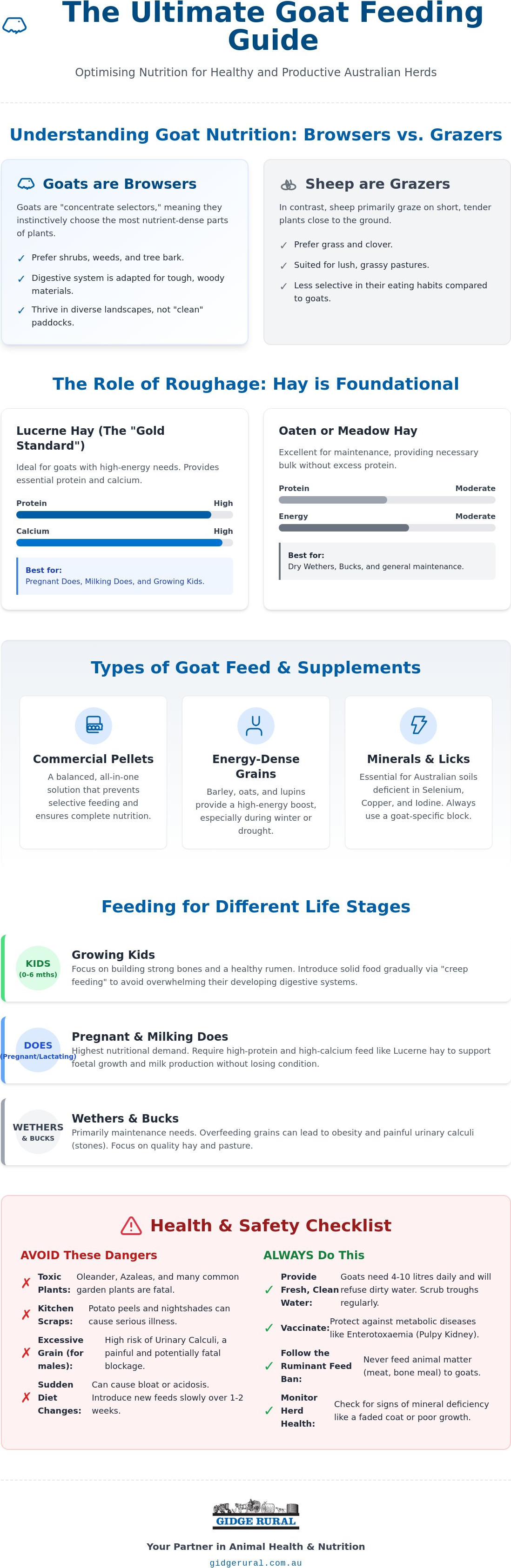
Goats aren't just small cows. They're specialised browsers. They're known as "concentrate selectors" because they pick out the most nutrient-dense parts of a plant. While a sheep grazes on grass, a goat looks for shrubs, weeds, and tree bark. This selective eating style is a survival mechanism. It allows them to find high-quality nutrition in rugged environments where lush grass is scarce.
Their digestive system is built for this variety. The rumen acts as a fermentation vat, breaking down tough, woody materials into energy. Following modern Goat farming practices means providing a diverse landscape. If you keep goats in a "clean" paddock without any scrub, they often suffer from nutritional deficiencies. They miss out on the deep minerals found in the woody plants they evolved to eat. Supplementing with a quality goat feed can help bridge this gap when natural browse is limited.
To better understand the unique way these animals eat, watch this helpful video:
The Role of Roughage and Hay
Roughage is the foundation of a healthy rumen. You should ensure your goats have access to quality hay at all times. It keeps their digestive system functioning and prevents boredom. While hay is the primary source of roughage, it should be used in conjunction with a formulated goat feed to ensure a complete nutritional profile.
- Lucerne Hay: This is the "gold standard" for high-energy needs. It is ideal for pregnant does, milking does, or growing kids because it's high in protein and calcium.
- Oaten or Meadow Hay: For general maintenance of dry wethers or bucks, this is a better option. It provides the bulk they need without the high protein levels that can cause obesity or urinary calculi.
Effective fibre is the physical structure of long-stemmed forage that stimulates chewing and saliva production to prevent rumen acidosis.
Types of Goat Feed: Pellets, Grains, and Supplements
Selecting the right goat feed depends on your herd's specific needs and the quality of your pasture. Commercial pellets, such as those sourced from Liken, offer a balanced, all-in-one solution that prevents goats from "sorting" through their food. This ensures every animal gets the exact vitamins and minerals they require. For a high-energy boost during winter or drought, grain mixes like barley, oats, or lupins are effective. However, use caution with wethers. Excessive grain intake can lead to urinary calculi; this condition is often painful and potentially fatal for males.
Chaff and mashes are excellent tools for delivering supplements or hydrating a sick animal. A warm bran mash can encourage a lethargic goat to drink during cold snaps. Avoid the temptation to feed kitchen scraps or garden waste. Plants common in Australian gardens, such as Oleander and Azaleas, are highly toxic. Even potato peels and certain nightshades can cause rapid illness or death in ruminants.
Essential Minerals and Lick Blocks
Australian soils are notoriously deficient in Selenium, Copper, and Iodine. Unlike sheep, goats have a high requirement for Copper. Using a general stock lick is often insufficient and can lead to coat fading or poor growth. You should provide a goat-specific mineral block to meet these unique physiological needs. Choosing Premium Stockfeed serves as the foundation for a healthy herd.
Water Requirements for Goats
Hydration is as critical as your choice of goat feed. A standard 60kg doe requires between 4 to 10 litres of water daily. This amount increases significantly during peak lactation or extreme summer heat. Goats are incredibly fussy drinkers. They will often refuse water if it contains a single leaf or bit of dirt. Scrub your troughs regularly to ensure they stay clean and inviting.
If you want to support your herd's vitality through every season, explore our range of animal health and medical supplies for practical, high-quality solutions.
Feeding for Life Stages: From Kids to Does
Precision is the key to managing a productive herd. Each life stage requires a different nutritional profile to ensure health and longevity. Feeding a dry buck the same ration as a high-producing dairy doe is a recipe for metabolic disaster. You must tailor your goat feed strategy to the specific energy demands of the animal's current role in the mob.
Kids need a head start for rumen development. While they begin on milk, introducing "creep feed" and fine-stemmed hay from two weeks of age is vital. This early access to solid food stimulates the rumen papillae, making the weaning process much smoother. For wethers, the focus shifts entirely to maintenance. These animals are prone to obesity and metabolic issues if given high-protein concentrates. Keep their diet simple, focusing on high-quality roughage and minimal grain to keep them in lean, healthy condition.
The breeding cycle for does demands the most attention. "Flushing" involves increasing energy intake three weeks before joining to improve ovulation rates. During the final trimester, 70% of foetal growth occurs, leaving little room in the abdomen for bulky, poor-quality forage. You need energy-dense goat feed during this window to prevent pregnancy toxaemia. Once lactation begins, dairy breeds require a significant boost in calcium and protein to maintain milk yield without stripping their own body reserves.
If you need to restock your supplies for the upcoming kidding season, you can buy premium stockfeed and animal health supplies directly from our online store.
Seasonal Feeding Strategies
Managing the "Summer Slump" is a common challenge for Australian property owners. As pastures dry off and protein levels plummet, you must monitor body condition scores (BCS) closely. A score of 2.5 to 3.0 is ideal for most goats. During drought or lean seasons, use supplementary pellets or lupins to bridge the nutritional gap and prevent rapid weight loss. If you are also managing larger livestock, you might find similar cattle feed principles useful for coordinating your property's overall nutrition plan.
Safety and Health: Avoiding Common Feeding Pitfalls
A goat's inquisitive nature is often its undoing. While they are famous for sampling everything, many common Australian plants are lethal. Oleander, Azaleas, and various nightshades can cause heart failure or respiratory distress within hours. Beyond garden escapes, some native species like certain Acacias or Brachyglottis also pose significant risks. Always survey your paddocks and fence lines for these hazards before introducing a new mob.
Metabolic disasters often stem from management errors rather than the goat feed itself. Enterotoxaemia, or "pulpy kidney," is a prime example. This occurs when Clostridium perfringens bacteria multiply rapidly in the gut, usually triggered by a sudden surge in high-energy grain or lush pasture. Vaccination with a 5-in-1 or 6-in-1 protocol is your best line of defence. It provides the necessary antibodies to neutralise toxins before they become fatal.
Consistency is vital for rumen health. Never swap feed types or brands overnight. Sudden dietary changes kill the beneficial microbes in the gut, leading to acidosis or stasis. Transition to any new goat feed over 7 to 10 days by gradually mixing increasing amounts of the new ration with the old. Secure storage is equally important. Keep all stockfeed in airtight drums or off the floor in a dry shed. Moisture leads to mould and mycotoxins, which can cause neurological damage or sudden death in your herd.
Signs of Nutritional Distress
Early detection saves lives. Watch for "staring" coats, where the hair looks dull and stands on end; this is a classic sign of mineral deficiency or a heavy worm burden. Bloat is another emergency. It presents as a visible swelling on the animal's left flank. If a goat is lethargic or standing away from the mob, check their rumen fill and temperature immediately.
Nutrition also plays a direct role in parasite management. A goat receiving adequate protein and minerals can mount a much stronger immune response against internal parasites. While drenching is necessary, a robust diet is what keeps them resilient. For complex cases or drought planning, always consult with your local rural specialist to develop a tailored feed plan that suits your specific Australian conditions.
Securing Your Herd's Future with Better Nutrition
Effective herd management starts with a deep understanding of goat physiology. You now recognise that these animals are specialised browsers; they require more than just a clear paddock to thrive. By tailoring your approach to specific life stages and maintaining a strict safety protocol, you prevent common metabolic diseases. Consistency and quality are the pillars of a resilient Australian herd.
A well-managed herd contributes to the broader agricultural economy and the culinary scene, where quality goat meat is highly valued. If you are travelling through the Sunraysia region, you can learn more about Curry & Tandoor to see how authentic Indian cuisine highlights the best of local produce.
Choosing the right goat feed is a practical investment in your property's success. Gidge Rural has been trusted by Australian property owners for decades to provide high-quality, utilitarian solutions. We offer expertly selected stockfeed to ensure optimal animal health across all conditions. With fast national shipping on essential animal health supplies, we keep your mob in peak condition year-round.
Browse our range of Premium Stockfeed and Goat Supplies today to find the right balance for your animals. Your commitment to better nutrition will lead to a healthier, more profitable future for your farm.
Frequently Asked Questions
What can goats not eat?
Goats must never eat toxic garden plants like Oleander, Azaleas, or Rhododendrons. It is also illegal under the National Ruminant Feed Ban to feed them any Restricted Animal Material (RAM), such as meat and bone meal. Avoid feeding them kitchen scraps like potato peels, avocado, or chocolate, as these can cause severe digestive upset or fatal poisoning.
Do goats need pellets if they have plenty of grass?
Yes, goats often require pellets even when pasture appears abundant. Most Australian grasses are deficient in essential minerals like Copper and Selenium that goats need for a healthy coat and strong immune system. A formulated goat feed ensures they receive a balanced intake that grass alone cannot provide, especially during dry seasons when pasture quality drops significantly.
Is lucerne hay good for all goats?
Lucerne hay is not suitable for every animal in your herd. While it is excellent for growing kids and lactating does due to high calcium and protein levels, it can be dangerous for wethers and bucks. High calcium intake in males often leads to the development of urinary calculi; this condition is painful and can be life-threatening. Stick to oaten or meadow hay for maintenance animals.
How much grain should I feed my goat daily?
The amount of grain depends entirely on the animal's life stage and body condition. A dry doe or wether may need no grain at all if they have access to quality forage. However, a doe in late pregnancy or peak lactation might require 200g to 500g of grain daily to maintain her energy levels. Always introduce any new goat feed slowly to prevent acidosis.
Can I feed sheep pellets to my goats?
You should avoid feeding sheep pellets to your goats as a long-term solution. Sheep are highly sensitive to copper, so sheep-specific feeds are formulated with very low levels of this mineral. Goats have a much higher copper requirement. Feeding them sheep pellets will eventually lead to a copper deficiency, resulting in poor growth, faded coats, and a weakened immune system.


