

The easiest landscaping material to buy can be the hardest to live with. A surface that looks right in a photo may not suit a sloping block, heavy foot traffic or the time you want to spend on upkeep. When comparing landscaping materials, look beyond colour and price to how each option will perform on your property.
This guide will help you match materials to different parts of the garden and the conditions on your site. Compare practical trade-offs for garden beds, paths and outdoor living areas, including drainage, durability and maintenance. You’ll also find steps for measuring areas and estimating quantities, so your shopping list reflects what the job needs. Start with how each area will be used, then consider slope, sun, soil and ongoing care. With a plan in hand, you can browse Gidge Rural’s garden and landscaping materials with a clearer idea of what belongs on your list.
Key Takeaways
- Identify what each garden zone needs to do, from supporting planting to providing reliable access.
- Compare landscaping materials by drainage, durability, appearance and the upkeep they’ll need on your site.
- Measure each area and decide how much coverage you want before estimating quantities.
- Use a shortlist of purpose, site conditions, quantity and maintenance needs to guide your shopping.
Landscaping Materials: Match the Material to the Garden Job
A garden may need to handle regular foot traffic, protect planting areas and provide a comfortable place to sit. Those jobs call for different materials. Start by looking at how each zone is used and what the site is like, including its slope, exposure and existing ground.
Landscaping materials are products used to shape, cover and support outdoor areas. Surface materials form visible or walkable layers, while soil-improvement materials support growing conditions. Paths, garden beds, planting areas and outdoor living spaces may need different choices. Hardscape materials are non-living elements, such as stone, concrete and wood, used in landscape design.
For a visual overview of how materials can suit different landscape jobs, watch this guide:
Which landscaping materials suit common garden areas?
Choose materials according to the role each area needs to play. Mulch can cover garden beds, while aggregates may create a defined surface or path. Soil and compost can support planting, and edging can mark the boundary between a bed and a lawn or path. These are starting points rather than universal solutions: site conditions and maintenance needs still affect the right choice.
Start with function before appearance
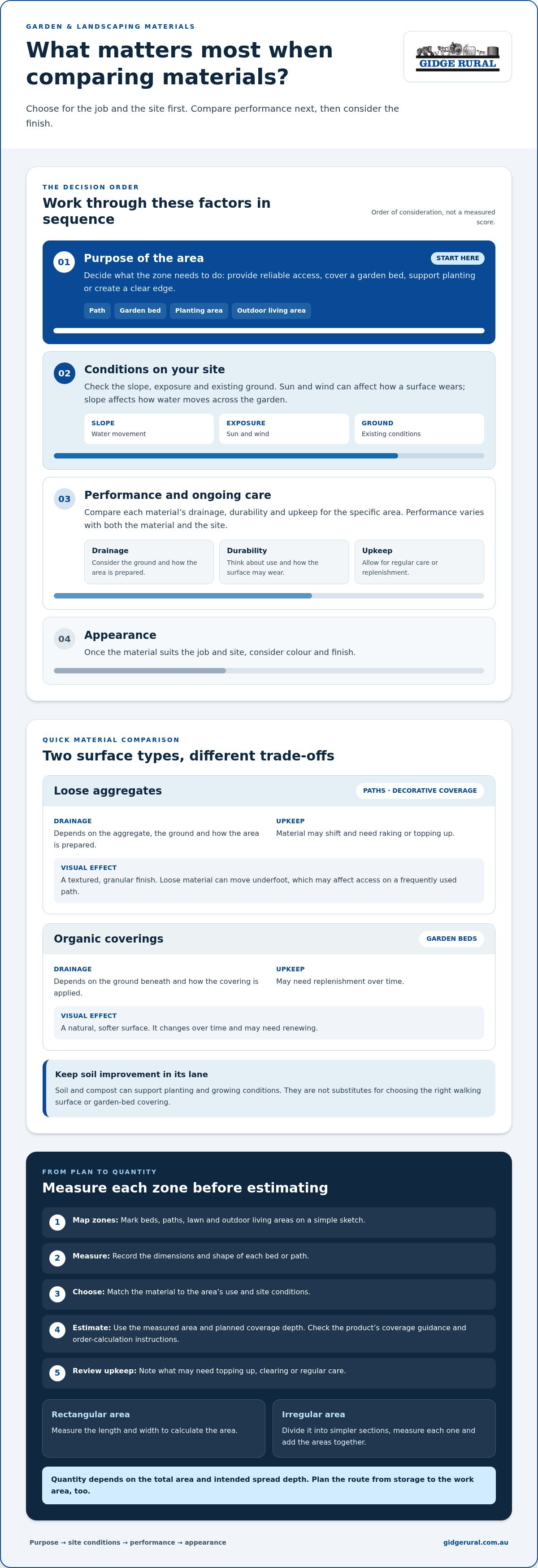
For each area, ask whether it needs coverage, reliable access, support for planting or a clear edge. A frequently used path has a different job from a planting bed, even if both sit beside the house. Decide on the function first, then narrow your options by drainage, durability and upkeep. Consider colour and finish once you know a material suits the job and site.
How to Compare Landscaping Materials for Drainage, Durability and Upkeep
A material’s performance depends on more than its label. Slope affects how water moves across a garden, while sun, wind and existing ground conditions can influence how a surface wears and how often it needs attention. A finish that looks attractive may not be suitable for every zone.
Compare function and site conditions before appearance. Use this quick guide to weigh common surface types. Performance varies with both the material and the site.
Loose aggregates
Use: Paths or decorative coverage. Drainage: Depends on the aggregate, the ground and how the area is prepared. Upkeep: Material may shift and need raking or topping up. Visual effect: A textured, granular finish.
Organic coverings
Use: Covering garden beds. Drainage: Depends on the ground beneath and how the covering is applied. Upkeep: May need replenishment over time. Visual effect: A natural, softer surface.
How do surface materials differ?
Loose materials can move underfoot or need redistribution, which may affect access on a frequently used path. Organic coverings can define a planted area, but they change over time and may need renewing. Before choosing either type, consider who uses the space, how often it is used and how much maintenance you’re prepared to do.
When does soil improvement matter?
Planting beds need suitable growing conditions. A decorative layer or path surface has a different purpose. Soil improvement is part of preparing a place for plants, not a substitute for choosing the right walking or covering material. For more on soil inputs, read this Australian property and pasture fertiliser guide.
Once you’ve matched each area’s purpose to its site conditions, browse Gidge Rural’s garden and landscaping materials to build a practical shortlist.
Plan Landscaping Materials, Quantities and Garden Upkeep
- Map zones: Mark beds, paths, lawn and outdoor living areas on a simple sketch.
- Measure areas: Record the dimensions and shape of each bed or path.
- Choose materials: Match each option to the area’s use and site conditions.
- Estimate quantities: Use the measured area and planned coverage depth to work out what’s needed.
- Review upkeep: Note what may need topping up, clearing or regular care.
How do I estimate landscaping material quantities?
For a rectangular bed or path, measure its length and width to calculate the area. For an irregular shape, divide it into simpler sections, measure each one and add the areas together. The quantity you need depends on the total area and the depth you intend to spread the material. Check the product’s coverage guidance and instructions for calculating an order rather than relying on a generic conversion. Also consider the route from the storage point to the work area when planning how to move the material.
Plan for plants and seasonal care
Keep planting plans separate from hard-surface measurements. Beds may need soil preparation and watering, while paths and other surfaces need their own coverage and upkeep plan. If you’re adding planted areas, see this reticulation equipment guide as you plan watering. For a lawn project, the Kikuyu grass seed selection guide can help inform that separate part of the plan.
Once you’ve recorded measurements and maintenance needs, browse garden and landscaping materials to build your project shortlist.
Choose and Shop Landscaping Materials for Your Project
Your plan is ready to become a shopping list. Before browsing, check that every garden zone has a clear purpose, a material category suited to its conditions, measured dimensions and an upkeep plan. This makes it easier to compare options and identify related supplies for the same area.
What should your landscaping materials checklist include?
Keep the details for each area together. For a garden bed, for example, note its intended use, the material category you’ve chosen, its dimensions and the care you expect it to need. Record any related garden supplies for that zone too. For a path or outdoor living area, include how it will be used and the site conditions that could affect your choice—such as preparing a level foundation for hosting spaces and shelters from Garden Chic.
- Project zone: Name the bed, path, lawn or outdoor area.
- Function and site: Note what it needs to do and the relevant ground or exposure conditions.
- Material and quantity: Record your chosen category, measurements and intended coverage.
- Upkeep and related supplies: List expected maintenance and other items needed for that area.
Turn the plan into your next shopping step
Use your checklist as a filter while browsing. It keeps your attention on material categories that match the project rather than appearance alone. Keep measurements and coverage notes close by so you can refer to product guidance as you compare options. For planted areas, include related garden supplies in the same project list.
Gidge Rural’s garden and landscaping materials are available through the online shop and physical store. Use your checklist to compare options against the job and site, keeping planned quantities and upkeep needs in view as you make your selections.
Put Your Garden Plan into Action
A practical garden starts with materials chosen for the job, not appearance alone. Match each area to its purpose and site conditions, then consider drainage, durability and the upkeep you’re prepared to manage. Measure beds and paths, plan the coverage you need and keep those details together in a clear shopping list.
With your shortlist ready, comparing landscaping materials becomes more straightforward. Focus on the categories that suit your project and account for related garden supplies before you shop.
Gidge Rural offers garden and landscaping materials through its online shop and physical store. Browse Gidge Rural’s garden and landscaping materials to explore options for your project. Take your measurements, work through your list and choose materials that fit the way you plan to use your garden.
Frequently Asked Questions
What are landscaping materials?
Landscaping materials are products used to shape, cover or support outdoor areas. They include surface materials for paths and outdoor living spaces, plus soil-improvement materials for planting areas. For example, mulch can cover a garden bed, aggregates can form a path surface, and soil or compost can help prepare a planting bed. Each material has a different purpose, so choose it for the job it needs to do.
How do I choose the right landscaping materials for my garden?
Choose landscaping materials by matching each option to the area’s function, site conditions and expected upkeep. Start by deciding whether a zone needs coverage, access, planting support or a defined edge. Then consider slope, exposure and existing ground before comparing appearance. A frequently used path and a garden bed have different requirements, even if you want a consistent look across the garden.
Which landscaping materials are best for garden drainage?
No single material is best for drainage in every garden. The result depends on the site’s slope, existing soil and how water moves through or across the area. Compare suitable surface options for the specific location, and consider whether the area is a path, planting bed or another zone. A surface material alone may not address underlying drainage problems, so assess the ground conditions as part of your plan.
How do I calculate how much landscaping material I need?
Measure the area and decide how deeply you plan to spread or apply the material. For a rectangular bed or path, record its length and width. Break an irregular shape into simpler sections, measure each one and add the areas together. The required quantity depends on the total area and planned coverage depth. Use the product’s coverage guidance to calculate what to buy, as requirements vary between material types.
Can I use the same landscaping materials throughout my property?
You can repeat a material to create a consistent look, but it may not suit every area’s function or ground conditions. A path needs to provide access, while a planting bed needs materials suited to growing conditions. Consider slope, exposure, drainage and maintenance for each zone before choosing. A small number of complementary material categories may work better than applying one option everywhere.


