

Are you tired of watching your hard-earned money disappear into expensive hay bales while your paddocks sit dusty and weed-choked? It's a common frustration for many landholders, especially when persistent weeds like Salvation Jane or thistles seem to grow better than your actual feed. Effective pasture management Perth Hills locals can rely on isn't just about waiting for rain; it's about treating your land as a manufactured asset. We know that when your soil fails to hold moisture, the reliance on bought-in hay becomes a heavy financial burden that eats into your budget.
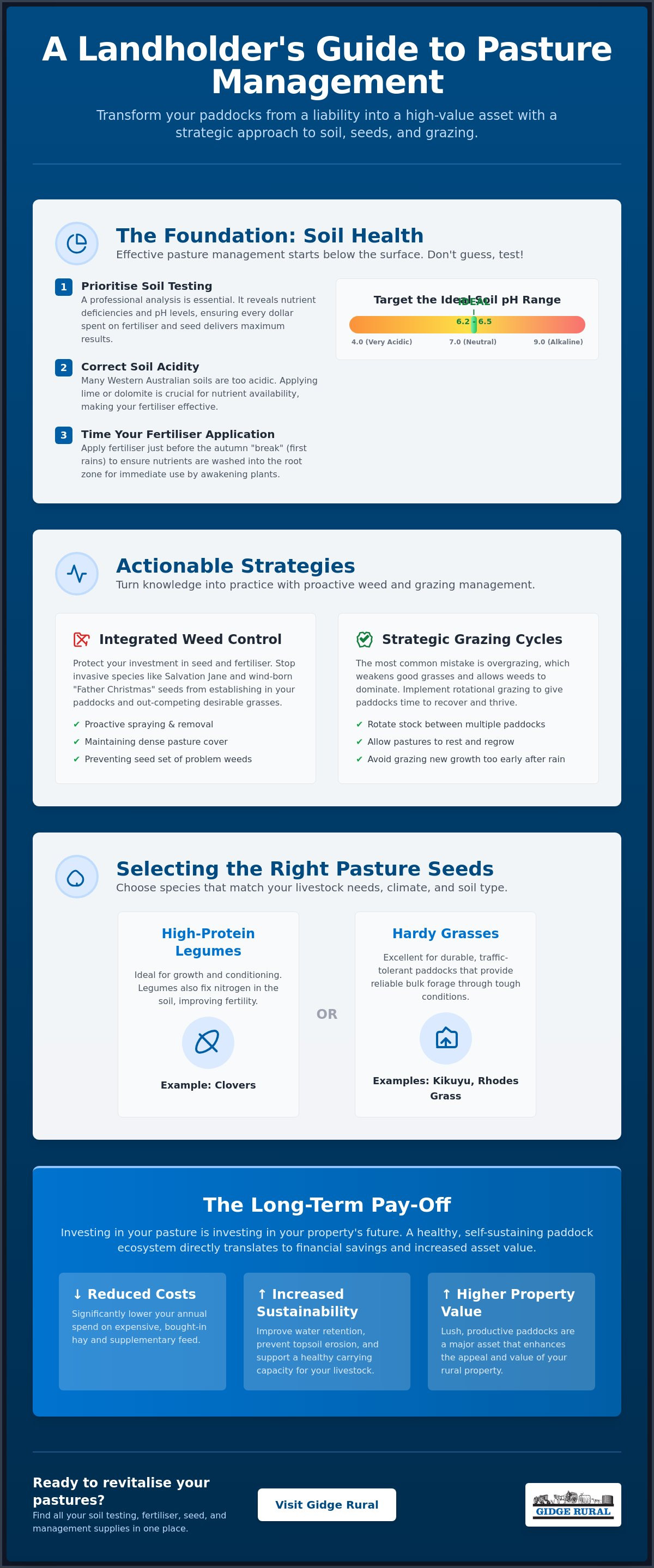
You can transform degraded ground into a lush, nutrient-rich resource that sustains your livestock and boosts your property value. This guide provides a professional approach to soil health, weed control, and strategic seed selection. We'll show you how to manage soil pH levels toward that ideal 6.2 to 6.5 range, choose the right species for the unique WA climate, and establish a grazing rhythm that works. You'll gain the practical knowledge needed to reduce your reliance on external feed and create a landscape you're proud to own.
Key Takeaways
- Prioritise soil testing to ensure every dollar spent on fertiliser and seed delivers maximum growth for your property.
- Master pasture management Perth Hills style by using strategic grazing cycles that allow your land to recover and thrive.
- Adopt an integrated weed management approach to stop wind-born "Father Christmas" seeds from overtaking your clean grazing areas.
- Match your seed selection to your livestock's nutritional needs, choosing between high-protein clovers or hardy grasses like Kikuyu and Rhodes grass.
- Lower your long-term costs and reliance on bought-in hay by maintaining a healthy, self-sustaining paddock ecosystem.
What is Pasture Management and Why Does it Matter?
Pasture management is the strategic practice of coordinating soil health, plant species, and grazing animals to maximise forage production. It's about viewing your land as a productive crop rather than just a patch of grass. For successful pasture management Perth Hills property owners must treat their paddocks as a living system that requires active maintenance to stay viable. Understanding what is pasture in a technical sense helps you transition from a passive observer to an active land manager.
Healthy paddocks act as a direct financial buffer for your rural lifestyle. When your land produces high-quality, nutrient-dense forage, you significantly reduce your annual spend on premium stockfeed. Beyond the hip pocket, good management prevents topsoil erosion and controls water runoff during heavy winter downpours. It also allows you to calculate your carrying capacity, ensuring you don't keep more livestock than your land can sustainably support.
To better understand this concept, watch this helpful video:
The Australian Seasonal Cycle
The Perth Hills climate presents unique challenges for growers. Managing the transition from dry summer dormancy to the autumn "break" is a critical window. If you graze too early after the first rains, you risk killing emerging seedlings before they establish. Proper winter management is equally vital. It determines your spring hay production and your total grazing volume for the rest of the year.
Common Pasture Pitfalls for New Property Owners
Overgrazing is the most frequent mistake. Leaving stock in one paddock too long allows them to eat the "good" grasses down to the roots, which gives invasive weeds a chance to take over. Another hidden issue is ignoring soil pH. If your soil is too acidic, which is common in many Western Australian soils, your expensive seeds will fail to germinate or thrive regardless of how much you water them.
The Foundation: Soil Health and Fertiliser Application
Success in pasture management Perth Hills starts beneath the surface. Many property owners rush to buy seed, but skipping a soil test is a costly mistake. You need to know exactly what nutrients are missing before you spend a cent. A professional soil analysis reveals your pH levels and nutrient deficiencies. It's the difference between feeding your grass and throwing money at the dirt. Testing allows you to apply only what's required, saving you significant costs over the long term.
Understanding the N-P-K ratio on fertiliser bags is vital for targeted growth. Nitrogen (N) drives leaf production and greening. Phosphorus (P) is essential for strong root development, especially for new seedlings. Potassium (K) improves overall plant health and stress resistance. In the Perth Hills, many soils are naturally acidic. Applying lime or dolomite is often necessary to bring the pH into the ideal 6.2 to 6.5 range. Without this correction, plants cannot access the nutrients in the soil. This is a critical step when managing native pastures, as these species require specific conditions to remain competitive against invasive weeds.
Timing is everything. You want to apply your fertiliser just before the first autumn rains, often called "the break". This ensures the nutrients wash into the root zone exactly when the plants are waking up from summer dormancy. If you miss this window, you risk losing nitrogen to the atmosphere or seeing nutrient runoff during heavy winter storms.
Choosing the Right Fertiliser
Synthetic fertilisers offer a concentrated hit of nutrients for rapid correction of poor soil. Organic options, such as composted manures, improve soil structure and microbial life over time. To avoid waste, always calculate your requirements based on kilograms per hectare as recommended by your soil test. This precision prevents over-application and environmental damage. If you're ready to start your soil improvement plan, you can find a wide range of garden and landscaping materials to help balance your paddock's nutrient levels.
Spreading Techniques for Small to Medium Properties
Actionable Strategies: Weed Control and Grazing Management
A successful approach to pasture management Perth Hills property owners can implement involves Integrated Pest Management (IPM). This method doesn't rely on a single fix. Instead, it combines chemical applications, manual removal, and strategic grazing to keep paddocks productive. By using multiple tools, you prevent weeds from becoming resistant to any one treatment.
Watch out for "Father Christmas" weeds like thistles or Capeweed. These plants produce fluffy, wind-born seeds that can ruin a clean paddock in a single season. If your neighbour ignores their weeds, those seeds will eventually land on your side of the fence. Constant monitoring is your best defence against these airborne invaders.
Rotational grazing is the most effective way to maintain forage quality. By using high-quality rural fencing supplies, you can divide your land into smaller "cells." This allows you to move stock frequently, ensuring they graze evenly without destroying the root systems of your best grasses. Every paddock needs a holiday from hooves to recover. This resting period allows plants to replenish their energy reserves and prevents the soil from becoming compacted.
Step-by-Step Weed Eradication
Start by identifying the species present. You need to know if you're dealing with broadleaf weeds like Salvation Jane or invasive grasses that compete with your sown varieties. For smaller properties, spot spraying is cost-effective and precise. Larger holdings benefit from boom spraying to cover ground quickly. A selective herbicide is a chemical tool that kills specific weeds without harming your primary pasture grass.
Fencing for Better Pasture
Temporary electric fencing is a game-changer for protecting newly sown areas or "locking up" a paddock for hay. It gives you the flexibility to adjust cell sizes based on the season. When designing your layout, pay close attention to gateways. Placing them on higher ground prevents bogging and soil compaction in high-traffic areas during the wet winter months. Secure your property and manage your stock effectively with our professional fencing supplies.
Selecting the Right Pasture Seeds and Maintenance Supplies
Selecting the correct seed variety is the final piece of the pasture management Perth Hills puzzle. You must match the plant species to your livestock's specific metabolic needs. For example, horse owners should prioritise low-sugar, horse-safe mixes to reduce the risk of laminitis. In contrast, sheep and cattle thrive on high-protein clovers that support growth and lactation. Choosing the wrong variety can lead to poor animal health or wasted investment when the plants fail to thrive in your specific soil type.
The Western Australian climate demands hardy varieties that can withstand long, dry spells. Kikuyu is a local favourite because it handles high traffic and spreads quickly, though it can become invasive if not managed. Rhodes grass offers exceptional drought tolerance and provides valuable summer feed. Rye grass provides excellent winter and spring bulk. However, it often struggles to survive the intense Perth summer heat without significant irrigation. Monthly monitoring is essential to track these changes. You should check ground cover percentages in summer and watch for weed emergence in autumn to stay ahead of potential issues.
Sowing Your New Pasture
Preparation is key when "over-sowing" into an existing paddock. You must scratch the soil surface or graze the existing grass down hard. This ensures the new seed makes direct contact with the earth rather than sitting on top of old thatch. Seeding rates are not a "one size fits all" calculation. While a standard mix might require 10 to 15 kilograms per hectare, your specific soil health and livestock density will dictate the final volume. Always check the requirements for your pasture seed before you start the tractor.
The Essential Maintenance Toolkit
A simple chain harrow is your most valuable maintenance tool. It breaks up manure pats to prevent "rank" patches where stock refuse to graze. It also aerates the soil surface to encourage new growth and better water penetration. Reliable water delivery is the second pillar of success. High-quality reticulation equipment and robust water pumps ensure your summer-active grasses survive the dry months. Explore our range of pasture seeds and fertilisers today to give your property the best start this season.
Transform Your Property Today
Turning a struggling paddock into a productive asset is a journey that starts with the soil. By prioritising regular testing and strategic fertiliser application, you create the foundation for long-term success. Effective pasture management Perth Hills property owners implement relies on a balance of rotational grazing, proactive weed control, and selecting the right seed varieties for your specific livestock. These steps don't just improve your land's health; they significantly reduce your reliance on expensive external feed.
In addition to land management, maintaining the safety and compliance of your rural buildings is a key responsibility for any landholder. For expert assistance with electrical safety and smoke alarm compliance, Inlightec Electrical Solutions provides reliable services to ensure your home and outbuildings meet the latest standards.
As a family-owned and operated business with decades of rural experience, we understand the unique challenges of the Western Australian landscape. We provide expert local advice to help you choose the right tools and materials for your acreage. We offer a full range of premium stockfeed, fencing, and fertilisers in one place to make your job easier. Shop our full range of rural supplies and pasture essentials to start your property's transformation. With a clear plan and the right supplies, you'll soon enjoy the benefits of a lush, sustainable, and productive rural property.
Frequently Asked Questions
When is the best time of year to sow pasture seed in Australia?
The best time to sow most pasture varieties is in autumn, immediately following the "break" of the season. This allows seedlings to establish their root systems while the soil is still warm and moisture is consistent. For tropical species like Rhodes grass, late spring can also be effective if there's enough soil moisture to support early growth.
How long should I keep animals off a newly seeded paddock?
You should keep livestock off a newly seeded paddock until the plants pass a "tug test," which usually takes six to twelve months for full establishment. If you can pull the plant out by hand, the roots aren't strong enough to withstand grazing. Premature grazing can kill young plants and significantly set back your pasture management Perth Hills goals.
Can I improve my pasture without using heavy machinery?
Yes, you can improve your land using strategic grazing management and manual tools. High-intensity rotational grazing uses your livestock to break up the soil surface and trample seeds into the ground. Hand-crank spreaders are also effective for applying fertiliser or seed to smaller high-traffic areas like day paddocks and gateways without needing a tractor.
What are the most common weeds to watch out for in Australian paddocks?
The most frequent invaders include Salvation Jane, Capeweed, and various thistle species. Doublegee is another major concern due to its prickly seeds that can cause lameness in livestock. Identifying these early is vital for an effective pasture management Perth Hills strategy, as they compete with your grass for moisture and nutrients.
How do I know if my soil needs lime or fertiliser?
A professional soil test is the only way to accurately determine if your soil needs lime or fertiliser. Physical indicators like the presence of moss or sorrel often suggest high acidity, which requires lime to balance the pH. Yellowing leaves or stunted growth usually point to a nutrient deficiency, but a lab test ensures you apply the correct N-P-K ratios without wasting money.


