

The most expensive bag of sheep feed on the shelf isn't always the one that will deliver the highest lambing percentages or the healthiest wool. It's common to feel a bit lost when comparing protein and energy labels, particularly when the threat of acidosis or grain poisoning is always a worry. You're likely tired of seeing high-quality grain or chaff go to waste because the mix isn't quite right for your specific mob. We understand that you want a reliable routine that supports your animals without draining your budget or causing unnecessary health scares.
We've put this guide together to help you choose the best sheep feed to keep your flock productive and thriving through every season. You'll learn how to match nutrition to every life stage, from weaners to pregnant ewes, without the usual stress or complexity. We'll simplify the science behind energy requirements and show you how to build a cost-effective feeding routine that actually delivers results in the paddock. By the end of this article, you'll have a clear plan to reduce wastage and ensure your sheep are getting exactly what they need to stay in top condition.
Key Takeaways
- Understand the vital balance between fibre, energy, and protein required to maintain ruminant health when summer pastures dry off.
- Optimise your flock's performance by selecting the right sheep feed for specific life stages, including flushing ewes and finishing lambs.
- Evaluate the pros and cons of pellets, grains, and licks to find the most cost-effective format for your specific management style.
- Learn safe transition protocols and monitoring techniques to prevent grain poisoning while ensuring your animals reach their target condition scores.
Understanding Sheep Nutrition: Why Quality Feed Matters
Sheep are remarkably resilient, but they aren't simple machines. As ruminants, they rely on a delicate internal fermentation process to stay healthy and productive. When the lush green grass of spring fades into the dry, straw-like paddocks of a typical Australian summer, their natural nutritional intake plummets. This shift is why quality sheep feed is a non-negotiable part of modern flock management. Relying solely on poor-quality standing dry feed often leads to "hollow" sheep that lack the reserves to handle environmental stress.
Consistent nutrition does more than just keep a sheep standing. It directly impacts your bottom line through several key factors:
- Higher weaning rates: Well-fed ewes are more likely to conceive and successfully rear multiples.
- Wool strength: Sudden drops in nutrition cause "tender" wool or breaks in the staple, significantly reducing your clip's value.
- Disease prevention: Proper mineral and energy balance prevents metabolic crises like pregnancy toxaemia (twin lamb disease) and hypocalcaemia.
Investing in the right sheep feed ensures your animals aren't just surviving the dry months, but are actually thriving. High-quality supplements provide the necessary vitamins and minerals that weathered pasture simply cannot offer.
Energy vs Protein: The Building Blocks
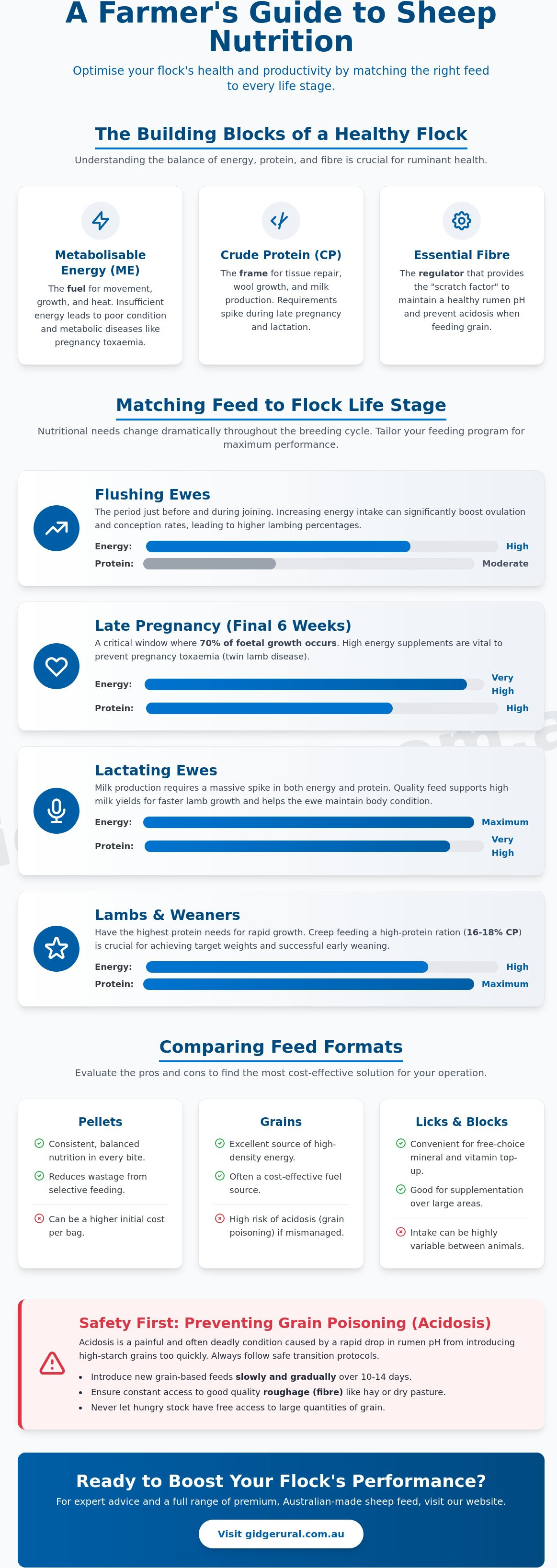
Understanding the difference between energy and protein is the key to efficient feeding. Metabolizable Energy (ME) is the actual fuel your sheep use for daily movement, heat production, and growth. If energy is the fuel, Crude Protein (CP) is the frame. It's essential for repairing tissue, growing wool, and producing high-quality colostrum. A dry ewe might only need 8% protein for maintenance, but that requirement jumps significantly during the final weeks of pregnancy. Matching your supplement to the specific stage of the lambing cycle prevents ewes from losing too much body condition while trying to support a growing lamb.
The Role of Fibre in Rumen Health
Fibre provides the "scratch factor" required to keep the rumen moving and healthy. Without enough structural fibre, the rumen pH can drop rapidly, especially when sheep are introduced to high-starch grains too quickly. This results in acidosis, a painful and often deadly condition. When you are supplementing with different types of animal feed, you must ensure the diet still contains enough roughage to stimulate cud-chewing. A rumen-friendly feed is a mix that maintains a stable pH. Maintaining this balance ensures your sheep can process both the supplement and any available paddock feed with maximum efficiency.
Choosing Feed for Different Life Stages and Goals
A "one size fits all" approach to nutrition rarely works in a productive flock. Your mob's requirements shift constantly based on their age, reproductive status, and the time of year. Selecting the right sheep feed is about matching the nutrient density of the bag to the specific goals of your management cycle. Whether you are aiming for high lambing percentages or rapid weight gain for market, timing is everything.
Feeding Ewes Through Pregnancy and Lactation
The nutritional demands on a ewe change dramatically as she moves from joining to lambing. During "flushing," which is the period just before and during joining, increasing her energy intake can significantly boost ovulation and conception rates. The most critical window, however, is the final six weeks of pregnancy. This is when the foetus gains 70% of its birth weight, leaving very little room in the ewe's abdomen for bulky, low-quality forage.
Providing high-energy supplements during this late stage is vital for preventing pregnancy toxaemia, also known as twin lamb disease. This metabolic crisis occurs when the ewe cannot eat enough to meet the energy demands of her growing lambs. To keep your breeding stock in peak condition, you should consider a premium stockfeed that offers concentrated energy without the bulk. Understanding the specific nutritional requirements of sheep during lactation is equally important, as milk production requires a massive spike in both protein and water intake.
Lamb Growth and Weaner Success
Lambs have the highest protein requirements of any animal in the flock. To achieve rapid growth and successful early weaning, many producers use "creep feeding." This involves providing a high-protein ration, typically 16% to 18% Crude Protein, in an area only the lambs can access. A palatable sheep feed encourages them to start eating solid food early, which eases the transition when they are eventually taken off their mothers.
Success with weaners depends on a smooth transition. Sudden changes in diet can lead to a "weaner setback" where growth stalls or health declines. Gradually introducing adult rations while maintaining high-quality protein helps them develop a robust rumen. For those looking to reach market weights quickly, finishing rations focus on high Metabolizable Energy (ME) to build muscle and fat cover efficiently. If you need help selecting a specific blend for your weaners, you can explore the range at Gidge Rural to find a solution that fits your paddock conditions.
Maintenance feeding is the final piece of the puzzle. During dry spells or drought, the goal is simply to keep the mob in a stable Body Condition Score (BCS). This often involves high-fibre licks or low-protein pellets that complement whatever dry standing feed is left in the paddock. It's a cost-effective way to protect your investment until the next break in the season.
Comparing Sheep Feed Formats: Pellets, Grains, and Licks
Deciding on the physical form of your sheep feed is a practical choice that affects both your budget and your flock's health. It isn't just about what is inside the bag; it's about how the animals consume it. Different formats suit different management styles, from intensive lot feeding to broad-acre grazing. Understanding the pros and cons of each helps you reduce wastage and ensure even nutrition across the entire mob.
The Benefits of Pelleted Feed
Pellets are often the preferred choice for producers looking for consistency and ease of use. The steam-pelleting process used during manufacturing does more than just hold the ingredients together. It helps kill off harmful pathogens and partially breaks down starches, which makes the nutrients easier for the sheep to digest. Because every pellet contains the same ratio of ingredients, you eliminate the "sorting" behaviour common with loose mixes. This means the shy feeders aren't left with the dust while the dominant sheep pick out the best grains.
Handling is another major advantage. Pellets flow easily through silos and automated feeders with minimal dust. This reduces respiratory issues for both the farmer and the livestock. While the initial cost per tonne might be higher than raw grain, the reduction in wastage often makes it the more economical choice in the long run. They are sturdy, easy to store, and provide a reliable way to deliver medications or specific additives to the whole group.
When to Use Mineral Supplements and Licks
Paddock-based sheep often face nutritional gaps that pasture alone cannot fill. Even lush, green grass can be deficient in essential salts, especially after heavy rain. Mineral lick blocks are a "set and forget" solution for filling these micro-nutrient gaps. They are particularly effective for managing seasonal deficiencies like magnesium or calcium, which are critical during the lambing cycle. If your soil is known for specific mineral lock-outs, a targeted block ensures your sheep don't go backwards when the weather turns.
For those managing sheep in dry conditions or containment pens, roughage like chaff and hay remains a vital component. This provides the structural fibre needed to maintain a healthy rumen pH. You can browse our full range of supplements to see which options best complement your current paddock feed. Whether you need a high-energy pellet or a simple mineral block, the goal is to provide a complete nutritional profile that supports your production targets. Combining these formats allows you to tailor your routine to the specific needs of your land and your livestock.
Standout Sheep Feed and Supplement Options
Selecting the right products for your flock means looking beyond the price per bag. You need options that deliver specific results, whether that is pushing lambs toward market weight or maintaining a breeding mob through a long, dry summer. High-performance lamb grower pellets are a staple for producers aiming for rapid weight gain. These usually feature a higher protein content to support bone and muscle development in young stock. For a more versatile approach, multi-purpose sheep nuts provide a balanced ration suitable for both ewes and wethers, making them a practical choice for mixed-age groups.
Specialised stud mixes are another essential category for those preparing rams for sale or ewes for the show ring. These blends often include higher levels of bypass protein and specific oils to improve coat condition and overall "bloom." In the paddock, weather-resistant mineral blocks are indispensable. They don't dissolve in the first rain, ensuring your sheep have access to vital salts and trace elements regardless of the weather. Choosing the correct sheep feed ensures your investment translates into measurable gains in animal health and productivity.
As livestock science continues to evolve, researchers rely on high-quality materials to study metabolic pathways; if you are looking for laboratory-grade supplies for such purposes, visit Peptide Research AU.
Essential Pellets for Maintenance and Growth
Pellets offer a controlled way to manage the nutritional intake of your entire mob. Standard 12-14% protein pellets are ideal for general maintenance, keeping adult sheep in a stable Body Condition Score when pasture is scarce. If you're in the final weeks before sending stock to market, high-energy finisher pellets provide the necessary "kick" to reach those target weights. Australian-made pellets are tailored for local climate conditions and the specific nutritional gaps found in our soils. This local focus ensures your sheep feed works with your environment rather than against it.
Vitamins and Mineral Boosters
During extended dry periods, sheep often miss out on critical vitamins that are usually found in green grass. Vitamin A, D, and E are the most common deficiencies during a long Aussie summer. Adding a booster or a targeted supplement can prevent night blindness and support immune function. For wool producers, bypass protein supplements are a game-changer. These proteins escape rumen fermentation and are absorbed directly in the small intestine, leading to superior wool strength and staple length. You can explore the collection to find the right match for your sheep's current needs.
Efficient feeding is about precision and reliability. If you are ready to upgrade your flock's nutrition, you can shop our premium stockfeed range to find the best solutions for your property.
Best Practices: Management, Transition, and Storage
Success with sheep feed isn't just about what is inside the bag. It's about how you manage the delivery. Even the highest quality ration can cause significant health issues if it is introduced too quickly or stored poorly. Good management keeps your flock healthy and ensures every dollar spent on nutrition delivers a return in growth, wool, or lambing percentages. It's the difference between a thriving mob and one that is just getting by.
How to Safely Transition Your Flock
Sheep are creatures of habit, and their rumen microbes are even more so. Sudden changes to a high-energy diet can lead to acidosis or grain poisoning. You must introduce new rations gradually to allow the rumen to adapt to the change in starch levels. Start by offering small amounts, roughly 50-100g per head, and slowly increase this volume over a period of 10-14 days until you reach the target ration.
During this transition, always provide full access to high-quality hay or straw. This structural fibre is essential for maintaining a stable rumen pH while the animals adjust. Keep a close eye on the mob for any signs of scouring, lethargy, or sheep that seem "off" their feed. If you notice these symptoms, hold the feed rate steady or reduce it slightly until the animals appear comfortable again. Patience during this window prevents costly losses.
Monitoring and Water Requirements
Regular monitoring of Body Condition Scores (BCS) is the best way to adjust your feed rates. Rather than guessing based on how the wool looks, get hands-on with your sheep to feel the fat and muscle cover over the loin. If the mob is losing condition, increase the energy density of the ration. If they are getting too fat, you can ease back to save on costs and prevent birthing difficulties in ewes.
Water is the most overlooked nutrient in any feeding program. Sheep on dry sheep feed or pellets will drink significantly more than those on green pasture. Ensure clean, cool water is always available. If the water source is poor or too far from the feeders, intake will drop, and your sheep won't process their feed efficiently. This leads to poor growth rates regardless of the quality of the supplement.
Storing Your Stockfeed for Freshness
Quality feed is an investment that needs protection from the elements. Store your bags off the ground on pallets to prevent moisture from wicking up through the floor. This simple step prevents mould growth, which can be toxic to livestock. Use vermin-proof containers or silos to stop mice and rats from contaminating the supply. Rodents don't just eat the feed; they spread diseases that can devastate a healthy flock. Finally, always check "use-by" dates. Vitamin potency in pellets can decline over time, so using the freshest stock ensures your animals get the full benefit of the formulation.
Maximise Your Flock's Potential
Managing a productive mob requires more than just good luck and green grass. By matching your sheep feed to specific life stages and implementing a gradual transition plan, you protect your animals from metabolic stress while improving your bottom line. Whether you are aiming for higher lambing percentages or better wool quality, the right nutritional strategy ensures your sheep remain in peak condition throughout the year.
With over 400 feed and supplement products available, we provide the variety needed to suit different property types and management goals. Our team offers expert advice for Australian property owners, ensuring you get the right products for your local climate. We are proud to be trusted by local farmers for our reliability and commitment to quality stockfeed.
Ready to see the difference a tailored nutrition plan can make for your property? Shop Premium Sheep Feed and Supplements at Gidge Rural and give your flock the best start for the season ahead. We look forward to helping you achieve a healthier, more productive farm.
Frequently Asked Questions
What is the best feed for sheep in a drought?
High-energy concentrates like pellets or grain are the most efficient way to maintain body condition during a drought. You must provide enough energy to stop the mob from slipping; however; you also need to include a source of roughage like straw or hay to keep the rumen functioning. Pelleted sheep feed is often the most practical choice because it reduces wastage and ensures every animal receives a balanced dose of vitamins and minerals when paddock forage is non-existent.
How much grain should I feed my sheep per day?
The correct amount depends on the sheep's life stage and the quality of your standing dry feed. A maintenance ration for a dry ewe might be as low as 200g to 300g per day, while a lamb being finished for market could require 1kg or more. Always start with small amounts and increase the volume over a two-week period to avoid digestive upsets. Monitoring their body condition score is the only reliable way to adjust these rates accurately.
Can sheep live on hay alone?
Sheep can survive on high-quality hay for maintenance, but it rarely provides enough energy or protein for rapid growth or late-stage pregnancy. Cereal hay is often low in protein; whereas; lucerne hay is much richer and more nutritious. If your sheep are pregnant or you are trying to grow out weaners, you will almost certainly need to supplement the hay with a more concentrated energy source to meet their specific production targets and health requirements.
What is acidosis in sheep and how do I prevent it?
Acidosis, or grain poisoning, occurs when a sheep consumes too much starch too quickly, causing the rumen pH to drop dangerously low. You can prevent this by introducing any new grain or pellet gradually over at least 14 days. Always ensure the animals have a belly full of dry straw or hay before they first access a new high-energy ration. This keeps the rumen moving and prevents the rapid fermentation that leads to serious illness or death.
Do sheep need salt blocks if they are on good pasture?
Even on lush green pasture, sheep often require salt or mineral blocks to fill specific nutritional gaps. Fast-growing grass is frequently low in sodium and magnesium, which can lead to metabolic issues like grass tetany. Providing a weather-resistant lick block allows the animals to self-regulate their intake based on their needs. It is a cost-effective insurance policy to ensure your flock stays healthy and productive regardless of how good the paddock looks to the eye.
Is it safe to feed cattle feed to sheep?
You should never feed cattle rations to sheep because they often contain copper levels that are toxic to wool-producing breeds. Sheep are highly sensitive to copper and can suffer from chronic poisoning if they consume feed formulated for other livestock types. Always stick to products specifically labelled as sheep feed to ensure the mineral balance is safe for their unique metabolism. This prevents long-term liver damage and sudden deaths within your flock.
How do I know if my sheep have enough protein in their diet?
The clearest signs of a protein deficiency are poor wool growth, low milk production in ewes, and stunted growth in lambs. If your weaners are not hitting their weight targets despite having plenty of dry feed, they likely lack the protein needed for muscle development. Testing your pasture or checking the Crude Protein percentage on your supplement bags will help you determine if the current diet meets the requirements of their specific life stage.
What is the best feed for pregnant ewes?
Pregnant ewes require a high-energy, concentrated ration, particularly in the final six weeks before lambing. As the lambs grow, they take up more physical space in the abdomen, leaving the ewe with less room for bulky, low-quality forage. A high-quality pellet with at least 12% to 14% protein and high metabolizable energy is ideal. This prevents the ewe from drawing too heavily on her own body reserves, which significantly reduces the risk of twin lamb disease.


