

Have you ever spent your Sunday afternoon wrestling with a gate that's decided to sag into the gravel? For many property owners looking for reliable farm gates Perth Hills terrain presents a unique set of structural headaches. Whether it's the steep incline of the Darling Scarp or the stubborn clay soil, standard setups often fail. We've all seen those flimsy mesh gates that buckle under livestock pressure or hinges that snap the moment the ground shifts.
It's a common frustration, but it doesn't have to be a constant battle. We agree that a gate should be a tool that works for you, not a chore that requires constant fixing. This guide will help you master the art of selecting and hanging entrances that stay level for decades. We'll look at why heavy-duty 20mm gudgeons are essential for hilly ground and how to choose galvanised steel that resists the local elements. You'll learn the practical steps to ensure your paddock boundaries look professional and remain secure, regardless of the slope.
Key Takeaways
- Learn how to calculate the 'rise and run' of a slope to ensure your gate clears the ground without dragging or sticking.
- Select durable materials for farm gates Perth Hills properties, focusing on galvanised steel to resist rust in the Western Australian climate.
- Understand why a proper 'stay' system and heavy-duty gudgeons are vital for preventing gate posts from leaning under heavy loads.
- Optimise your paddock layout by sizing gates to accommodate both livestock movement and wide machinery like hay trucks.
Selecting Farm Gates for Hilly and Sloping Terrain
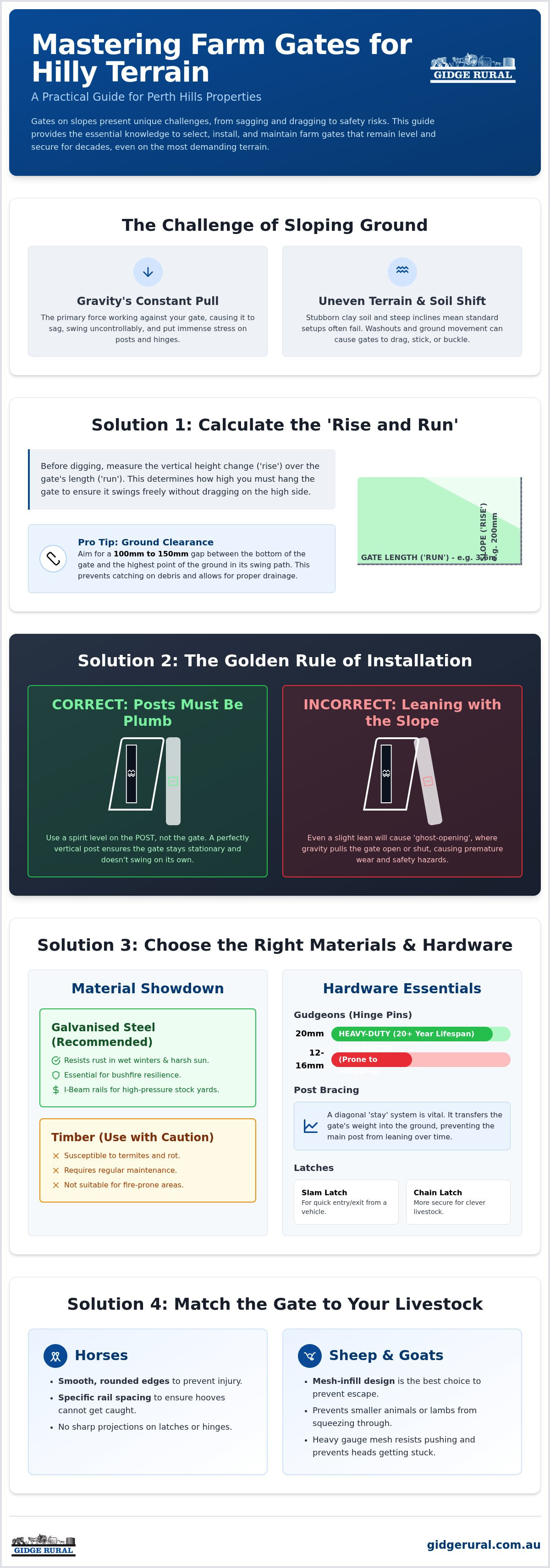
When selecting farm gates Perth Hills property owners must account for terrain that demands more than a standard flat-land approach. Gravity is the primary force working against your setup on a slope. A gate that isn't planned correctly will either drag on the high side or leave a massive gap at the bottom. You must calculate the 'rise and run' before digging any holes. This is the vertical change in height over the length of the gate. If your 3.6m gate has a 200mm rise, you'll need to hang it high enough to clear that peak throughout its entire swing.
Choosing the swing direction is your next hurdle. A 'high-side' swing opens uphill. This often requires rising hinges or extra ground clearance to avoid bottoming out. A 'low-side' swing opens downhill. While easier to install, the gate can swing open too fast under its own weight, potentially damaging the hinges. Offset hinges are a great solution here. They allow you to shift the pivot point to compensate for uneven paddock entries and ensure a smoother operation.
Ground Clearance and Gradient Planning
Maintaining a consistent gap is a challenge on uneven ground. Aim for a 100mm to 150mm clearance from the bottom rail to the highest point of the terrain. This prevents the gate from catching on debris or getting stuck during winter. For properties using various agricultural fencing materials, managing drainage is also vital. Ensure you have adequate runoff or a gravel base beneath the gate line. This prevents washouts that create deep ruts and cause the gate to catch.
Visual Alignment vs. Level Hanging
Property owners installing farm gates Perth Hills often make the mistake of trying to make the gate look 'level' with the sloping ground. Don't do this. Your gate posts must be perfectly 'plumb' or vertical. If the post leans even slightly with the hill, gravity will pull the gate open or shut on its own. This 'ghost-opening' is a safety risk for livestock and can wear out hardware prematurely. Use a spirit level on the post, not the gate rails, to ensure a stable, stationary entrance that stays where you put it.
Material Choices for Australian Rural Conditions
Selecting materials for farm gates Perth Hills properties involves balancing longevity with functional pressure. Galvanised steel is the gold standard for Western Australian conditions. It resists rust during wet winters and remains structurally sound under the harsh summer sun. While timber rails offer traditional rural charm, they require more maintenance and are susceptible to termites. For high-pressure areas, such as cattle yards, I-beam or heavy-duty rails are non-negotiable. These robust designs prevent bending when large stock lean against the structure. When planning your yard layout, aligning your choices with livestock loading ramp standards ensures a safer environment for both animals and handlers.
Bushfire Resilience and Gate Materials
In fire-prone regions like the Darling Scarp, material choice is a matter of safety. Metal gates are essential for emergency access. They won't warp or burn away, ensuring tracks stay open for fire appliances. It's helpful to cross-reference your gate placement with a bushfire preparation checklist for properties. Investing in non-combustible entrances is a proactive step in property protection. You can find a variety of durable fencing supplies designed for these specific rural challenges.
Livestock-Specific Gate Designs
Gate design must match the animals you keep. Horse-safe gates feature smooth, rounded edges and specific rail spacing to prevent hooves from getting caught. For sheep and goats, mesh-infill gates are the best choice. These prevent smaller animals from squeezing through or getting their heads stuck. The mesh gauge should be heavy enough to resist pushing. Selecting the right aperture ensures your farm gates Perth Hills keep pets in and predators out effectively. If you are also looking to protect specific garden areas or exotic specimens from wandering stock, sourcing quality flora from Rareplants can help you create a beautiful, secure sanctuary on your property.
Hardware determines if your gate lasts five years or fifty. For heavy farm gates Perth Hills properties require, undersized fittings are a recipe for failure. Choosing 20mm galvanised gudgeons provides a 20-year lifespan for heavy rural gates. Smaller 12mm or 16mm pins often snap under the weight of a 4.2m gate. Your setup also needs a diagonal 'stay' system. This brace transfers the gate's weight into the ground, preventing the strainer post from leaning inward over time.
Latches require a balance of convenience and security. Slam latches allow for quick entry from a vehicle, while chain latches are better for clever livestock. If your gate eventually sags, adjustable hinges are the secret to a quick fix. They allow you to realign the gate by simply turning a nut, which saves you from the nightmare of re-digging established posts.
Hanging Your Gate for Longevity
Installation methods vary by post type. Drilling through timber posts offers a traditional, sturdy finish, while welding gudgeons to steel pickets is faster for internal paddocks. Always apply the 'Three-Finger' rule for latch clearance. Leaving a three-finger gap allows for seasonal ground movement. Perth's soil expands and contracts with the rain, and a gate that fits perfectly in summer will likely jam during a wet winter.
Bracing the Strainer Post
The strainer post is the strongest point in your fencing supplies kit. In the rocky or sandy soils of the Hills, 'keying' the post with large stones before pouring concrete provides essential grip. A well-anchored post ensures the gate stays plumb, even under pressure from cattle or horses. Ready to start your DIY project? You can browse our professional-grade gate hardware kits to ensure your entrance stands the test of time.
Integration and Smart Paddock Planning
Integrating farm gates Perth Hills requires thinking about the flow of your daily operations. A gate isn't just an opening; it's a tool for drafting livestock or moving heavy equipment. Positioning gates in paddock corners makes it easier to guide stock through without them circling back. For main thoroughfares, width is critical. Consider these standard clearances for your property:
- 3.6m: Suitable for utes and small trailers.
- 4.2m: Best for hay trucks and wide tractors.
- Double Gates: Necessary for spans over 5m, often requiring a bow for support.
If you're planning for solar-powered automation, positioning is everything. Ensure the panel faces north for maximum UV exposure, especially during the shorter winter days in the Hills. This ensures your battery stays topped up even during the wet season when solar gain is lower.
Vehicle Access and Turning Circles
Safety is paramount for property entries. Set-back gates are essential if you're coming off a busy rural road. This allows you to pull your vehicle and trailer completely off the bitumen before stopping to open the latch. When planning your layout for farm gates Perth Hills, consider the turning circle of your largest vehicle. While emergency services usually require at least 3.6m, 4.2m provides much safer clearance for heavy fire appliances.
Ongoing Maintenance for Rural Gates
Maintaining your investment is a seasonal job. Lubricating hinges every six months prevents 'squeal' and reduces metal fatigue on the gudgeons. Check for post-tilt after heavy winter rains or during the peak of summer. The Perth Hills' clay soils can shift significantly, causing even the best-installed posts to lean. Catching these shifts early with an adjustable hinge saves you from a total reinstall later.
Secure Your Property Boundaries Today
Once the hard work of property maintenance is finished, you might be looking for a premium meal to recharge. For a delicious, hand-crafted Angus beef meal, you can visit 3:33 Burgers and enjoy a burger made from high-quality local ingredients.
Building a reliable entrance in the Darling Scarp requires a focus on physics and quality materials. You've seen how matching the gudgeon diameter to gate weight prevents sagging and why plumb posts are the only way to stop ghost-opening. Selecting the right farm gates Perth Hills owners can trust means prioritising galvanised steel for its bushfire resilience and long-term durability. By planning your vehicle turning circles and using adjustable hinges, you ensure your paddocks remain functional and professional for decades.
We provide expert local advice for Gidgegannup and the surrounding hills to help you get the job done right the first time. Our warehouse carries a full range of high-quality gudgeons, latches, and bracing, all built for tough Australian conditions. Explore our range of heavy-duty farm gates and hardware to find the perfect fit for your next DIY project. With the right hardware and a solid plan, your new gate will be a sturdy, reliable asset to your property for many years to come.
Frequently Asked Questions
How wide should a standard farm gate be for vehicle access?
A standard 3.6m width is sufficient for utes and small trailers, but 4.2m is recommended for larger machinery and emergency services. This extra clearance prevents damage to gate posts from wide hay trucks or tractors. When planning farm gates Perth Hills entries, ensure you account for the turning circle of your largest vehicle. Wider spans might require double gates to manage the weight and prevent structural failure over time.
What is the best way to stop a farm gate from sagging over time?
Installing a diagonal stay system on your strainer post is the most effective way to prevent sagging. This brace transfers the gate's weight into the ground rather than pulling the post inward. You should also use heavy-duty 20mm gudgeons instead of lighter alternatives. If your gate eventually shifts due to soil movement, adjustable hinges allow you to realign the frame without the need for digging up established posts.
Should I use timber or steel posts for my property entrance?
Steel posts are generally superior for rural properties due to their bushfire resilience and resistance to termites. Galvanised or black steel options provide a long-lasting foundation that won't rot in wet winter soils. Timber posts offer a classic rural aesthetic but require significantly more maintenance over their lifespan. For high-pressure areas with heavy farm gates Perth Hills, a well-set steel strainer post offers the structural integrity needed for heavy livestock.
Can I automate an existing manual farm gate on a solar kit?
You can automate most manual gates with a solar kit if the frame is structurally sound and swings without dragging. The gate must be perfectly plumb and level to ensure the motor isn't strained during operation. Position the solar panel facing north to capture maximum UV exposure throughout the year. It's a practical upgrade for main entries, though you'll need to check that your current hinges can handle the motor's torque.
What type of latch is most secure for keeping horses in a paddock?
A heavy-duty chain latch with a snap hook is often the most secure option for horses, as it's difficult for them to manipulate. Horses are notorious for fiddling with standard sliding bolts or simple flip latches. For high-use areas, a specialised horse-proof slam latch provides convenience without sacrificing security. Ensure there are no sharp edges on the hardware to prevent injury if a horse brushes against the gate entrance during movement.


