

Your property's resilience is only as strong as the weakest bolt in your shed. Maintaining an Australian acreage is a full-time commitment that demands much more than standard DIY tools. It is incredibly frustrating when gear snaps under the harsh sun or a critical plumbing fix fails during a dry spell. You need equipment that works as hard as you do to keep things running. This guide helps you build a reliable maintenance kit by identifying the essential categories of rural hardware supplies and the durability standards required to withstand dust, heat, and heavy-duty use.
By choosing the right gear, you will reduce equipment downtime and ensure your land stays safe and productive. We will explore heavy-duty fencing essentials, reticulation equipment for water security, and the latest fire safety requirements, including the mandatory AS 1851-2012 standards. Discover how to select hardware that meets Australian conditions so you can spend less time replacing broken tools and more time managing your property effectively.
Key Takeaways
- Understand why standard DIY tools often fail in the Australian climate and how to identify gear designed for extreme UV and dust exposure.
- Build a robust maintenance kit by focusing on essential rural hardware supplies for heavy-duty fencing, reticulation, and structural repairs.
- Learn the non-negotiable requirements for fire safety equipment and water management hardware to keep your property compliant and resilient.
- Use a simple checklist to evaluate hardware quality based on weight and finish to ensure your equipment survives the toughest conditions.
Why Rural Hardware Supplies Differ from Standard DIY Tools
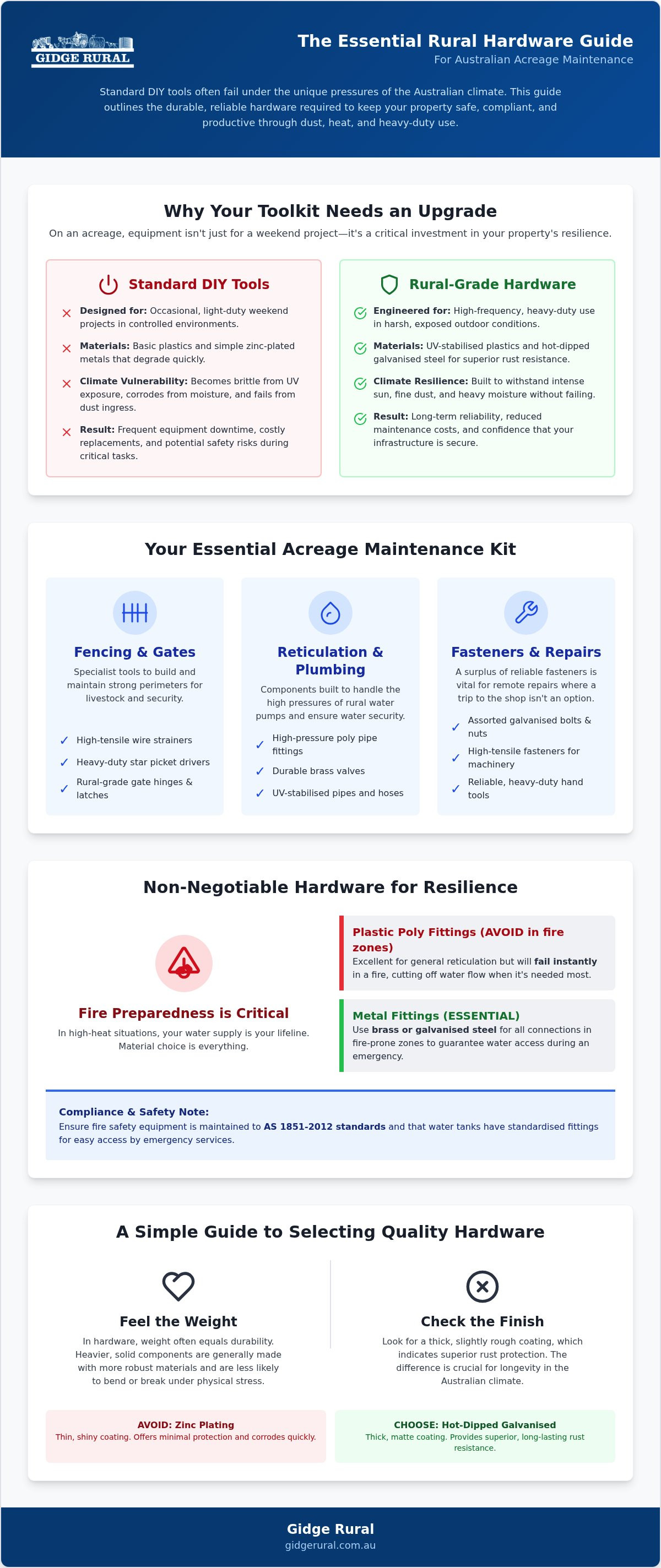
Standard suburban hardware is designed for the occasional weekend project. On an acreage, your gear faces high-frequency use and constant exposure to the elements. Quality rural hardware supplies are engineered specifically to endure these pressures. While a standard drill might sit in a climate-controlled garage, your rural tools are often out in the paddock, enduring the relentless cycle of Australian weather. This gear isn't just a commodity; it's a strategic investment in your property's long-term resilience.
The Australian climate is particularly unforgiving. Intense UV radiation quickly turns standard plastics brittle, while fine dust penetrates moving parts, causing premature failure. Moisture from heavy dew or seasonal rains leads to rapid oxidation on inferior metals. This is why many experienced property owners adopt a "buy once, cry once" mentality. It's better to invest in professional-grade equipment than to deal with tools snapping or seizing when you are kilometres away from the shed. Standard fasteners often fail because they lack the tensile strength needed for heavy-duty applications like tensioning fence lines or maintaining essential agricultural machinery. Sourcing dedicated rural hardware supplies ensures your infrastructure remains standing through the toughest seasons.
Durability and Material Standards in Australia
Material choice makes the difference between a repair that lasts a decade and one that fails in a month. Always prioritise hot-dipped galvanised steel over simple zinc plating; the thicker coating provides far superior rust resistance in damp or mineral-rich soils. For reticulation and storage, ensure all plastics are UV-stabilised to prevent sun-bleaching and cracking under the summer sun. Heavy-duty hardware in Australia must adhere to rigorous load-bearing and manufacturing standards to ensure safety and reliability under extreme physical stress. For property owners managing larger construction or infrastructure projects, professional services such as concrete batching plant calibration Australia are essential to ensure structural materials meet these high standards.
Essential General Hardware Categories for Acreage Maintenance
Effective land management starts with categorising your gear into functional groups: fencing, water, and structures. Keeping a surplus of fasteners like bolts, nuts, and wire strainers is vital for remote properties where a quick trip to the shops isn't possible. You can find a full breakdown in our essential acreage maintenance checklist. Reliable hand tools are your first line of defence during daily paddock inspections. They allow you to fix a loose gate or a leaking pipe before it becomes a major problem.
Fasteners and Fencing Tools
Fence maintenance requires specialist equipment. High-tensile wire strainers and heavy-duty star picket drivers are essential for building and repairing perimeters. Standard gate hardware often lacks the weight-bearing capacity needed for wide rural gates; always opt for rural-grade hinges and latches. Stocking various gauges of fencing wire ensures you're prepared for emergency repairs if livestock break through. These rural hardware supplies are built to withstand the physical tension required for long-term containment.
Reticulation and Plumbing Essentials
Water management is critical for property health. Use high-pressure poly pipe fittings and brass valves to handle the output of rural pumps. Suburban-grade garden hoses and plastic fittings frequently burst or leak under these high pressures. For more detailed advice, consult the reticulation equipment guide. This approach aligns with the North East Catchment Management Authority's property guide, which emphasises farm safety and sustainable water use. If you need to restock your shed, you can browse our range of rural hardware supplies online to ensure your water system remains secure.
Hardware for Resilience: Fire Equipment and Water Management
Fire preparedness is a non-negotiable part of acreage ownership. Your rural hardware supplies must include high-quality fire safety gear to protect your home and livestock. While plastic poly fittings are excellent for daily reticulation, they fail instantly in high-heat situations. Metal fittings, specifically brass or galvanised steel, are essential in fire-prone zones to ensure water flow remains uninterrupted when it matters most. You should also ensure your water tanks are equipped with standardised fittings for emergency services access. For a complete inventory of what you need, refer to our fire equipment checklist.
Fire Fighting Hardware and Safety Gear
Reliability is everything during an emergency. Your kit should include petrol-powered pumps, heavy-duty fire-hose reels, and adjustable brass nozzles. Unlike electric pumps, petrol models function during power outages, making them a staple of dependable rural hardware supplies. Maintenance is vital during the off-season to prevent equipment failure. Follow a simple routine to stay ready:
- Test pumps monthly to ensure they start on the first pull.
- Check hoses for UV degradation or cracks caused by heat.
- Keep brass nozzles lubricated and clear of debris or spiders.
Don't overlook personal protection. High-visibility safety gear and appropriate PPE are necessary for both daily property work and emergency response. Sturdy boots, gloves, and eye protection safeguard you against the heat and dust typical of the Australian landscape. If you need to upgrade your emergency preparedness, you can shop fire safety hardware to find gear built for local conditions.
Selecting Quality Rural Hardware for Australian Conditions
Choosing the right gear requires a critical eye. Don't judge by price alone. Use this simple checklist to evaluate rural hardware supplies before you buy:
- Weight: Heavier tools and fittings usually indicate thicker steel and better structural integrity.
- Finish: Look for a rough, thick hot-dipped galvanised coating rather than a smooth, shiny zinc finish.
- Brand Reputation: Stick to trade-trusted names that professional farmers rely on for daily operations.
Specialist rural stores stock equipment specifically designed for high-frequency use in harsh environments. A general retailer might offer a cheaper alternative, but it rarely survives the Australian sun or the physical strain of acreage work. Once you have the right gear, keep it in top shape by organising your workshop. Use sealed cabinets or shadow boards to keep tools off the ground and away from dust and moisture. Regular maintenance, such as cleaning and light lubrication after use, will extend the life of your expensive hardware and save you thousands in replacement costs. If you apply this same standard of high-performance gear to your endurance training, you can discover Fastgear Australia for specialised racing kits and nutrition.
The Value of Specialist Advice
Expert, no-nonsense advice is your best tool for preventing incorrect purchases. Specialists understand the specific pressures of your local environment and can recommend the right gauge or fitting for your specific pump or fence line. This professional guidance ensures you get the job done right the first time. For those managing large properties, the convenience of buying rural supplies online is a game-changer. It allows you to source heavy or bulk items like fencing coils and reticulation pipes without the hassle of multiple trips to town. Investing in quality rural hardware supplies today ensures your property remains a safe, efficient, and manageable asset for years to come.
Secure Your Land with the Right Gear
Maintaining an Australian acreage is a constant balancing act between routine maintenance and emergency preparedness. Success depends on having the right gear in your shed before you actually need it. By prioritising heavy-duty materials like hot-dipped galvanised steel and UV-stabilised plastics, you protect your investment from the harsh local climate. Specialist equipment is built for high-frequency use, ensuring your fencing and reticulation systems stand the test of time.
Whether you are upgrading your fire safety kit or restocking your workshop, choosing trade-trusted brands used by professional farmers is the smartest way to reduce downtime. We offer expert advice for Australian property owners and provide nationwide shipping on all our rural-grade gear. Our store is open seven days a week to help with your essential supplies whenever an urgent need arises. Browse our range of heavy-duty rural hardware supplies today to ensure your property remains safe and productive. With the right tools and a proactive maintenance schedule, you can manage your land with confidence and ease.
Frequently Asked Questions
What is the difference between general hardware and rural hardware supplies?
Rural hardware is designed for high-frequency use and extreme environmental exposure. While suburban tools don't always last, rural hardware supplies must withstand constant dust, UV radiation, and heavy physical loads. These products often feature thicker steel and hot-dipped galvanisation. Choosing gear specifically rated for rural conditions prevents premature failure and ensures your equipment remains reliable when you're working in remote areas.
Do I really need galvanised hardware for my paddock gates?
Yes, hot-dipped galvanised hardware is essential for paddock gates. Standard zinc plating isn't thick enough for the Australian climate and will rust quickly when exposed to soil and rain. Galvanised coatings provide a much thicker protective layer that resists oxidation for decades. This durability is vital for gate hinges and latches that support heavy loads and endure constant movement.
What fire fighting equipment is considered essential for a 5-acre property?
A 5-acre property requires a reliable petrol-powered pump, a heavy-duty fire-hose reel, and adjustable brass nozzles. Petrol pumps are necessary because they operate during power outages. You should also install a standardised fire-fighting coupling on your water tank for emergency services access. Keeping a surplus of rural hardware supplies like metal fittings and high-visibility safety gear ensures you're prepared to protect your home.
Can I use standard reticulation fittings for my rural water tank?
No, standard suburban garden fittings aren't suitable for rural water tanks. These plastic components often burst or leak under the high pressure generated by rural pumps. You should use high-pressure poly pipe fittings or brass valves instead. These materials are engineered to handle significant flow rates and maintain a secure seal; ensuring your water management system remains efficient and leak-free throughout the season.
How do I maintain my rural hardware to prevent rust and UV damage?
Proper maintenance starts with cleaning and drying tools after every use. Apply a light layer of lubricant to moving parts to prevent oxidation. Store your gear in a dry, organised shed; preferably in sealed cabinets to keep dust and moisture at bay. If you lack adequate on-site space, SafeHouse Storage provides secure, self-managed units for protecting valuable equipment. For plastics, ensure they're kept out of direct sunlight when not in use to minimise UV degradation and prevent brittleness.


