
Would your standard garden hose really stand a chance if a fast-moving grass fire reached your boundary fence? Most property owners assume their everyday reticulation is enough, but relying on domestic gear instead of dedicated fire equipment is a risk you can't afford to take. We understand that sorting through technical fittings like Storz vs BSP or choosing between ABE and BE extinguishers feels overwhelming. You want to protect your family and your land without getting bogged down in technical jargon.
This comprehensive 2026 checklist identifies the essential gear every Australian rural property needs to maintain a reliable first-attack capability. We'll show you exactly what to stock, how to meet the latest AS 1851-2012 maintenance standards, and why your water delivery system is your most critical asset. From high-performance pumps to the right nozzles, you'll gain the confidence to ensure your hardware performs when it matters most. By the end of this guide, you'll have a clear shopping list and a maintenance schedule designed to keep your home and livestock safe throughout the season.
Key Takeaways
- Identify specific property risks and learn why the ABE dry powder extinguisher is the essential all-rounder for rural sheds and kitchens.
- Understand why standard garden hoses fail in high heat and how to select the right fire equipment, including UV-stabilised hoses and adjustable nozzles.
- Recognise the vital role of non-synthetic clothing like wool or cotton and how a knapsack sprayer helps you manage spot fires effectively.
- Master the "Shake and Check" method and seasonal pump testing to ensure your gear remains operational when an emergency strikes.
Understanding Fire Classes and Portable Extinguishers
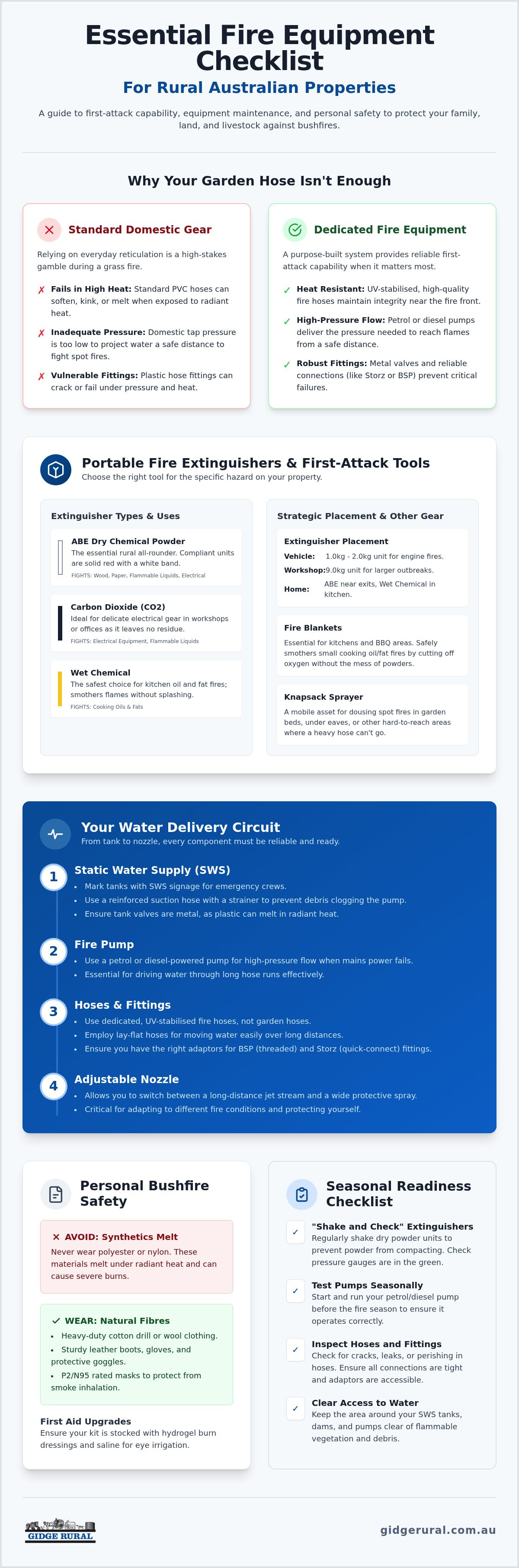
Rural properties aren't like suburban blocks; your risks are spread across fuel sheds, machinery workshops, and residential kitchens. Choosing the right fire equipment starts with understanding these specific hazards. Most acreage owners rely on the ABE Dry Chemical Powder (DCP) extinguisher. It's the rural all-rounder because it effectively tackles wood, paper, flammable liquids, and electrical fires.
To stay compliant with Australian Standard AS 1841, ensure your units have a solid red body. The coloured band indicates the contents. A white band signifies dry powder, while a black band identifies CO2 for delicate electrical gear. For kitchen oil fires, a Wet Chemical extinguisher with an oatmeal band is the safest choice. While extinguishers are active tools for first-attack, specialised gear like a fire shelter provides a last-resort refuge in extreme bushfire scenarios where suppression is no longer possible.
The Essential Extinguisher Checklist
Placement is just as vital as the type of unit you buy. You should have a clear strategy: one for the ute, one for the workshop, and one for the home. Keep a 1.0kg or 2.0kg unit in the vehicle for engine fires. For the workshop or hay shed, a 9.0kg unit provides the volume needed to suppress a larger outbreak before it spreads. Ensure every unit is mounted in an accessible spot, away from the immediate fire risk but close enough to grab quickly.
Fire Blankets for First-Attack
Every rural kitchen and outdoor BBQ area needs a certified fire blanket. These are designed to smother small cooking fires by cutting off oxygen. It's a safer alternative to an extinguisher for fat fires, as it won't splash burning oil. Simply pull the tabs, hold the edges to protect your hands, and gently place it over the flames. This simple piece of gear provides a high-impact solution for kitchen safety without the mess of chemical powders. Professional establishments like Khalsa G Pizza similarly prioritise such safety protocols to manage risks in a busy kitchen environment.
Water Delivery Systems: Pumps, Hoses, and Reels
Standard garden hoses are designed for the backyard, not the fire front. In high-heat conditions, PVC hoses often soften or melt, and your domestic tap pressure won't throw water far enough to suppress a spot fire safely. A robust fire equipment setup requires a dedicated system. This includes a petrol or diesel-powered fire pump. When the main power grid fails, these engines provide the high-pressure flow needed for your fire hose reels. You can also integrate your existing reticulation equipment into your plan to keep gardens damp, provided you have a secondary pump to drive the sprinklers. To truly prepare for a bushfire, you must treat your water delivery as a complete circuit from tank to nozzle.
Hoses and Fittings: Storz vs BSP
Compatibility is the biggest hurdle during an emergency. BSP (British Standard Pipe) is a threaded connection common on pumps, while Storz is a quick-connect system used by fire services. Ensure you have the right adaptors to swap between them. Use lay-flat hoses for moving water across paddocks over long distances. They're lightweight, easy to store, and handle high pressure without bursting. Choosing high-quality plumbing and reticulation supplies ensures your fittings won't leak when pressure peaks.
Static Water Supply (SWS) Requirements
If you have a dam or tank, it must be accessible. Mark your tanks with SWS signage so emergency crews know where to find water. Your pump needs a reinforced suction hose with a strainer to prevent debris from clogging the impeller. Without a clear suction line, even the best pump is useless. Ensure your tank valves are metal, as plastic fittings can fail in the radiant heat of a passing front. Checking these details now prevents a system failure when you have minutes to react.
Personal Protection and Bushfire Survival Gear
Fire suppression is physically demanding and dangerous. If you're staying to defend, your personal fire equipment must include high-quality Personal Protective Equipment (PPE). Never wear synthetics like polyester or nylon. They melt under radiant heat and can cause severe injuries. Stick to heavy-duty cotton drill or wool. These natural fibres provide a critical layer of insulation against heat and are less likely to ignite from stray embers.
A knapsack sprayer is your most mobile asset for patrolling the property. It lets you douse spot fires in garden beds or under eaves where a heavy fire hose can't reach. Your first aid kit also needs specific upgrades. Stock it with hydrogel burn dressings, saline for eye irrigation, and masks to help with smoke inhalation. For a complete strategy, refer to our bushfire preparation checklist for properties.
First-Attack Hand Tools
The McLeod tool is a rural staple. It combines a rake and a hoe, making it perfect for clearing fuel and creating mineral earth breaks. Fire rakes help you scrape back leaf litter, while a sturdy fire axe is essential for gaining access to smouldering stumps or clearing fallen debris from access tracks. These tools are low-tech but fail-safe when mechanical fire equipment or pumps encounter issues.
Communication and Lighting
Visibility drops to near zero in heavy smoke. High-lumen headlamps are better than handheld torches because they keep your hands free for using tools. Don't rely on mobile phones. Towers often fail during major events. A battery-powered or wind-up radio is the only reliable way to monitor emergency broadcasts when the grid goes down. Ensure you have spare batteries stored in a cool, dry place.
Stay ready for any emergency. You can source professional-grade animal health and medical supplies to ensure your property's first aid kit is fully stocked before the season peaks.
Maintenance and Storage Checklist for Rural Readiness
High-quality fire equipment is a life-saving investment, but only if it functions during an emergency. In rural environments, dust, heat, and pests are constant threats to your readiness. Owning the gear is only half the battle; the other half is ensuring it survives the off-season. Centralise your equipment in a highly visible, accessible location that every family member can find in the dark or under stress.
Dry chemical powder (DCP) extinguishers are prone to "caking." The powder settles and hardens over time due to vehicle vibrations or static storage. Use the "Shake and Check" method monthly: tip the unit upside down and listen for the powder shifting. If it feels like a solid block, it needs professional servicing. Similarly, inspect your fire hose reels for UV damage and cracks. Check nozzles specifically for mud dauber wasp nests. These pests frequently block outlets, which can cause back-pressure and pump failure when you least expect it.
The Monthly Maintenance Routine
Don't wait for a smoke plume to start your pump. Perform seasonal testing by running the engine for 15 minutes every month. Check for fuel degradation, as petrol can go stale in as little as 30 days and cause starting issues. Integrate these checks into your broader acreage maintenance checklist. Ensure all pressure gauges are in the "green" zone and test your smoke alarms to confirm the batteries are still strong.
Safe Storage of Firefighting Consumables
Store firefighting fuel in approved, clearly marked containers away from direct sunlight and heat sources. Protect lay-flat hoses from rodents. Mice love nesting in coiled hoses and can chew through the lining, rendering the fire equipment useless. Keep your gear off the shed floor to prevent moisture damage and rust. Proper storage ensures that when the time comes to act, your hardware is as ready as you are.
Securing Your Property for a Safer Season
Protecting an Australian rural property requires more than just a single hose; it's about building a reliable, tiered system. You need the right extinguishers for your workshop, robust water delivery through dedicated pumps, and essential personal protective gear to shield you from radiant heat. Regular maintenance, such as the "Shake and Check" method for dry powder units and monthly pump tests, ensures your hardware remains ready for the first sign of smoke. These proactive steps turn a simple list of gear into a functional fire equipment defence plan.
At Gidge Rural, we've spent years serving Australian property owners with expert advice on rural water management and high-quality reticulation gear. We understand the harsh conditions you face and stock the durable hardware needed to handle them. Browse our range of fire equipment and rural supplies at Gidge Rural to complete your checklist today. For those looking to diversify their wealth as part of a long-term security plan, VIP Vaults & Bullion Exchange Perth offers a range of investment-grade bullion options. Taking these steps now gives you the confidence to protect your family and livelihood when it matters most.
What is the difference between ABE and BE fire extinguishers?
ABE dry powder extinguishers are the versatile choice for rural properties because they handle Class A (combustible solids like wood), Class B (flammable liquids), and Class E (electrical) fires. BE units are specialised for liquid and electrical fires but lack the rating for wood or paper. On a farm, the ABE is the essential all-rounder for sheds and workshops where multiple fire risks exist simultaneously.
How often do I need to service my fire equipment on a farm?
You should perform a "Shake and Check" on your extinguishers monthly to prevent powder caking. According to Australian Standard AS 1851-2012, professional servicing is required every six months to ensure your fire equipment remains compliant. For rural pumps and hoses, monthly test runs are vital during the fire season to check for fuel degradation, perished seals, or pest blockages in the nozzles.
Can I use a standard garden hose to fight a bushfire?
No, standard garden hoses are insufficient for fighting a bushfire. Most domestic hoses are made of PVC, which melts quickly under radiant heat. They also lack the pressure and flow rate needed to suppress anything beyond a small spot fire. A dedicated fire hose reel with UV-stabilised material and a high-pressure pump is necessary to deliver enough water from a safe distance.
What is a Storz fitting and why is it used on fire hoses?
A Storz fitting is a genderless, quick-connect coupling designed for high-pressure water delivery. Unlike threaded BSP fittings that can be cross-threaded in a panic, Storz connections lock with a simple quarter-turn. This is the standard used by Australian fire services. Having Storz adaptors on your tanks and fire equipment allows emergency crews to connect their hoses directly to your water supply without wasting time.
Do I need a petrol or diesel pump for fire fighting?
Both petrol and diesel pumps are suitable, provided they are independent of the main power grid. Petrol pumps are common and easier to start, but diesel is less volatile and safer to store in high-heat environments. The most important factor is reliability; your pump must be a dedicated high-pressure unit capable of pulling water from tanks or dams when the electricity fails during an emergency.
What should be in a basic rural fire first aid kit?
A rural fire first aid kit must go beyond a standard home kit. It should include:
- Hydrogel burn dressings for heat injuries.
- Saline solution for flushing ash and debris from eyes.
- P2 masks for respiratory protection against smoke.
- Heavy-duty bandages for traumatic injuries.
Stocking these supplies ensures you can manage immediate burns or smoke inhalation until professional medical help is available on the property.


