

Imagine it's a late Friday afternoon and your prize ewe is looking sluggish, or your horse has a nasty wire cut in the back paddock. Do you have exactly what you need in the shed, or are you facing a $500 emergency vet fee because you're missing a basic bandage? Managing an Australian property is rewarding, but the technical side of animal health supplies can feel like a minefield of confusing terms and seasonal checklists. It's completely normal to feel a bit overwhelmed by technical jargon like anthelmintics or trace minerals when you just want your stock to stay healthy.
We believe that being a prepared owner means more than just providing water and feed; it's about being ready for the unexpected. This guide will teach you how to identify, organise, and maintain the essential medical and nutritional supplies needed to keep your livestock and pets thriving in our unique conditions. We will break down essential health categories, provide a functional first aid checklist, and show you how to prevent common issues before they require a professional vet call-out.
Key Takeaways
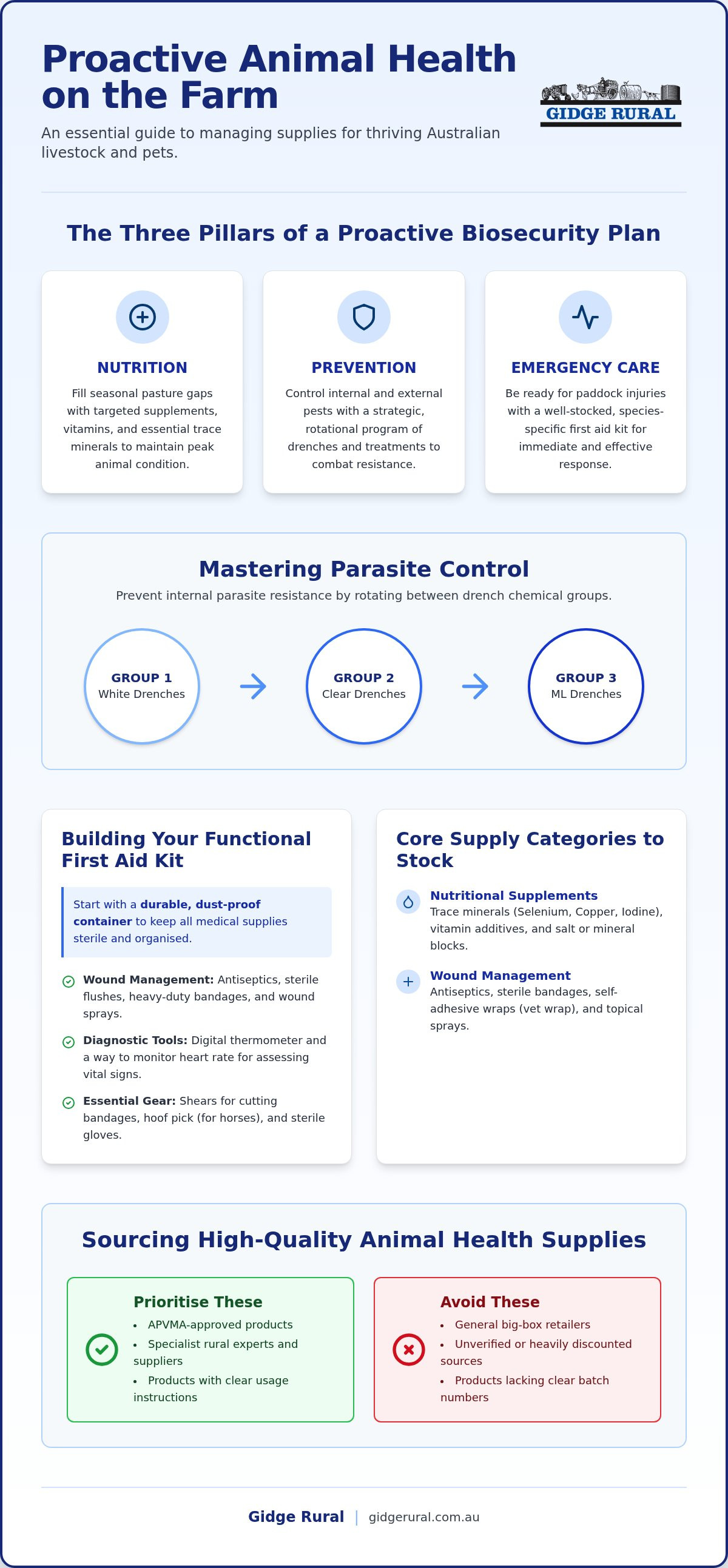
- Categorise your property stocks into nutrition, prevention, and emergency care to establish a proactive and reliable biosecurity plan for your livestock.
- Identify high-quality animal health supplies by prioritising APVMA-approved products sourced from specialist rural experts rather than general big-box retailers.
- Construct a functional on-farm first aid kit using a durable, dust-proof container and a checklist of species-specific wound care essentials.
- Maintain animal condition through seasonal changes by mastering the use of targeted supplements and anthelmintics to prevent internal parasite resistance.
Understanding Essential Animal Health Supplies for Australian Properties
Managing a successful property requires a practical, well-stocked toolkit. At its core, animal health supplies represent a broad category that encompasses daily nutrition, preventative care, and emergency medical gear. Effective animal husbandry relies on a no-nonsense approach to biosecurity. If you don't have basic medical stocks ready, you risk the health of your entire herd or stable. Our harsh Australian climate dictates many of these needs. You must account for extreme heat stress and hydration requirements that shift rapidly between a wet winter and a scorching January.
Why Proactive Health Management Matters
Proactive management is the primary way to reduce long-term veterinary costs while ensuring your animals remain productive. Regular health checks allow you to spot a dull coat or a slight limp before a minor issue becomes an expensive crisis. Having the right animal health supplies on hand ensures you don't waste critical hours waiting for a delivery while an animal's condition worsens. Immediate treatment during those first few hours often makes the difference between a quick recovery and a permanent setback. While focusing on the recovery and vitality of your livestock, you might also be interested in natural wellness practices for your own home; check out Aarding to discover how grounding products can support your family's health.
Key Categories of Rural Medical Supplies
Think of your medical shed as a well-rounded pantry for animal health. You need to maintain consistent stocks across four specific pillars to ensure you're never caught out. These include:
- Nutritional supplements: Vitamins and minerals that fill seasonal pasture gaps.
- Parasite control: Drenches and wormers to manage internal and external pests.
- Wound management: Antiseptics, sprays, and bandages for paddock injuries.
- Diagnostic tools: Thermometers and heart rate monitors to track vital signs.
Daily maintenance items, such as salt blocks or coat conditioners, keep your stock in peak condition. However, emergency gear like heavy-duty bandages and sterile flushes are the items that truly matter during a sudden accident.
Livestock and Pet Nutrition: Supplements and Parasite Control
Maintaining condition in Australian livestock and pets requires a deep understanding of local soil and pasture cycles. Many property owners find that even the best grazing land lacks critical trace minerals like selenium and copper. These deficiencies directly impact the effectiveness of your premium stockfeed; without mineral balance, animals cannot properly synthesise nutrients. This is why targeted animal health supplies, such as mineral blocks and liquid additives, are essential year-round.
The Role of Trace Minerals and Supplements
Australian soils are notoriously variable, often leading to "hidden hunger" in otherwise well-fed animals. Using horse supplements is particularly vital during seasonal pasture changes when protein levels in grass drop. For cattle and sheep, providing loose lick or blocks ensures they receive the iodine and cobalt needed for growth and reproduction. A balanced approach to Animal health & welfare starts with filling these nutritional gaps before they manifest as weight loss or poor coat quality. This holistic view of health extends to all animals on the property, including indoor pets; for those who keep home aquariums, CU Aquatics offers a high standard of care and selection for tropical fish.
Managing Internal and External Parasites
Parasite management is a seasonal battle that requires a methodical drenching cycle. Using anthelmintics, or wormers, is non-negotiable for preventing internal parasite resistance. You must rotate between different chemical groups, such as white, clear, and ML drenches, to ensure worms don't build immunity to your treatments. External threats are equally persistent. Effective tick and flea treatment is a core part of your animal health supplies, protecting both working dogs and livestock from debilitating diseases. If you're unsure which rotation suits your region, you can browse our expert-selected range to find the right chemical matches for your property.
Building a Functional Animal First Aid Kit
A reliable first aid kit is the backbone of property management. Step one is selecting a durable, dust-proof container to centre your medical supplies. Rural environments are notoriously harsh on sensitive gear; a sealed tub keeps everything sterile and ready for use. Step two involves stocking essential bandages, antiseptics, and wound sprays. These animal health supplies form your first line of defence when an accident happens in the back paddock. Step three requires adding diagnostic tools like digital thermometers and stethoscopes to track vital signs. Finally, step four is adding species-specific emergency treatments like bloat oil or electrolytes to handle sudden metabolic issues before the vet arrives.
Essential Wound Care and Treatment Tools
Your kit must contain sterile saline for flushing dirt, iodine for disinfecting, and a variety of non-stick dressings. Cohesive bandages are particularly useful for livestock because they stick to themselves rather than fur or wool. During the Australian summer, always include fly strike powder and antiseptic sprays to prevent maggot infestations in open wounds. You need these tools to manage everything from minor scratches to significant paddock injuries. For more technical guidance on property biosecurity and disease management, the Animal Health Australia resource hub offers excellent technical papers for producers.
Organising and Maintaining Your Medical Stocks
Organisation is just as vital as the supplies themselves. We recommend checking your expiry dates every six months to ensure everything in your kit is still effective. Temperature-sensitive vaccines and certain medications must stay in a dedicated fridge, never in a hot shed where they lose potency. Keeping your gear organised means you won't be fumbling in the dark during a midnight crisis. A well-maintained kit provides peace of mind and immediate action when it matters most. If your kit is looking sparse, you can buy essential animal health supplies online to restock your property today and stay prepared.
Selecting Reliable Supplies for Your Property’s Needs
Identifying high-quality animal health supplies isn't just about the brand name; it's about regulatory compliance and local suitability. In Australia, the gold standard for any medical treatment is APVMA approval. This ensures that every drench, supplement, or wound spray has been rigorously tested for our specific environmental conditions. Choosing a supplier that truly understands the Australian rural lifestyle is just as important as the products themselves. You need a partner who knows that a drought in the north requires different nutritional support than a wet winter in the south.
Quality Standards and Australian Regulations
The APVMA logo on a bottle or packet is your guarantee of product safety and efficacy. This regulatory body oversees the registration of all veterinary medicines to ensure they do what they claim without harming your stock. We strongly advise against using unlabelled or "home-made" medical remedies. These products lack guaranteed dosages and can lead to accidental toxicity or ineffective treatment. Using unregulated supplies often costs you more in the long run through lost productivity or emergency vet call-outs that could have been avoided with a proven product.
Why Expertise Matters in Rural Supplies
A specialist rural supplier offers far better value than a general "big box" retailer because they provide targeted expertise. Buying from a shop that knows rural hardware supplies as well as animal health ensures your entire property management plan is cohesive. This expertise helps you select the right animal health supplies for your specific acreage and stock numbers. It's about finding a "no-nonsense" guide who values quality and utility above all else. We encourage you to organise your medical cabinet and nutritional stocks well before the peak of the season hits.
Being prepared means you can focus on your animals when they need you most rather than rushing for supplies during a crisis. Taking a proactive approach to your inventory is the hallmark of a successful property owner. Explore our full range of animal health supplies at Gidge Rural to restock your property today and ensure your livestock stays in peak condition throughout the year.
Secure Your Property’s Health Future
Maintaining a thriving property requires shifting from reactive treatment to proactive care. By organising a functional first aid kit and understanding the seasonal nutritional gaps in your pasture, you protect your animals from avoidable crises. Reliability is key when selecting animal health supplies; look for APVMA-approved products and expert guidance to ensure your stocks are safe and effective. Gidge Rural is trusted by Australian property owners for expert rural advice and a comprehensive range of livestock and pet health products. Whether you need horse wormers or cattle supplements, our team provides the no-nonsense support required for rural life. With fast national delivery for all your farm supply needs, you can restock your medical cabinet from the comfort of your home. Take the lead on your biosecurity today to keep your animals in peak condition through every season.
Shop the full range of Animal Health Supplies at Gidge Rural
Frequently Asked Questions
What should be in a basic animal first aid kit for an Australian farm?
A functional kit should include sterile saline, iodine, cohesive bandages, and non-stick dressings. You also need diagnostic tools like a digital thermometer and stethoscope to monitor vital signs. In the Australian summer, fly strike powder and antiseptic sprays are non-negotiable for wound protection. Keeping these items in a sealed, dust-proof tub ensures they remain sterile and ready for any paddock emergency or sudden injury.
How often do I need to drench my livestock for parasites?
Drenching frequency depends on your local climate, seasonal pasture growth, and regular faecal egg counts. While many owners drench during autumn and spring, testing helps you avoid over-treating and prevents parasite resistance. It is vital to rotate between different chemical groups to keep your treatments effective. Consult your specific property management plan to determine the best timing for your sheep or cattle herds.
Are horse supplements necessary if they have good pasture?
Yes, because even lush green pasture often lacks essential trace minerals like selenium, copper, and zinc. These soil deficiencies are common across many parts of Australia and can lead to poor hoof health or dull coats. Using targeted animal health supplies like mineral balancers fills these nutritional gaps. This ensures your horse maintains peak condition and performance even when the nutritional value of your grass fluctuates.
How do I store animal vaccines and medications on the property?
Vaccines must be kept in a dedicated fridge between 2 and 8 degrees Celsius to maintain their potency. Avoid storing them in the fridge door as the temperature fluctuates too much. For other animal health supplies, choose a cool, dark, and dry cabinet. Australian shed temperatures can rise rapidly, which often degrades active ingredients and makes expensive medications completely ineffective during a crisis.
Can I use the same health supplies for both sheep and cattle?
Some basic wound care items like bandages are universal, but most medical treatments are species-specific. Drenches and vaccines are formulated with precise dosages for either sheep or cattle. Using a cattle product on sheep can lead to dangerous toxicity or ineffective dosing. Always verify the APVMA label to ensure the product is registered for your specific livestock to maintain high safety and welfare standards.


