
You're out in the back paddock when you notice a damp patch where it should be bone dry. A cheap fitting has finally cracked under the blistering Australian sun, and now your water pressure is gone. It's a frustrating situation that many rural property owners know well. Dealing with gear that fails under high UV exposure or struggling to find trade-quality plumbing supplies for remote repairs can turn a simple fix into a massive headache.
We understand that a reliable water system is the lifeblood of your land. You need components that handle the heat and fittings that actually fit the first time. This guide helps you identify the exact pipes, valves, and fittings required to keep your systems running reliably year-round. We will cover how to select durable materials that survive the local climate and make your DIY repairs much easier. By choosing the right gear now, you can ensure a leak-free system that stands up to the toughest conditions on your property.
Key Takeaways
- Identify the core components needed for stock water and irrigation systems to ensure every drop of water reaches its destination.
- Compare poly and PVC materials to find plumbing supplies that withstand harsh Australian weather and high UV exposure.
- Learn which valves and flow control fittings are necessary to protect your pumps and manage water pressure effectively across long distances.
- Prepare a "break-fix" kit with essential tools and spare parts to handle emergency pipe repairs quickly and avoid costly water loss.
Essential Categories of Rural Plumbing Supplies
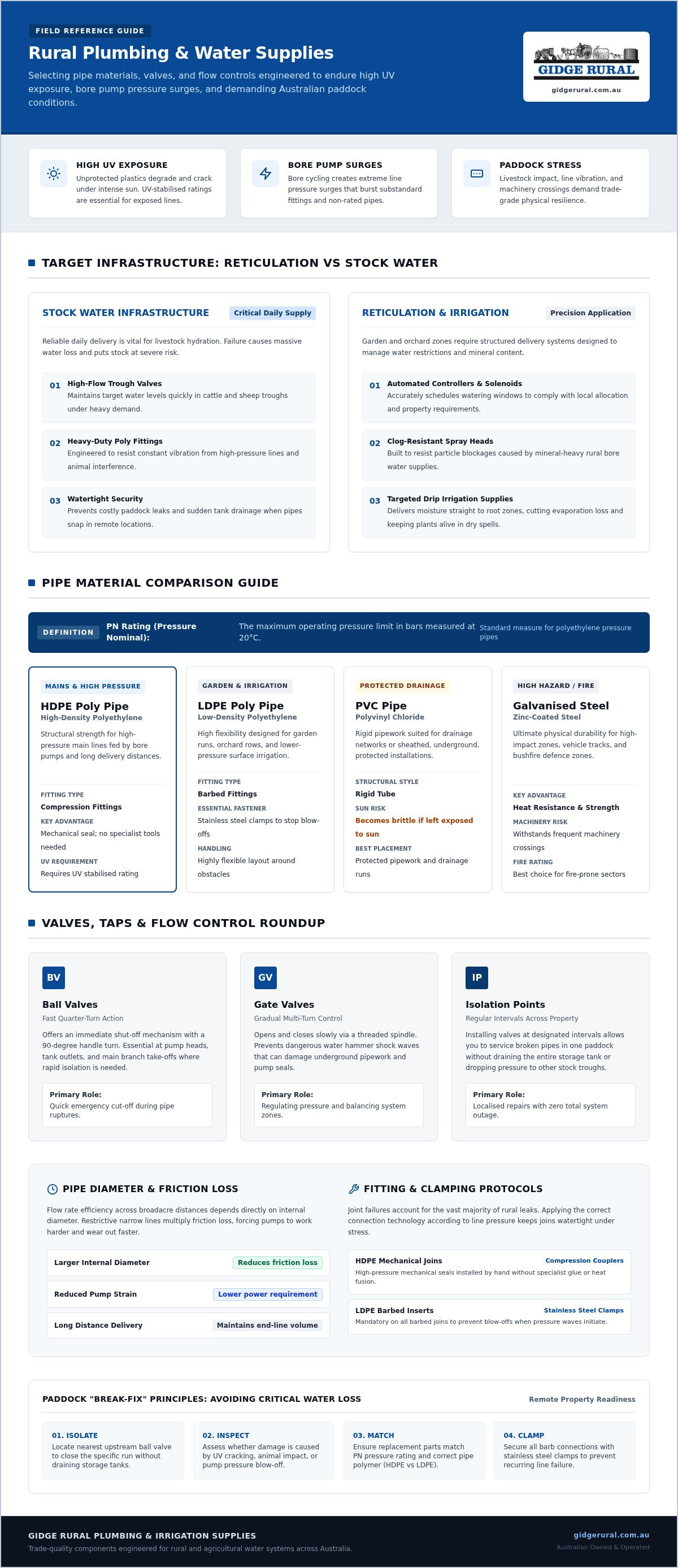
Managing water on a remote property requires a strategic approach to your inventory. The core components include pipes, valves, filtration units, and specialized fittings. Unlike urban setups, rural systems often face high-pressure surges from bore pumps that can easily burst inferior products. High-quality gear is vital. Choosing trade-quality piping and plumbing fittings is the only way to ensure your connections remain watertight under extreme stress. These professional-grade plumbing supplies are built to last in harsh environments where a single failure can mean a long drive to the nearest store. For an in-depth look at layout design, our guide on reticulation equipment offers detailed insights into creating a functional system.
To better understand how these components work together during a repair, watch this helpful video:
Reticulation and Irrigation Components
Garden and orchard zones rely on precise delivery. You need reliable solenoids and automated controllers to manage your watering windows, paired with spray heads that resist clogging from mineral-heavy bore water. If you want to maximise efficiency, integrating drip irrigation supplies allows you to target the root zone directly. This reduces waste and keeps your plants thriving even during water restrictions.
Stock Water Infrastructure
Providing water for livestock is a non-negotiable daily requirement. High-flow trough valves and heavy-duty poly fittings are essential for maintaining water levels in cattle and sheep troughs. These components must be sturdy enough to resist animal impact and the constant vibration of high-pressure lines. Using low-quality gear here is a risk you can't afford. Reliable fittings ensure your stock stays hydrated while preventing the massive water loss that occurs when a trough valve fails or a pipe snaps in the paddock.
Comparing Pipe Materials: Poly, PVC, and Galvanised
Choosing the right material for your water lines is a balance of pressure requirements and environmental exposure. The PN rating is the standard measure for this; it defines the pipe pressure limit by representing the maximum operating pressure in bars at 20 degrees Celsius. Low-Density Polyethylene (LDPE) offers excellent flexibility for garden runs, while High-Density Polyethylene (HDPE) provides the structural strength needed for high-pressure main lines. Always ensure your choices meet the standards for polyethylene pressure pipes to guarantee long-term performance and safety.
While poly is the rural favourite, other materials have their place. PVC is excellent for rigid drainage systems or protected pipework, though it can become brittle if left exposed to the sun. For fire-prone areas or locations where heavy machinery frequently crosses over lines, galvanised steel remains the best choice for physical durability and heat resistance. You can find a range of these durable plumbing supplies to suit any property layout.
Poly Pipe: The Rural Standard
UV stabilised ratings are vital for Australian conditions. Without this protection, the sun quickly degrades standard plastics, leading to cracks and leaks. When selecting your pipe, consider the diameter carefully to maintain flow rate efficiency. A larger diameter reduces friction loss, which ensures your pump doesn't have to work as hard to deliver water over long distances across the property.
Fittings and Joiners
Compression fittings offer a high-pressure, mechanical seal for HDPE lines and generally don't require specialist tools for installation. Barbed fittings are the standard for LDPE irrigation lines. Regardless of the fitting type, always use high-quality stainless steel clamps on barbed joins. This simple step prevents blow-offs when the pump kicks in and keeps your water system secure under pressure.
Valves, Taps, and Flow Control Roundup
Effective water management relies on more than just pipes. You need reliable ways to start, stop, and direct the flow across your property. Essential components include ball valves for fast quarter-turn shut-offs and gate valves for more gradual control. Adding isolation points at regular intervals is a smart move. It allows you to shut off specific sections for repairs without draining your entire storage system or losing pressure in other paddocks.
In rural water pump setups, foot valves are indispensable. They sit at the end of the suction line to keep the pump primed and prevent water from draining back into the source. When selecting these plumbing supplies, consider the environment. Brass valves offer superior UV resistance and physical strength for exposed areas. High-grade plastic options are often suitable for chemical-heavy irrigation or locations where soil corrosion is a high risk.
Trough Float Valves
Maintaining stock water requires specific high-flow valves that can keep up with demand during a heatwave. Selecting the right pipe sizing and trough valves ensures your troughs refill faster than your livestock can drink them dry. You should always protect these valves with a sturdy cover or cage. Curious cattle can easily bend a float arm or snap a plastic valve, leading to a flooded paddock and an empty tank.
Backflow Prevention
Check valves are vital for protecting your infrastructure. They ensure water only moves in one direction, which prevents high-pressure back-surge from damaging your pump internals when the system shuts down. These valves also act as a simple barrier against tank contamination. By stopping dirty water from siphoning back into your clean storage, you maintain a safer supply for both domestic use and animal health.
Explore our range of high-performance valves and flow control gear to secure your water system today.
How to Organise Your Rural Plumbing Spares
Having a "break-fix" kit is essential for every rural property. When a line bursts on a Sunday afternoon, you don't want to be caught out. Your kit should include a variety of high-quality plumbing supplies such as spare poly joiners, elbows, and end caps. Keep these items in a weather-proof tub in your workshop so they are easy to find when pressure drops suddenly. Include a dedicated set of tools nearby: sharp pipe cutters for clean ends, sturdy multi-grips for tightening fittings, and plenty of pink thread tape. Being prepared means a burst pipe is a ten-minute fix rather than a day-long disaster.
Avoiding Common DIY Mistakes
A common error in rural plumbing is mixing incompatible thread types. In Australia, British Standard Pipe (BSP) is the norm. Don't try to force an American NPT fitting onto a BSP thread; it will leak or strip the plastic. To ensure a watertight seal every time, clean the threads thoroughly and apply thread tape in the direction of the screw. This small step prevents the frustration of a slow drip after you've already buried the pipe and turned the pump back on.
Ordering Supplies Online
Sourcing your gear from a specialist rural supplier ensures you get components designed for the bush. Before you order, use a calliper to measure the outside diameter of your existing pipes accurately. Ordering your plumbing supplies online saves hours of driving back and forth to a town hardware store that might not even stock rural-specific sizes. Gidge Rural serves as a dependable partner for all your rural hardware supplies, delivering gear directly to your property. This approach keeps your maintenance schedule on track and your water systems running without interruption.
Secure Your Water Future with Reliable Gear
Maintaining a rural water system doesn't have to be a constant struggle against leaks and burst pipes. By choosing the right materials like UV-stabilised poly and high-pressure valves, you build a network that handles the Australian climate with ease. Having a well-stocked spares kit ensures that when a minor issue occurs, it stays a minor issue. It's about having the right gear on hand so you can focus on running your property instead of chasing damp patches in the paddock. Our focus on durability means your components stand up to the toughest environments.
Gidge Rural provides the specialist rural knowledge you need to select the best plumbing supplies for your specific setup. We offer national delivery across Australia, bringing trade-quality components directly to your gate. Investing in reliable gear today protects your livestock and your land for the long term. You can move forward with your property maintenance knowing your water systems are secure.
Browse our range of plumbing and reticulation supplies and get your property sorted with confidence.
Frequently Asked Questions
What is the best pipe for underground rural water lines?
High-Density Polyethylene (HDPE) is generally the best choice for underground main lines on rural properties. It is designed to handle higher pressure and is more resistant to ground movement and root intrusion than standard PVC. While it is more rigid than LDPE, the durability it provides for long-distance runs is vital. Always bury your pipes at least 600mm deep to protect them from vehicles and temperature fluctuations.
How do I tell the difference between LDPE and HDPE poly pipe?
You can identify these plumbing supplies by checking the colour-coded stripes and wall thickness. LDPE usually has a green stripe and is flexible enough to bend by hand, which is ideal for low-pressure irrigation. HDPE often features a blue stripe for potable water and has much thicker walls. It is far more rigid and requires mechanical compression fittings because it cannot stretch over standard barbed joins.
Do I need a plumber to install irrigation supplies on my property?
You don't usually need a licensed plumber for garden irrigation or stock watering systems that aren't connected to a town mains supply. Most property owners manage these DIY installations using standard compression fittings and poly pipe. If you are planning a broader setup, specialist retailers like PuntoJardin.com offer a good reference for technical irrigation supplies and outdoor equipment to help you plan your system. However, if you are connecting to a domestic drinking water line or a municipal supply, Australian regulations often require a licensed professional to install specific backflow prevention devices to protect the network.
Which fittings are best for high-pressure water systems?
Compression fittings are the superior choice for high-pressure systems because they create a mechanical seal that won't slip under stress. These fittings use a nut and split ring to grip the pipe firmly, which is more secure than barbed joins. When sourcing your plumbing supplies, always check they are rated for the PN pressure limit of your pump to ensure long-term system reliability and prevent blow-offs.
How can I protect my outdoor plumbing from UV damage and frost?
The most effective protection is to bury your pipes wherever possible to shield them from the sun and freezing air. For exposed sections like pump manifolds, use UV-stabilised materials or apply outdoor-grade paint to prevent the plastic from becoming brittle. In frost-prone areas, wrap exposed valves and metal pipes in foam insulation or lagging. This prevents water from freezing and cracking your expensive brass fittings.


